Early smoke detection outdoors: the camera sees where detectors can't reachAround a mining and silo site, existing perimeter cameras detected smoke at an early stage with AI and raised alerts with evidence frames.2026-10-12
At a site surrounded by silos, stockyards, a motorway verge and grassland, a small outdoor fire or smoke was noticed late in areas without smoke detectors. Hype Vision turned the perimeter cameras already installed for security into an early-warning smoke detection system.
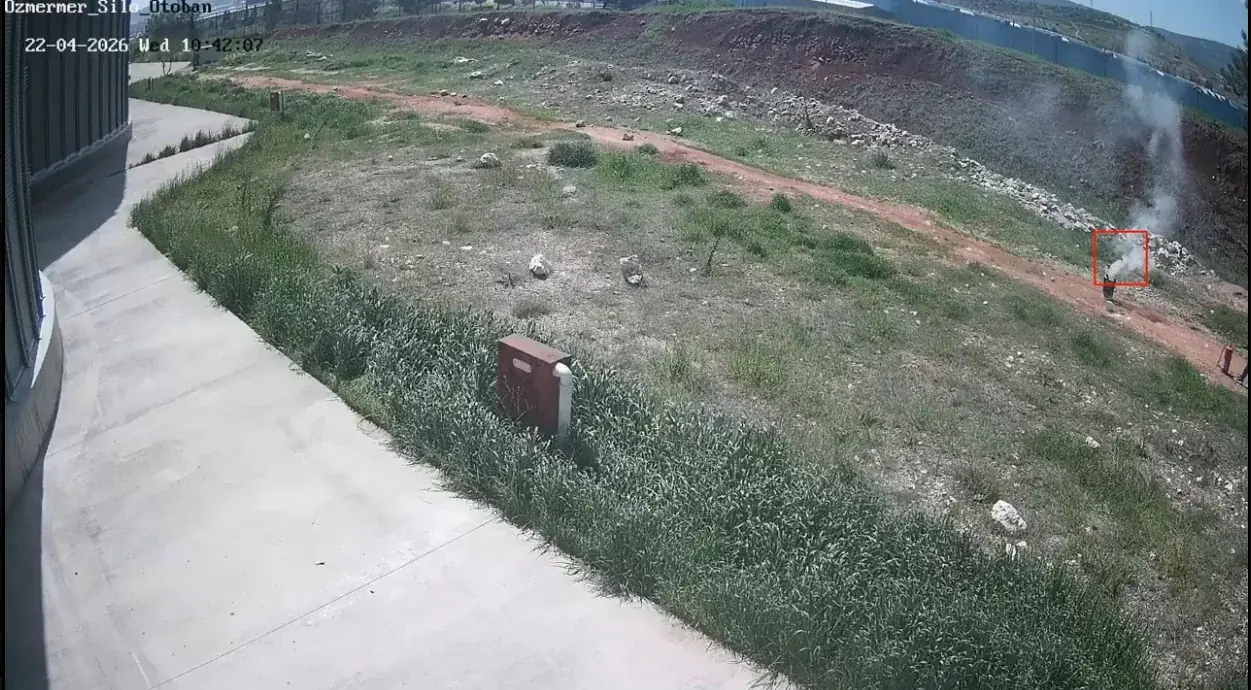
Point smoke detectors are for indoor spaces and don't work in open, windy areas.
The AI model was trained to distinguish smoke plumes and flames from ground, sky and dust.
24/7 smoke monitoring in outdoor areas without detectors; Smoke detected at the first stage and sent to the team; Every alert logged with an evidence frame
Problem
Point smoke detectors are for indoor spaces and don't work in open, windy areas. Perimeter cameras only recorded, and nobody watched screens 24/7. Smoke starting in dry grass could grow within minutes.
How it works
The AI model was trained to distinguish smoke plumes and flames from ground, sky and dust. A detection is confirmed over several frames before becoming an alert, so brief dust, fog or exhaust doesn't cause false alarms.
Alerts are sent to the control-room dashboard and mobile devices with camera name, location, time and a marked evidence frame.
- Outdoor smoke and flame detection
- Multi-frame confirmation to reduce false alarms
- Zone-based sensitivity (stockyard, grassland, roadside)
- Instant alert with evidence frame
Why it matters
Early warning lets a small plume be put out before it becomes a fire. Since existing cameras are used, no new sensors, cabling or infrastructure are needed, and the same cameras keep doing perimeter security.
Results
Perimeter cameras moved from passive recording to active early warning.
- 24/7 smoke monitoring in outdoor areas without detectors
- Smoke detected at the first stage and sent to the team
- Every alert logged with an evidence frame
- No new sensors or cabling required
Related solutions
Frequently asked questions
Does it replace smoke detectors?
No. Vision-based detection is a complementary layer; it doesn't replace legally required fire detection, but adds early warning especially outdoors where detectors don't exist.
Do fog or dust trigger false alarms?
Multi-frame confirmation and site-specific calibration keep such false alarms to a minimum.