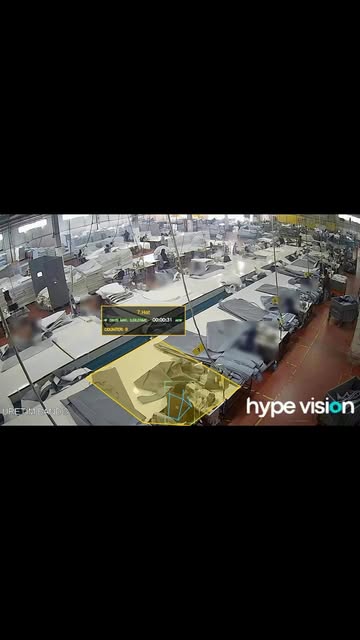
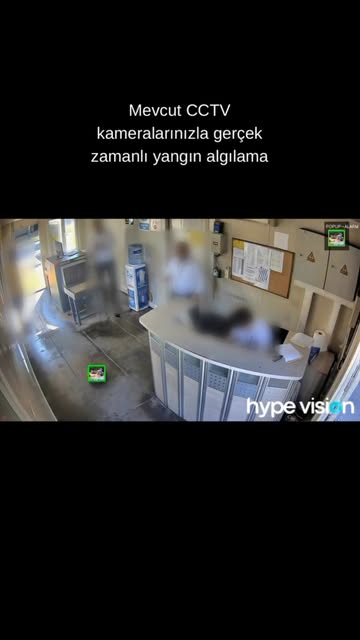
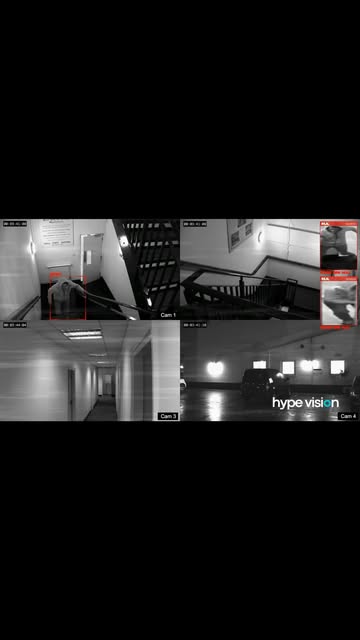
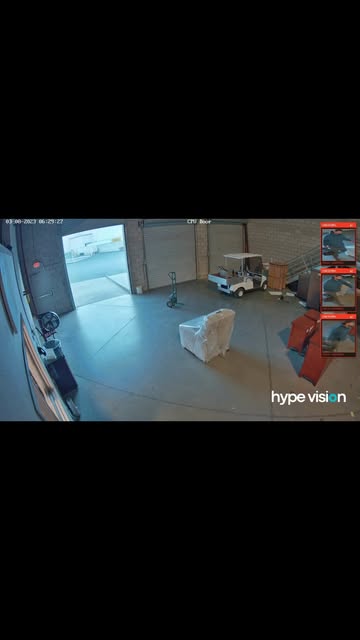
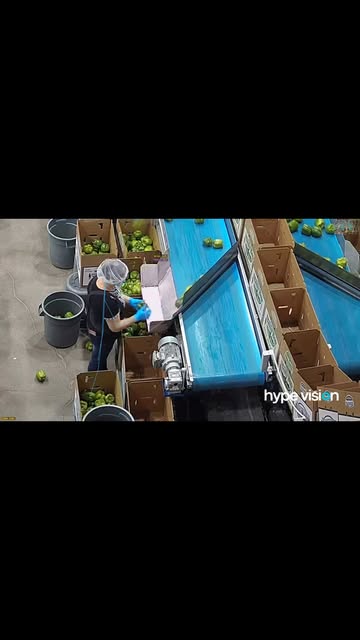
Make your factory smarter with AI-powered computer vision.Safety, quality control and productivity with your existing cameras.
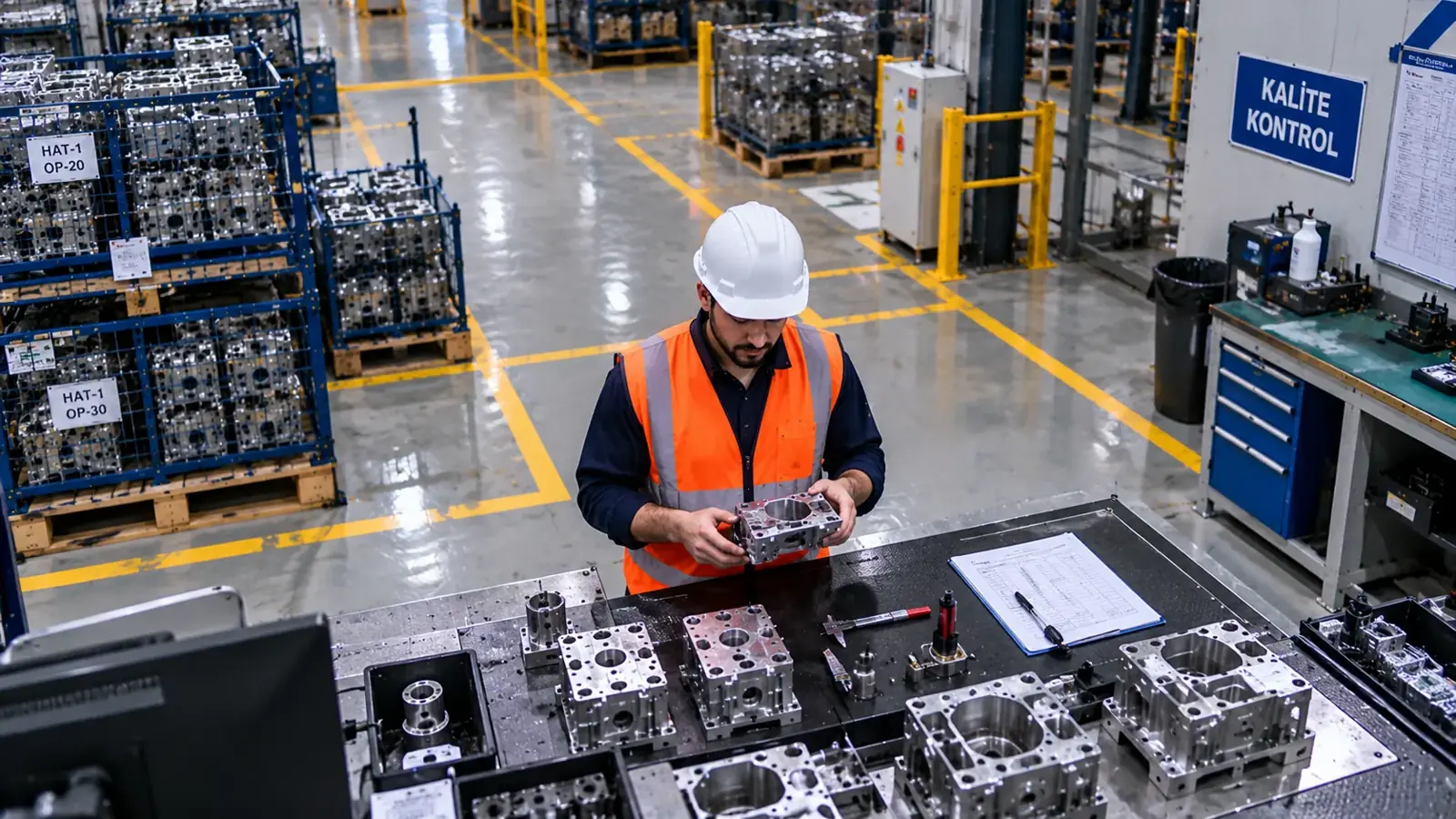
Works with your existing infrastructureNo new cameras. No new cabling. Live within days.
Hype AssistantAsk about your site, get answers with evidence.
Ask anything about your facility in plain language. The assistant scans real camera data and returns the number, the chart, the event footage and a downloadable report in one answer.
Three eyes, one AIFixed cameras, robot dogs and drones — all on one platform.
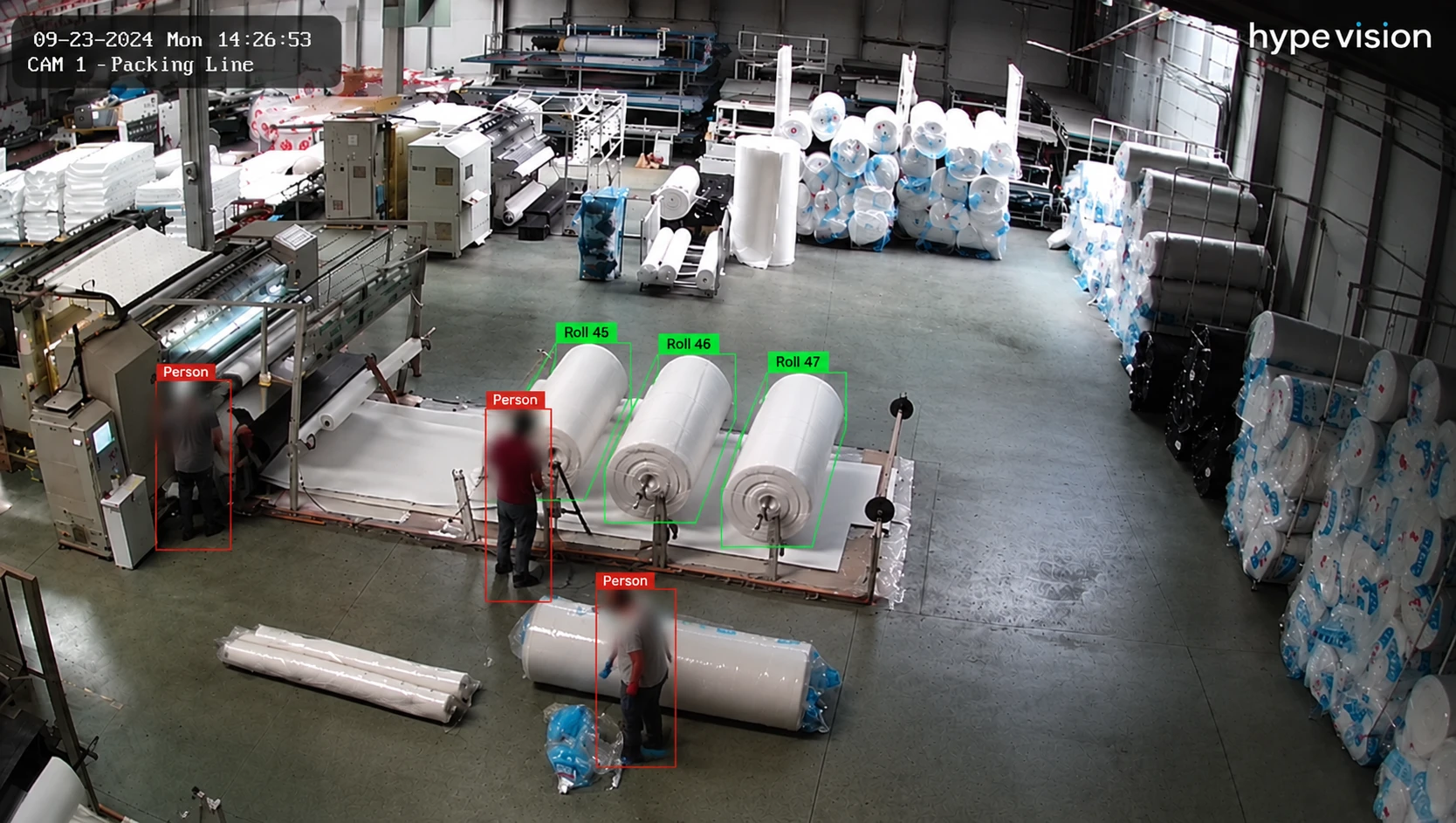
Fixed Cameras
Your existing IP cameras watch 24/7: PPE, forklift–pedestrian distance, restricted zones and line stoppages are detected instantly. No new cameras or cabling.
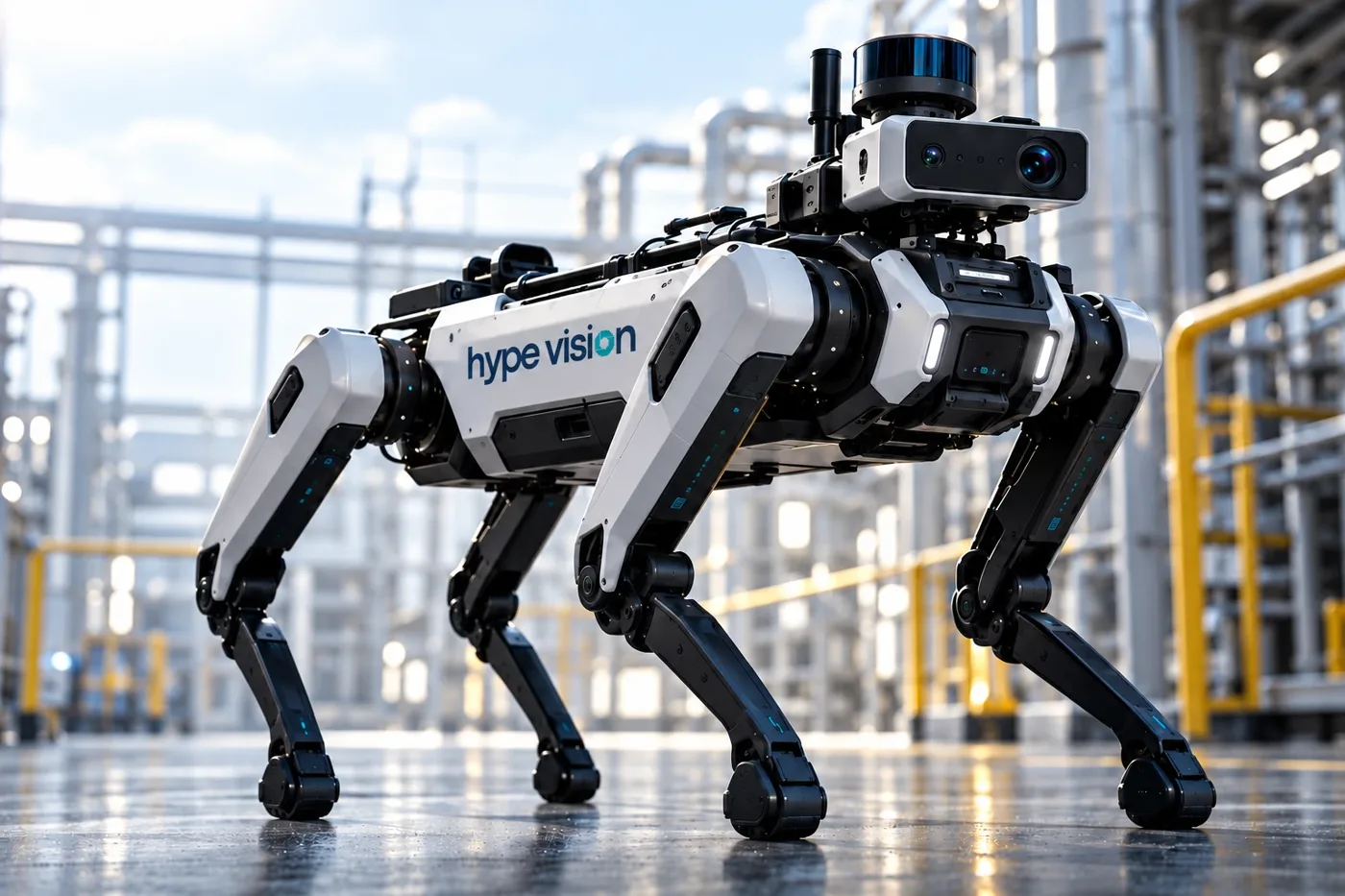
Robot Dog
Scheduled patrols through corridors and process areas fixed cameras can't see. Its camera and LiDAR feed the same AI layer, so no blind spots remain.
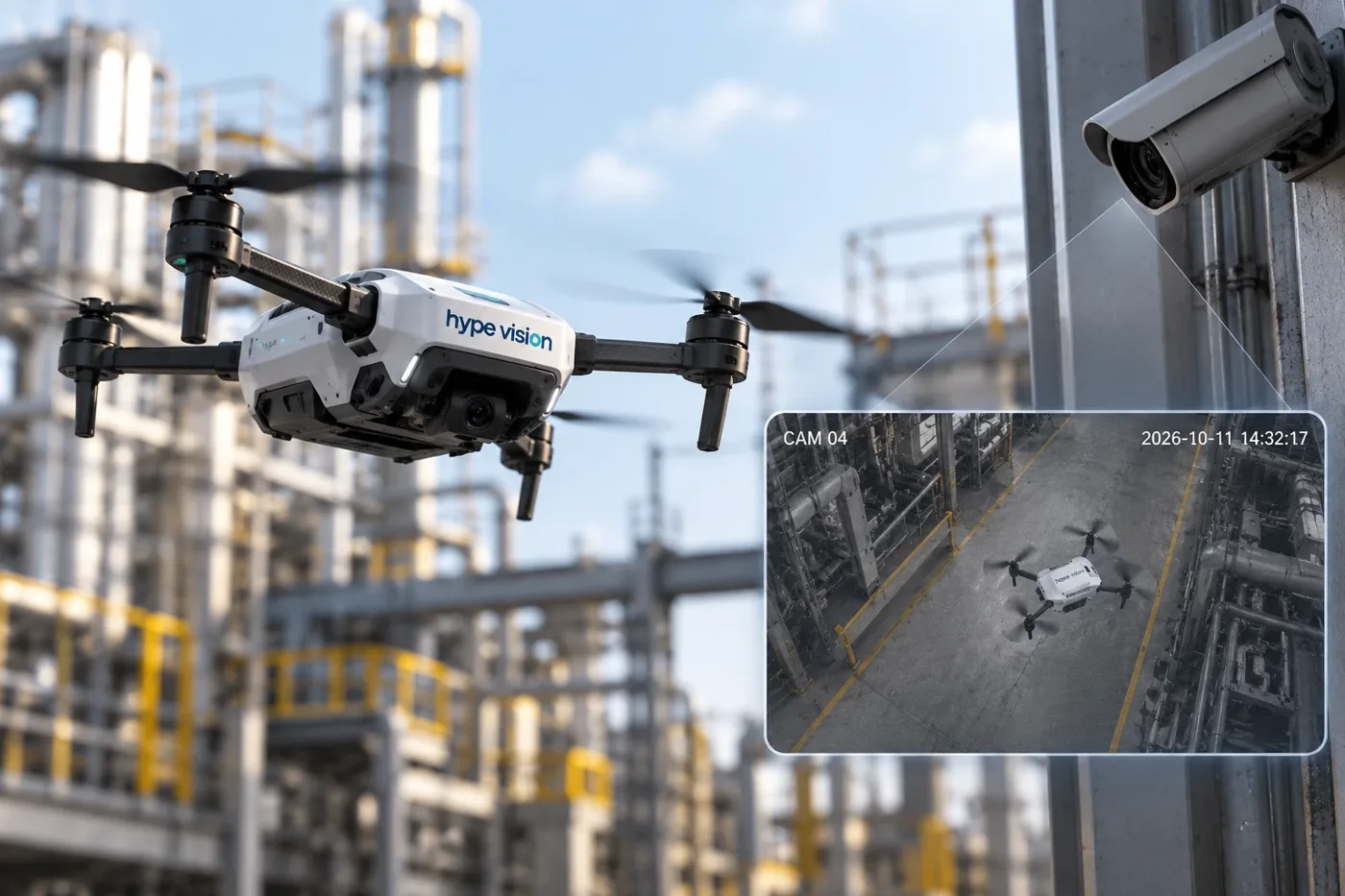
Drone
Fast scans of large sites, tank farms and tall structures. Drone footage is analysed alongside fixed cameras in one dashboard, with events pinned on the map.
Real-time transparencyfrom a single station to every site
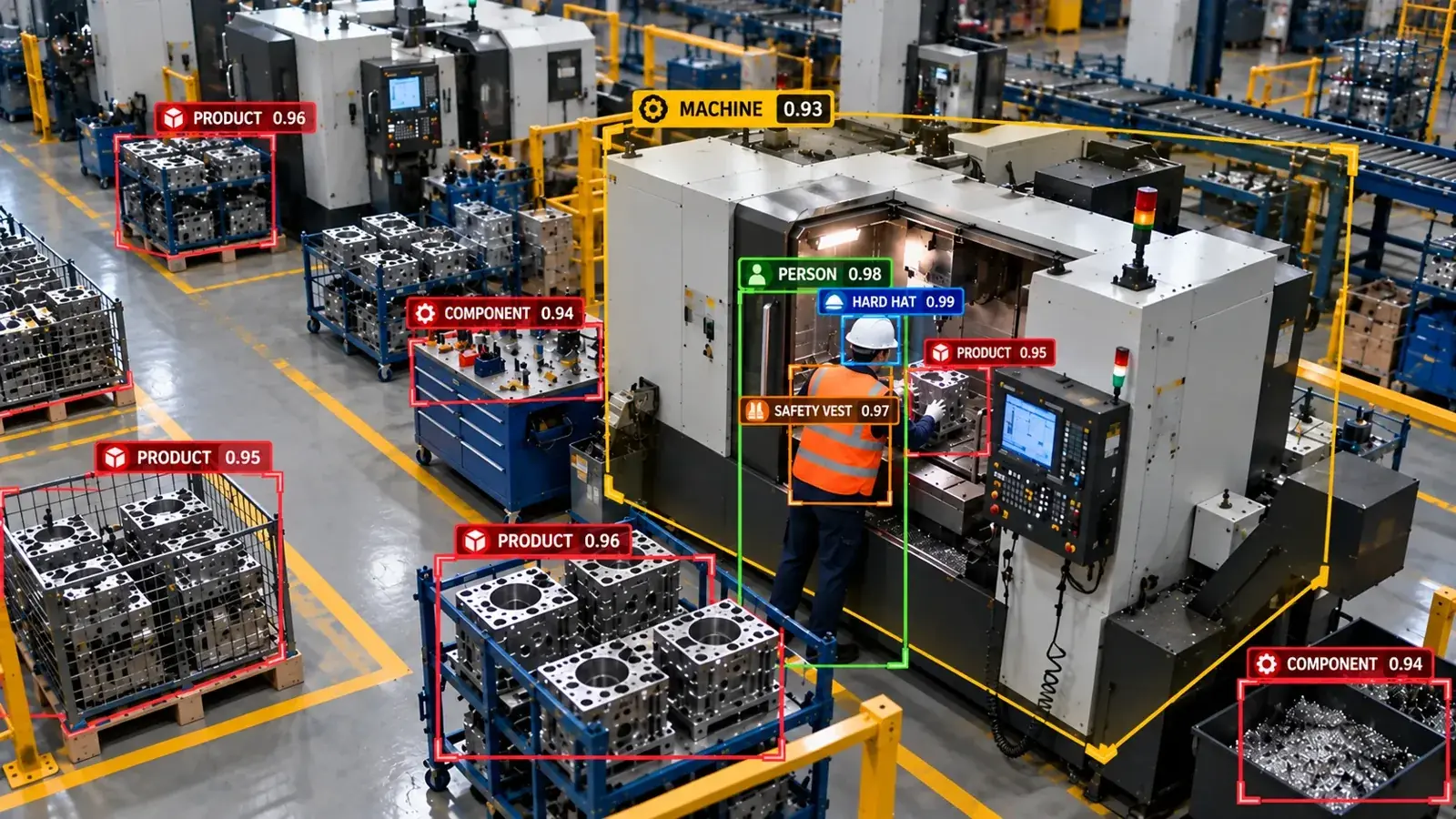
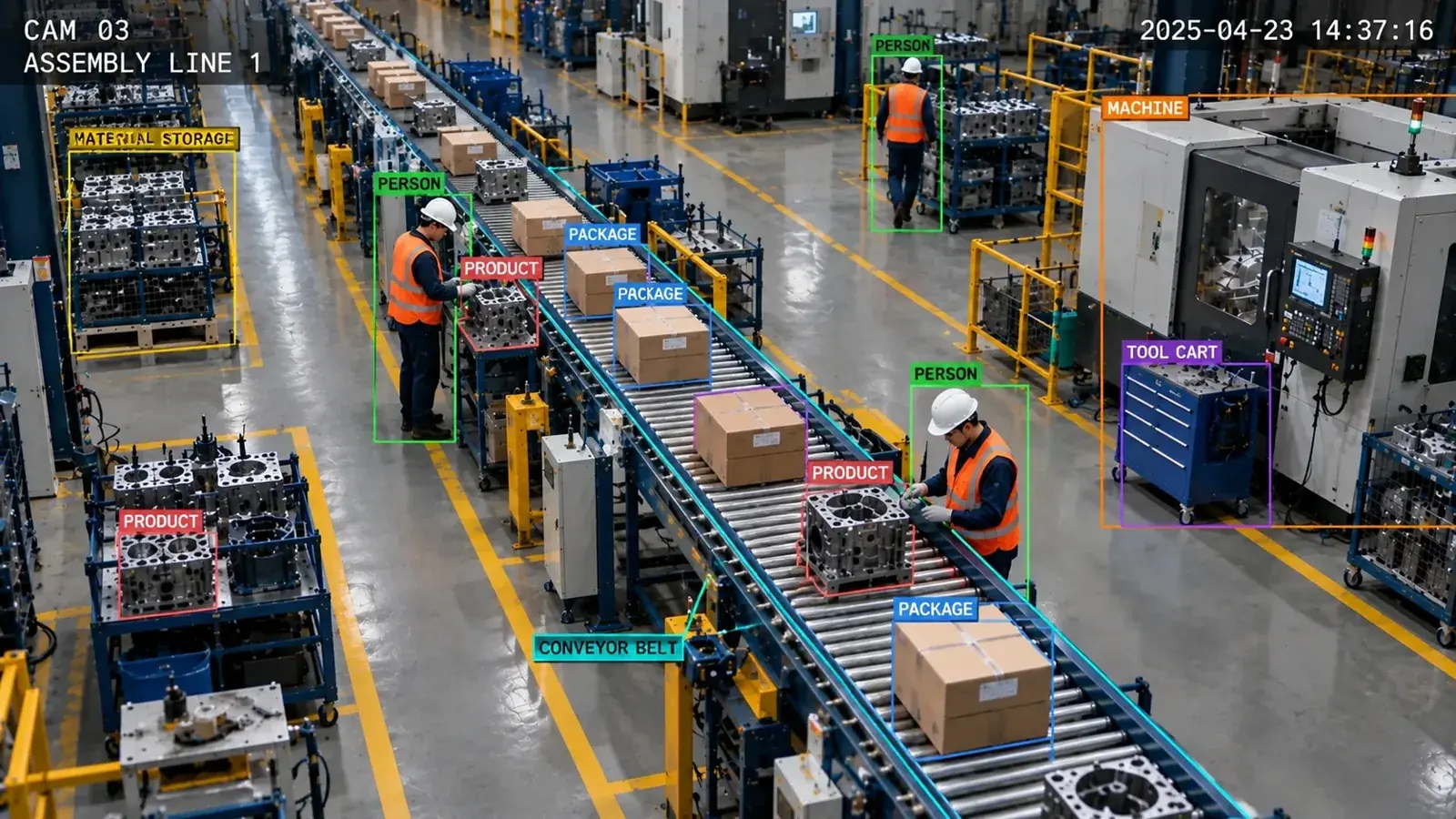
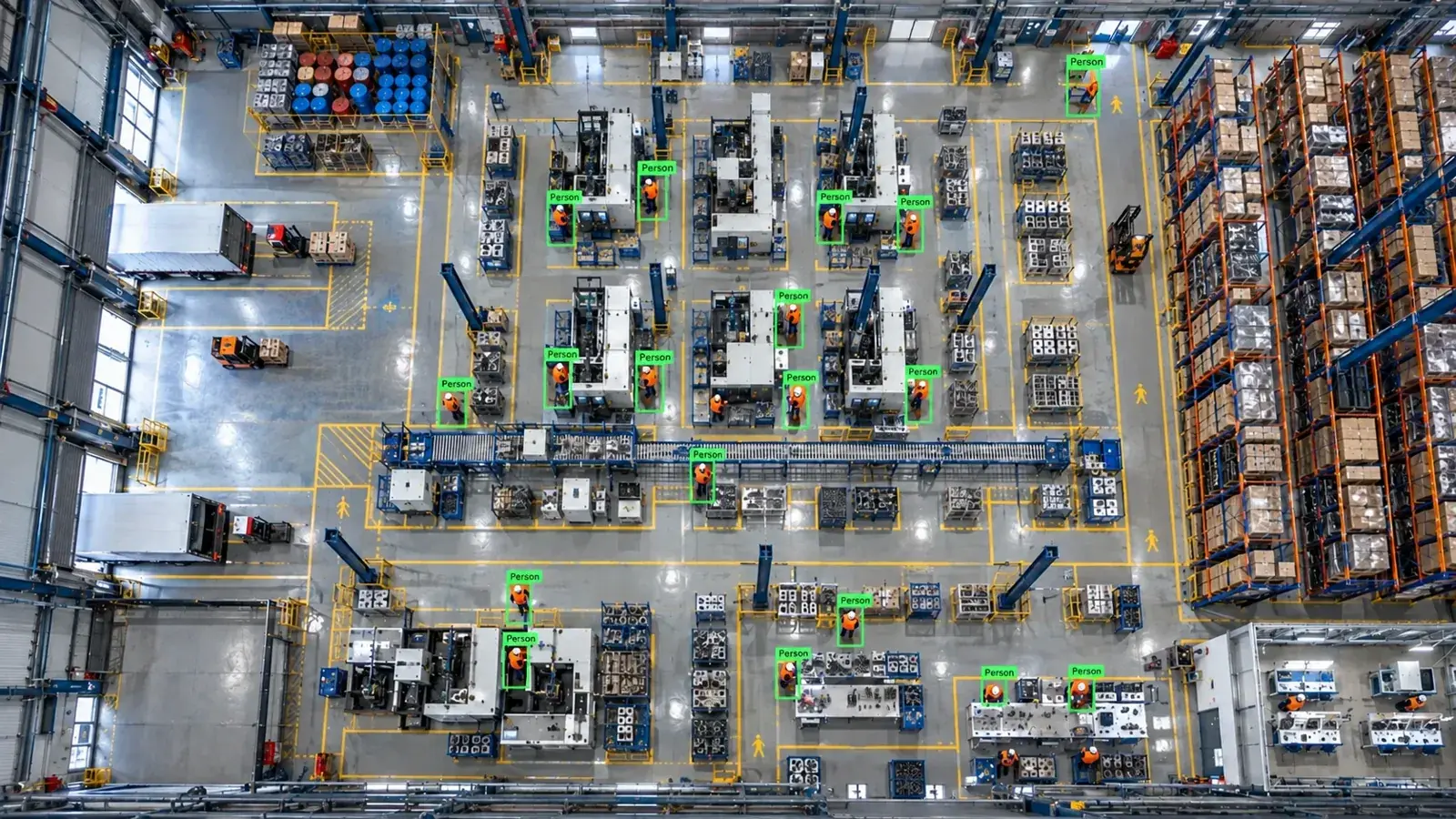
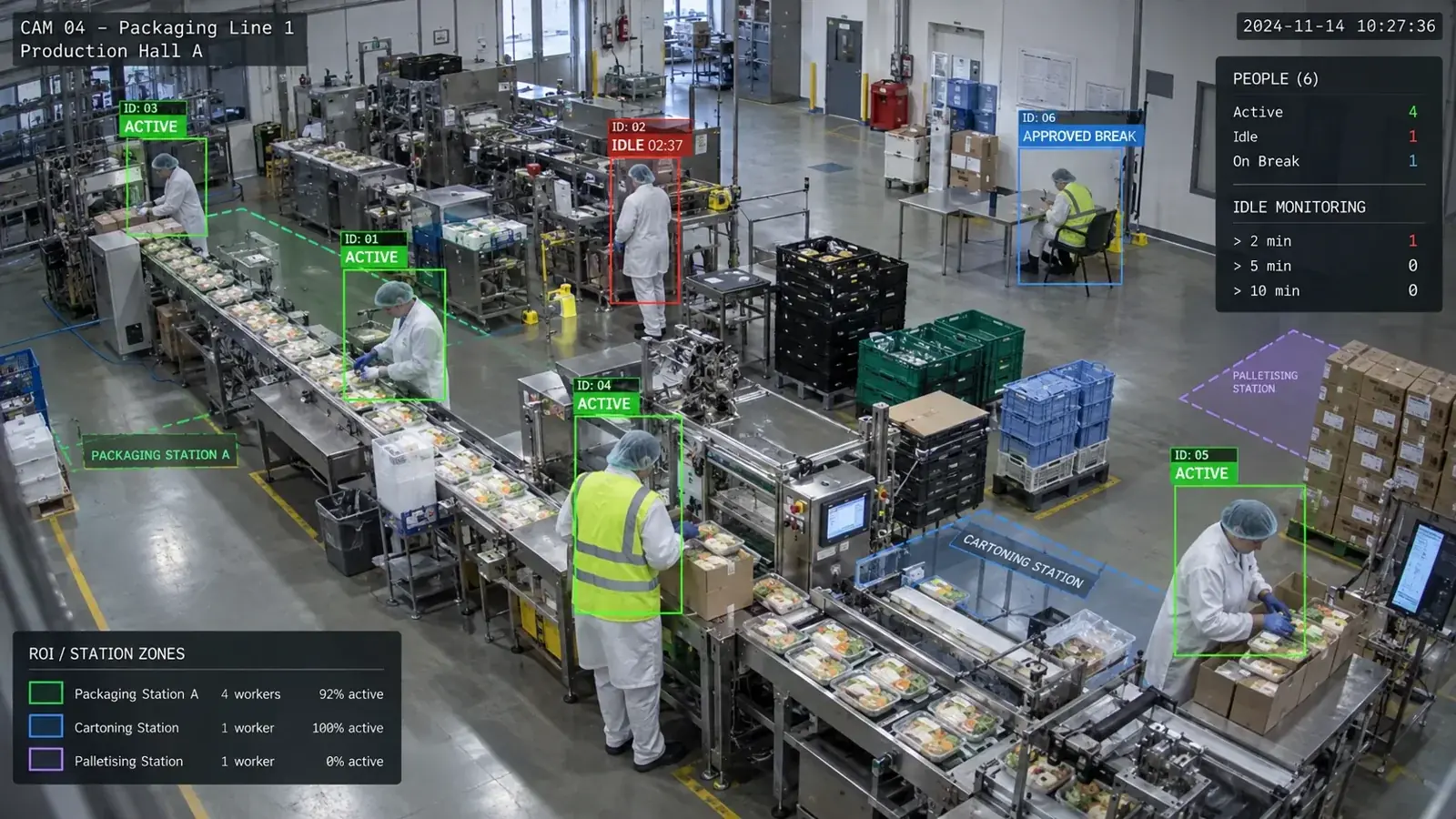
Occupancy, cycle time and safety status of every station, second by second.
Every line and zone on one screen, with heatmaps and a live alert feed.
Benchmark sites and roll best practice out everywhere.
What we help you doa digital twin of your plant, on one screen
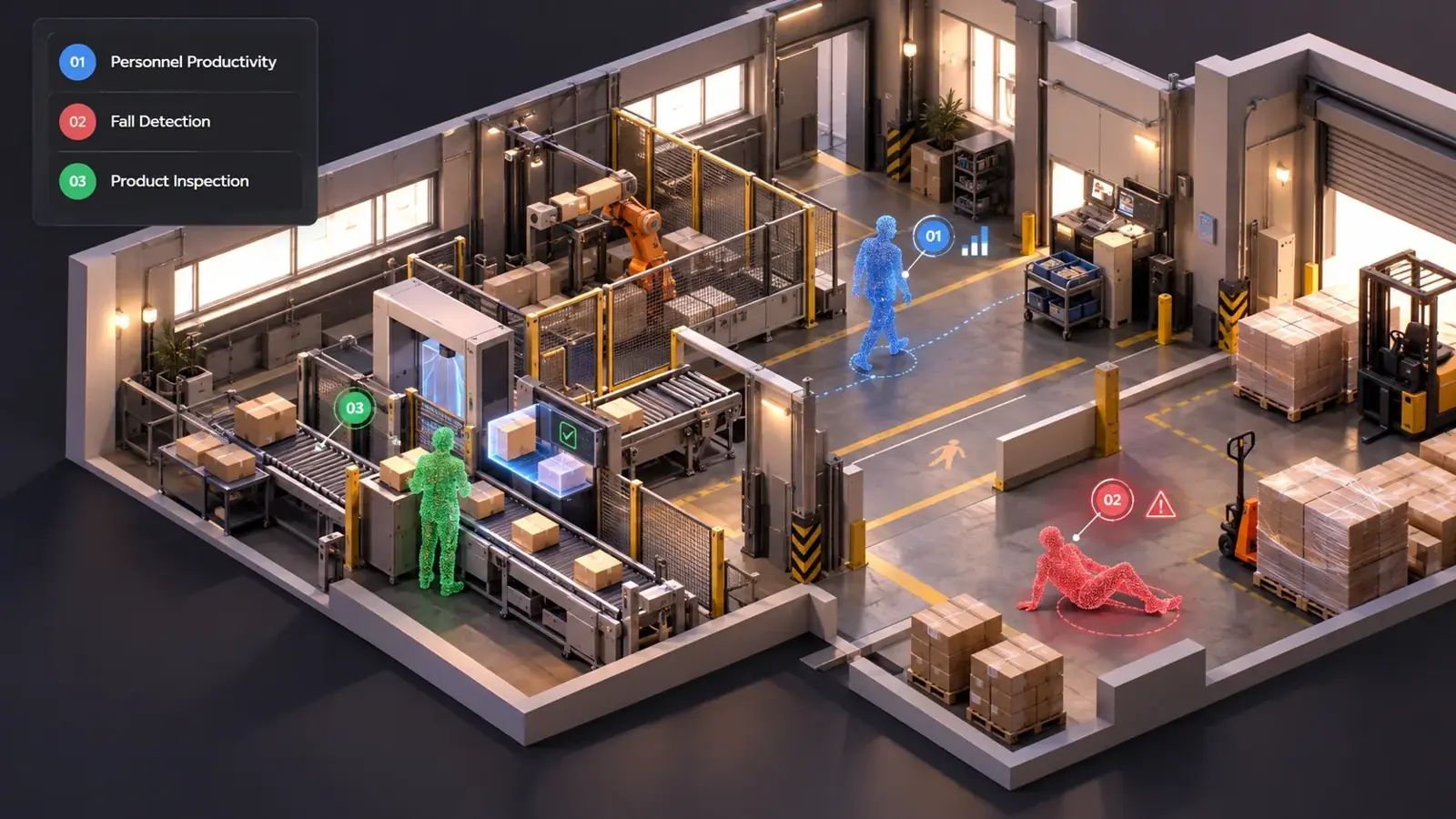
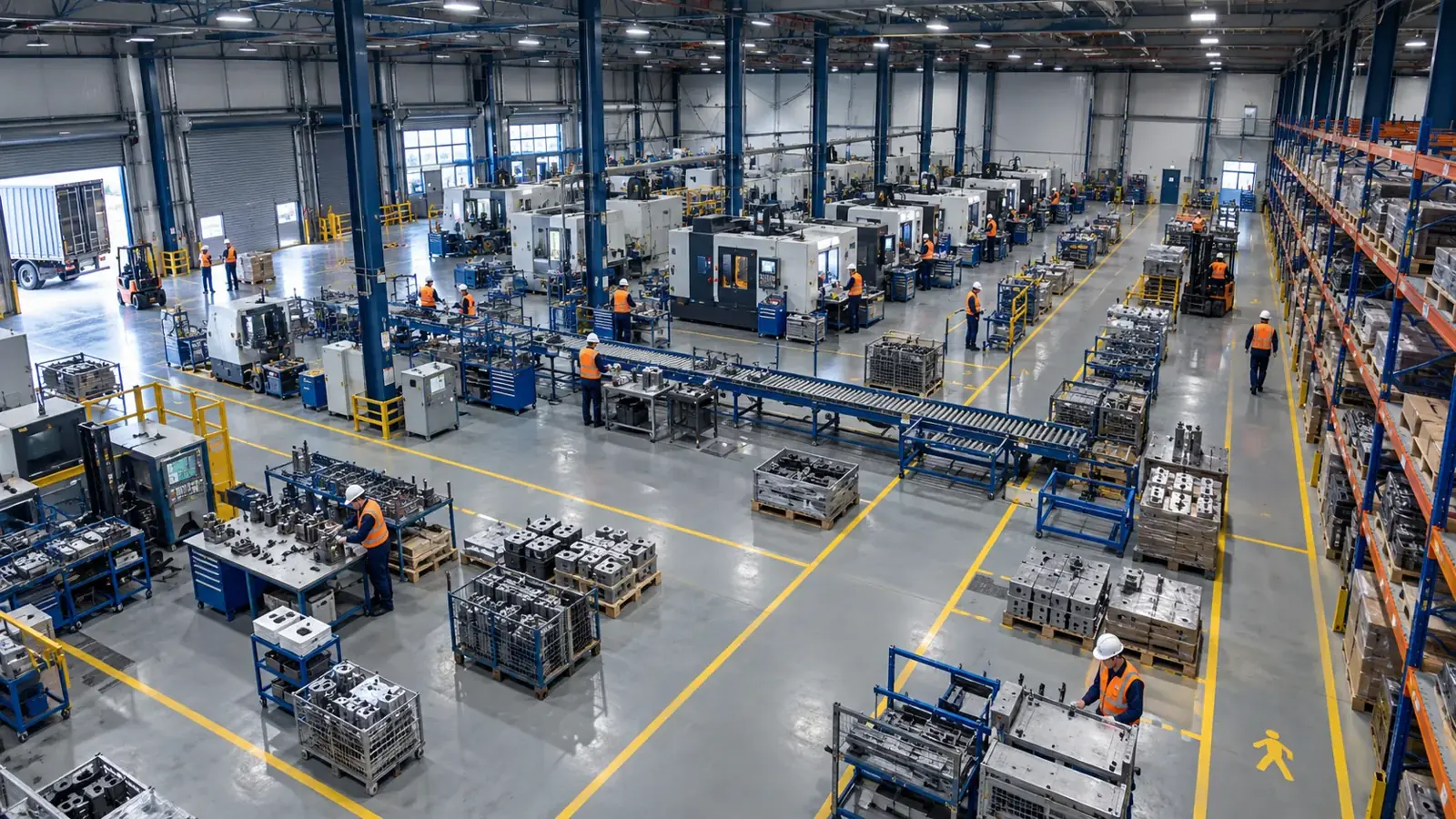
Detections from your cameras are mapped onto a digital twin of your facility: where work is productive, where someone fell, which product passed inspection — all on one map.
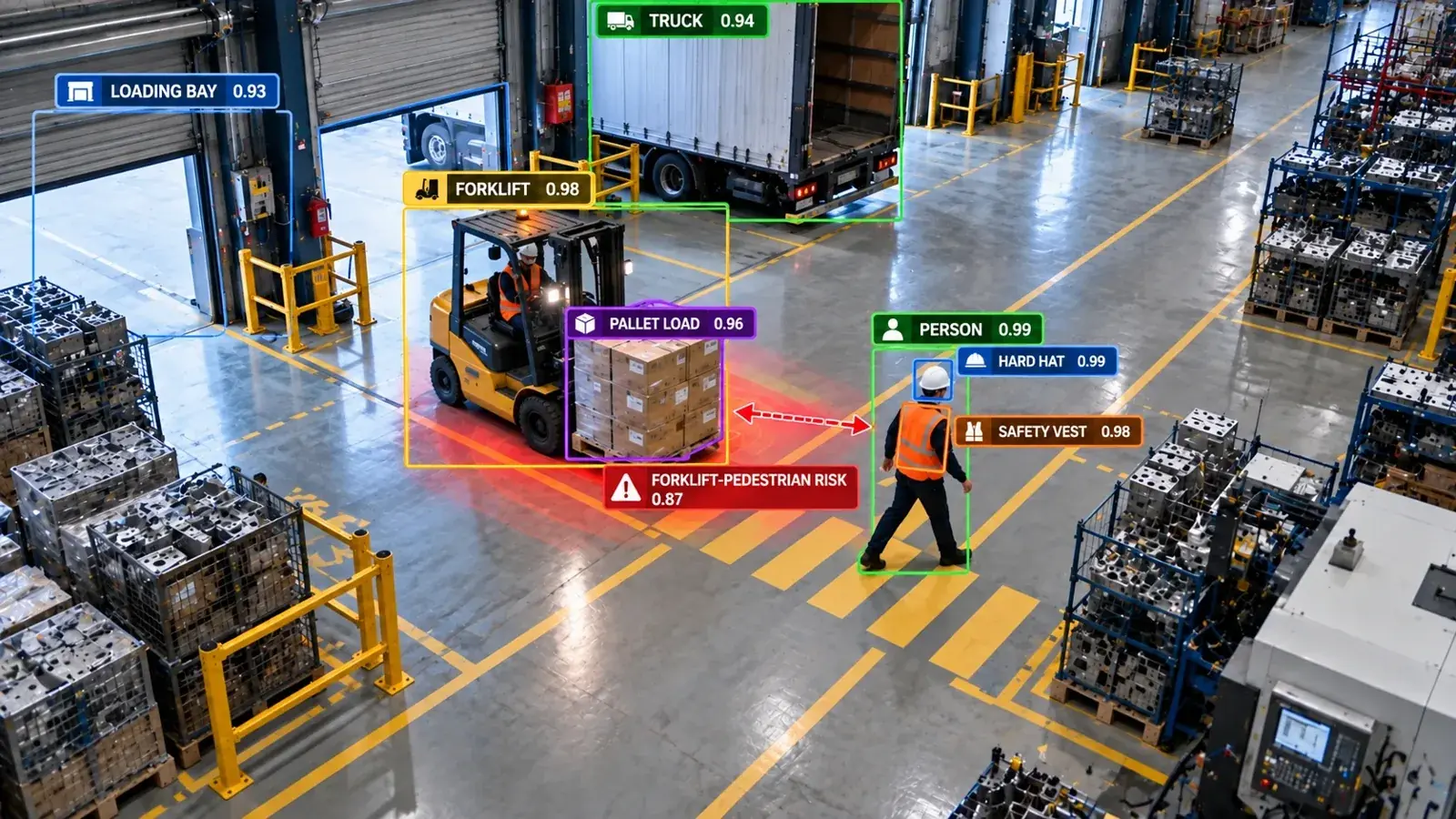
Empower field teams
Real-time alerts, one-tap acknowledgement and quick triage. Teams respond sooner and do less paperwork.
Granular data analysis
Performance by station, line and shift. Review it in our dashboard or export it to your own systems.
See risks early
Continuous signals become trends and risk flags. The system spots subtle changes first and prompts action before issues escalate.
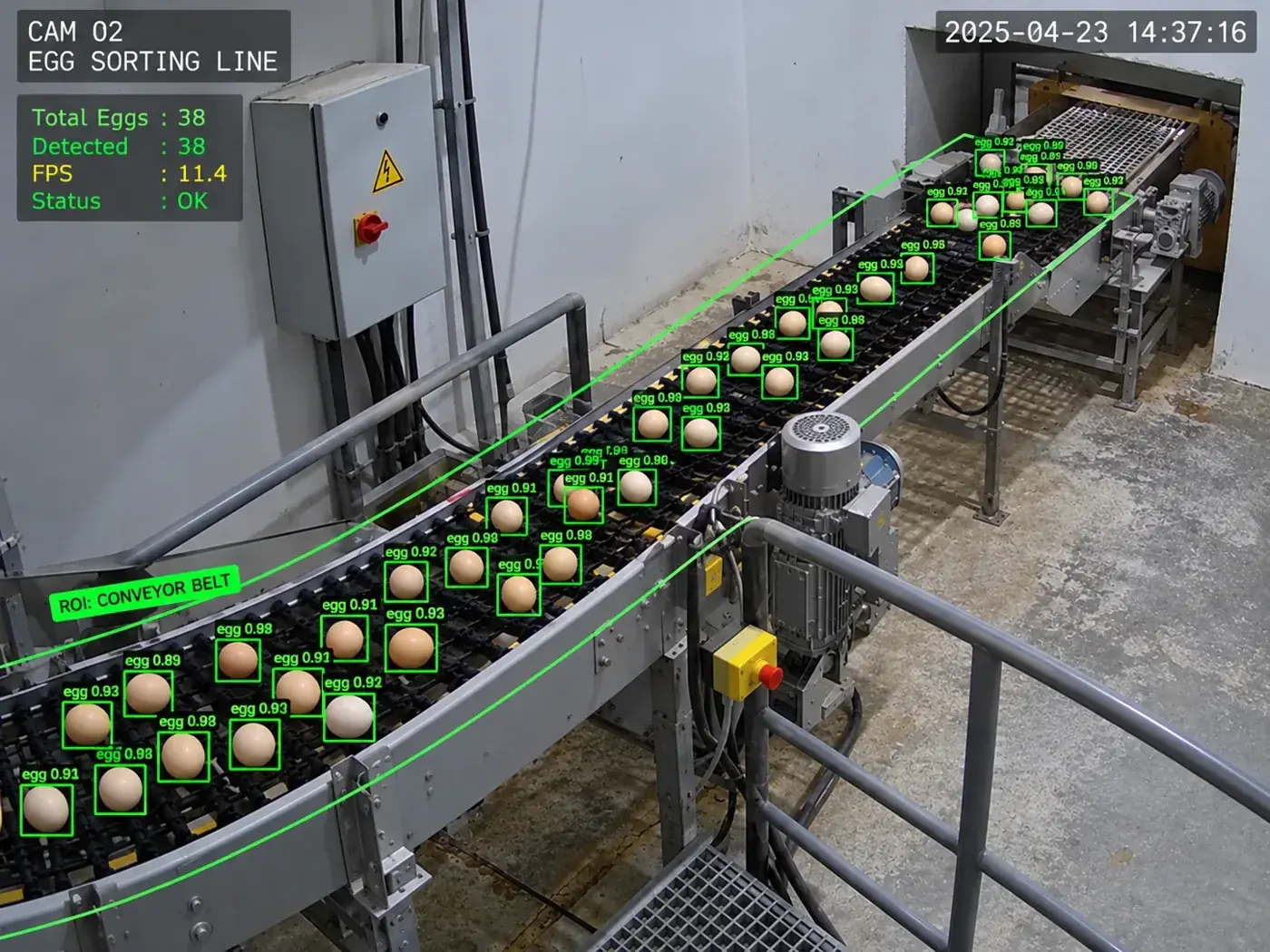
Count, measure, prove
Every unit and every second recorded, from production to shipping. Real numbers instead of estimates; video evidence instead of arguments.
All solutionswhat we can detect with your existing cameras
See all →One platform for every industrydifferent sites, different problems
All industries →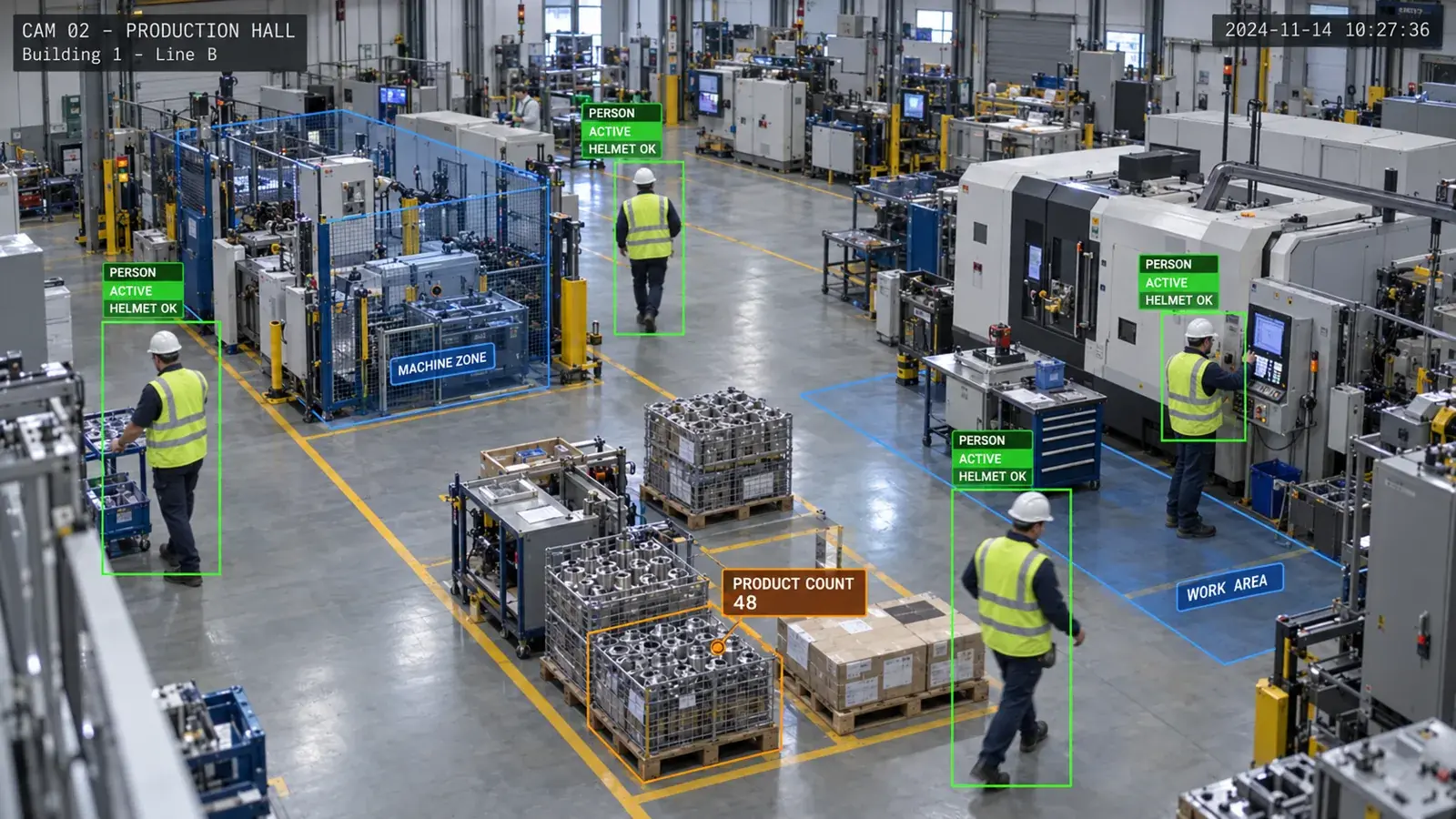
Manufacturing
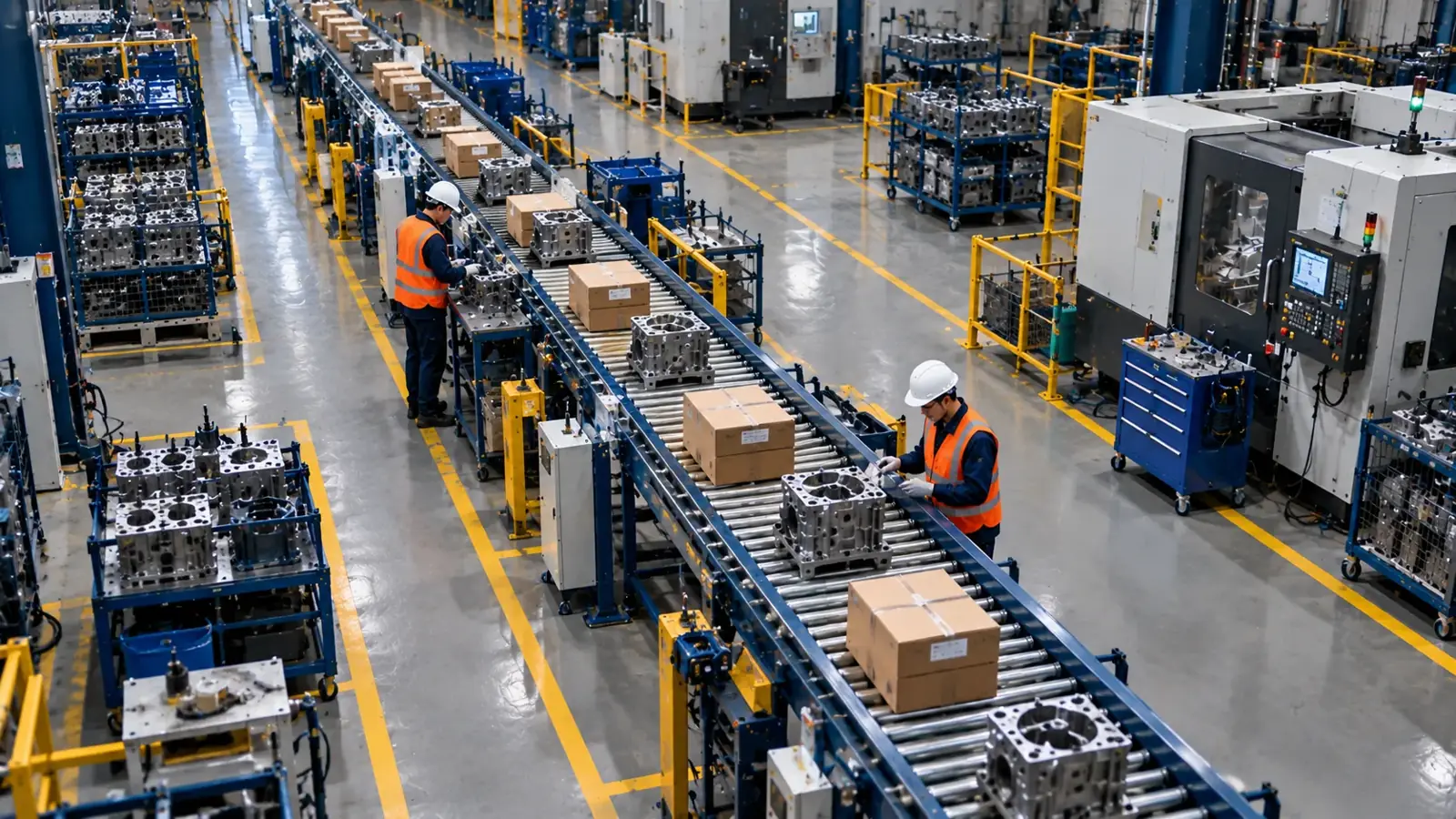
One video-analytics layer on existing cameras for workplace safety, production visibility and quality.
- PPE compliance
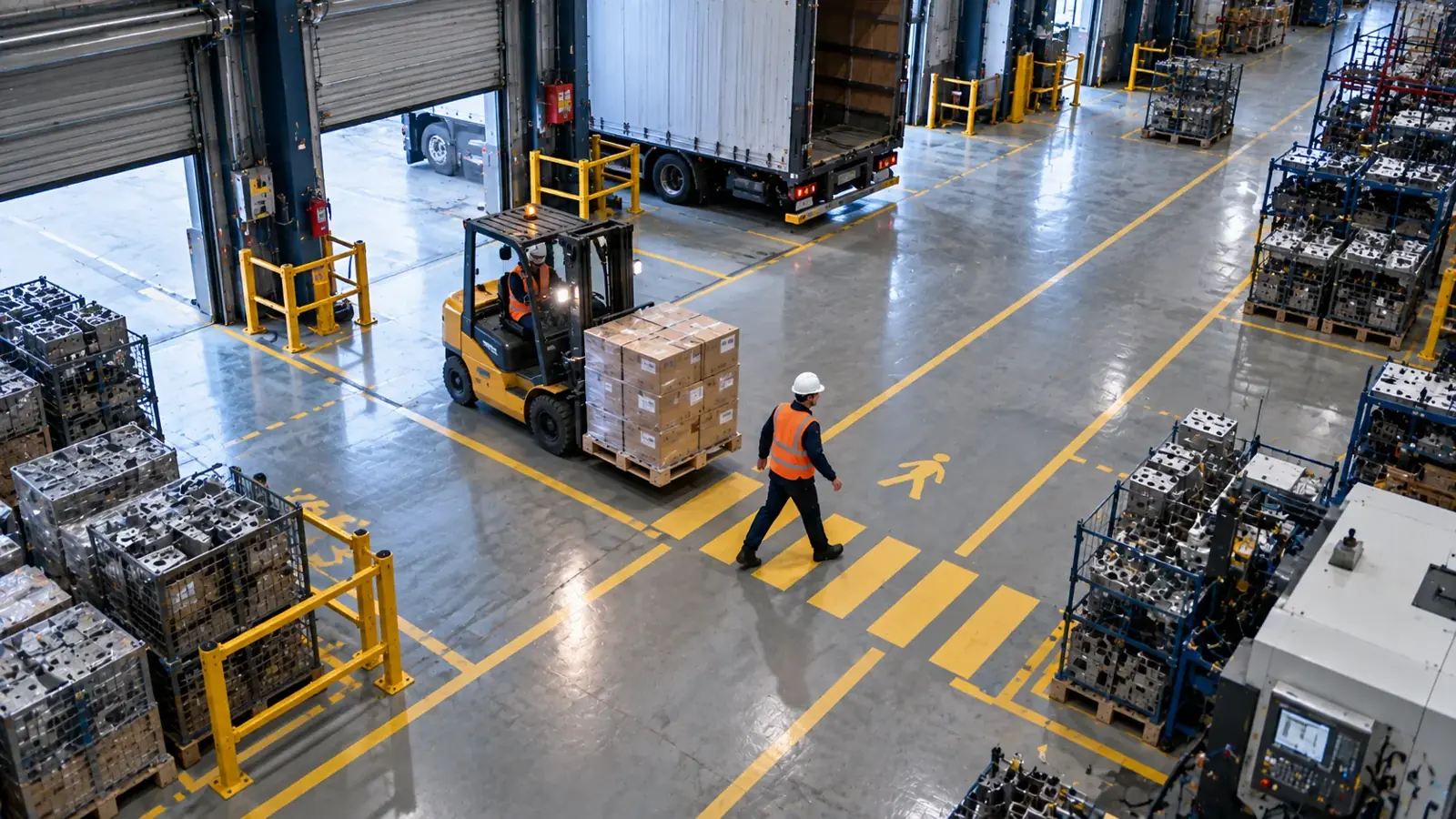
- Forklift–pedestrian
- Line stoppage
- Quality control
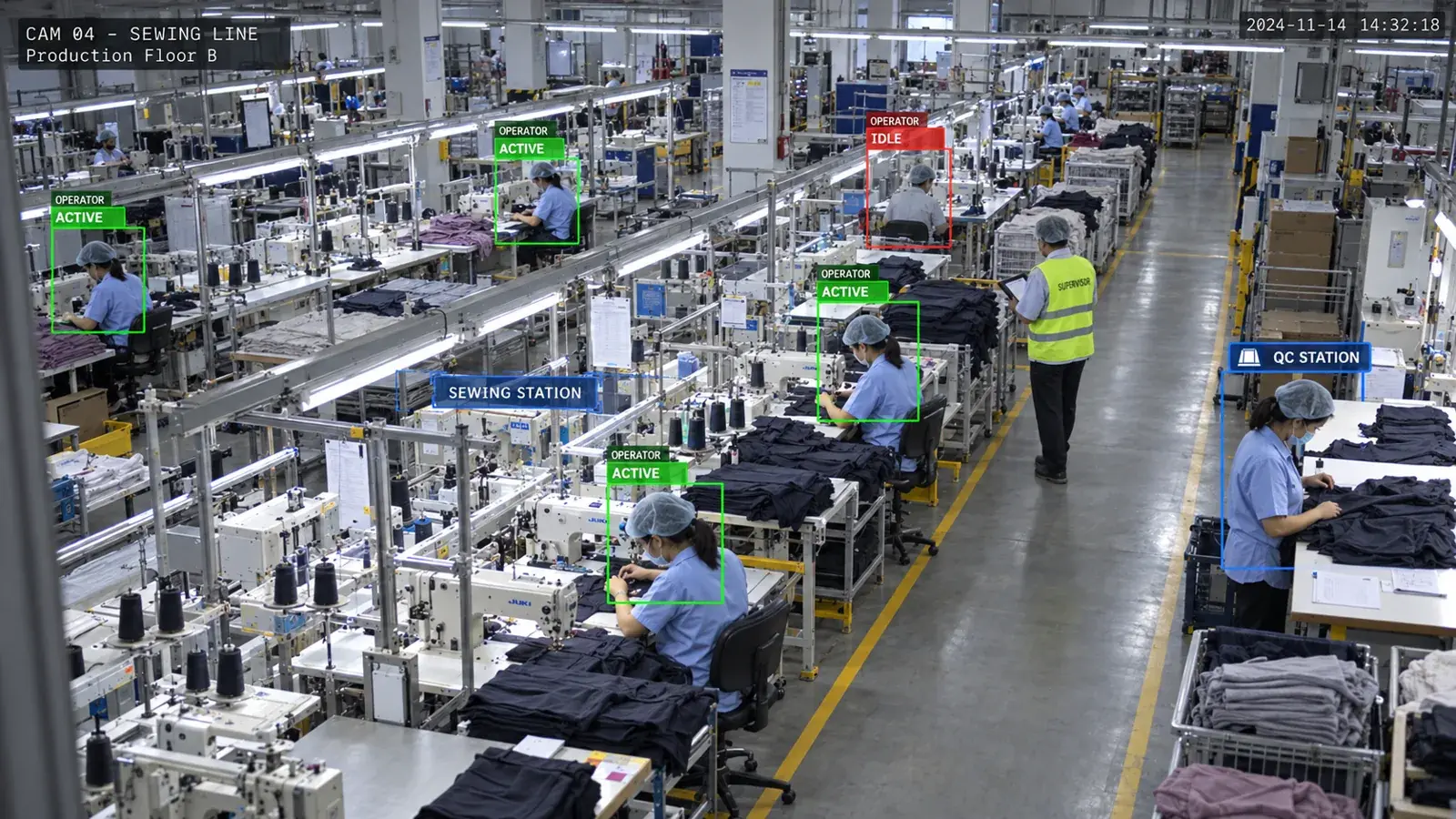
Textile
Unit counting, idle time and scrap tracking per line and station, without waiting for the end of the shift.
- Line efficiency
- Unit counting
- Scrap analysis
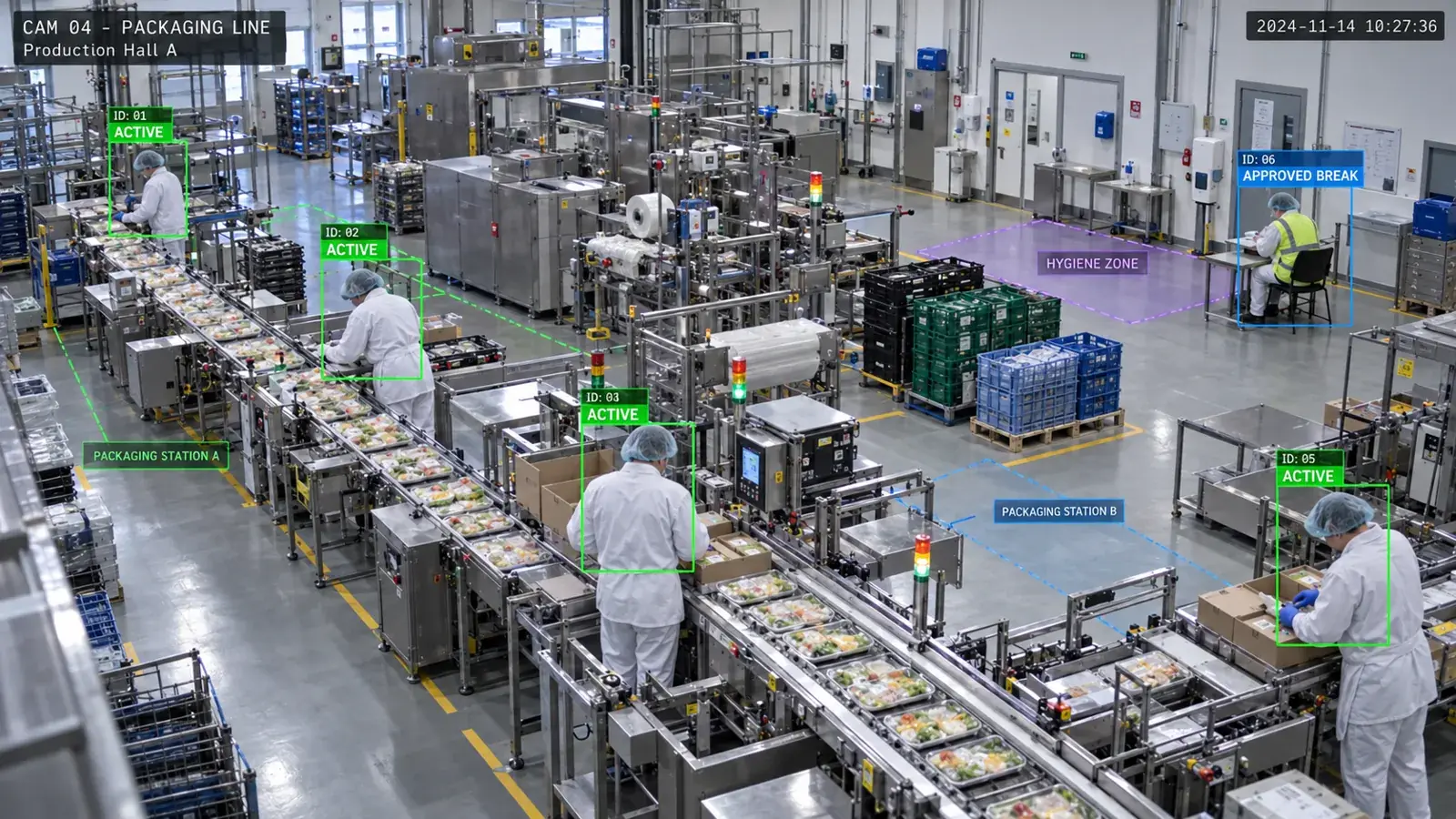
Food & Agriculture
Counting and grading on the conveyor, hygiene compliance and line idle-time measurement.
- Product counting
- Grading
- Hygiene
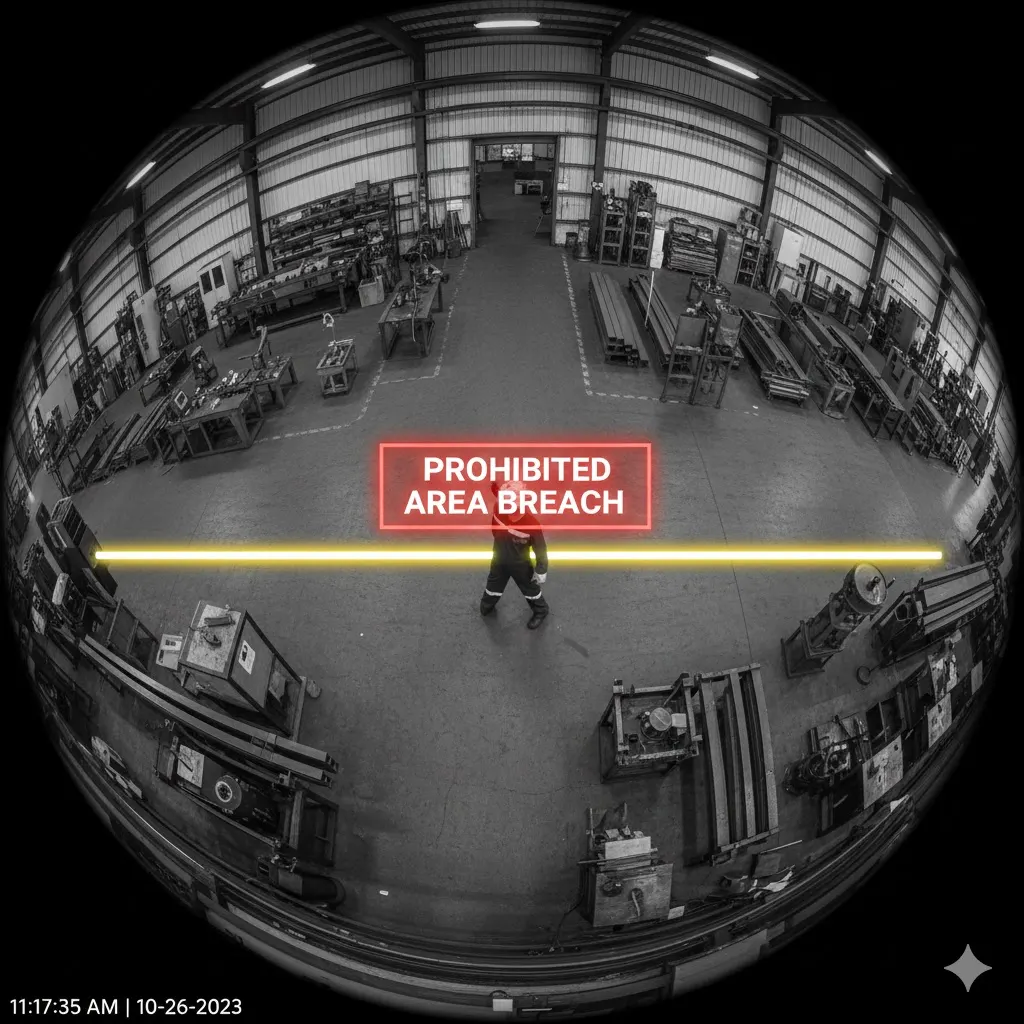
Chemical & Process Plants
Danger-zone, PPE and 5S monitoring — 24/7 evidence-backed tracking with existing cameras, even in hazardous areas.
- Restricted zone
- PPE compliance
- Leaks & smoke
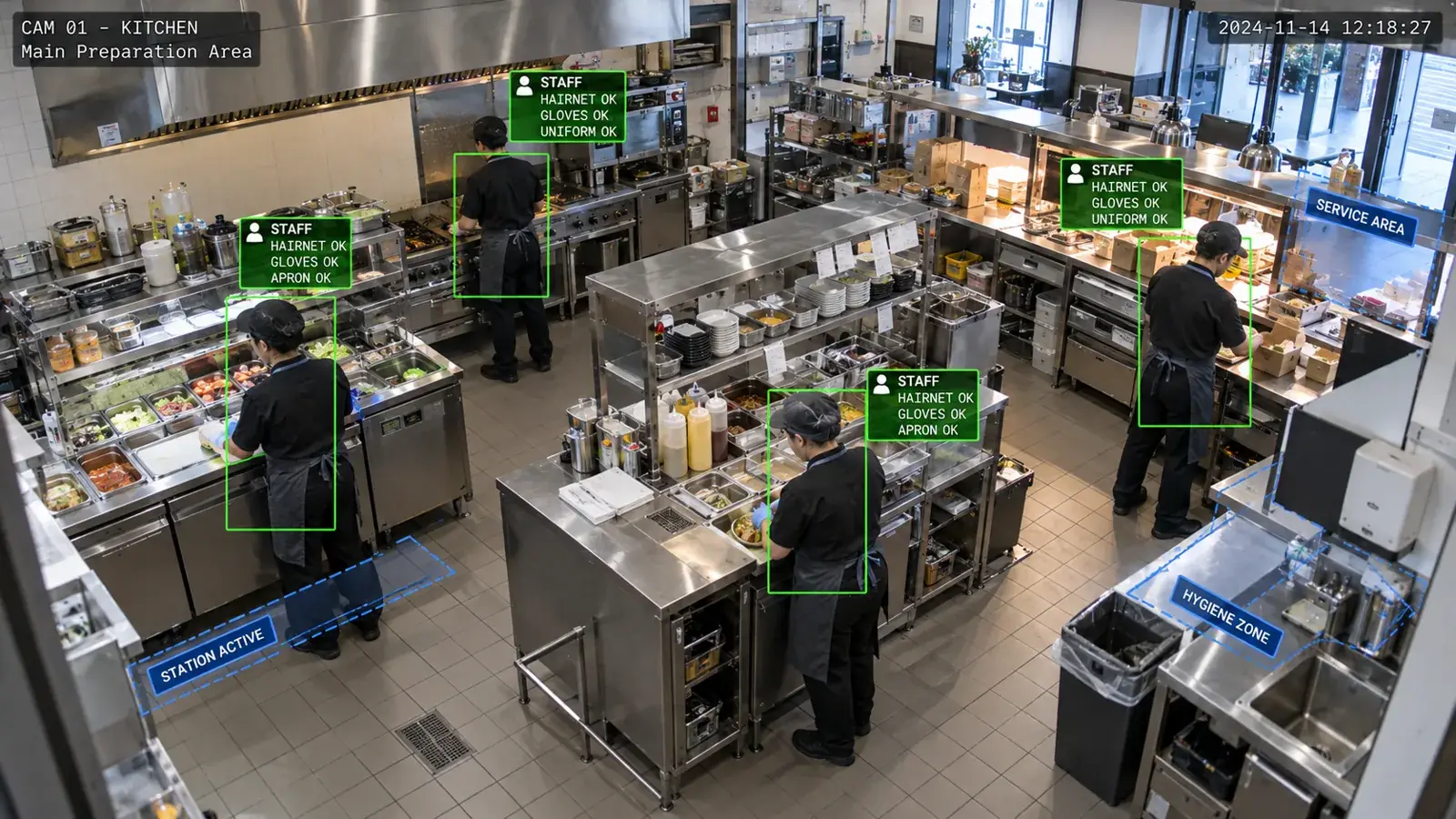
Restaurants & F&B
Consistent hygiene, service speed and procedures in every branch — measured, not assumed.
- Service time
- Hygiene
- Checkout control
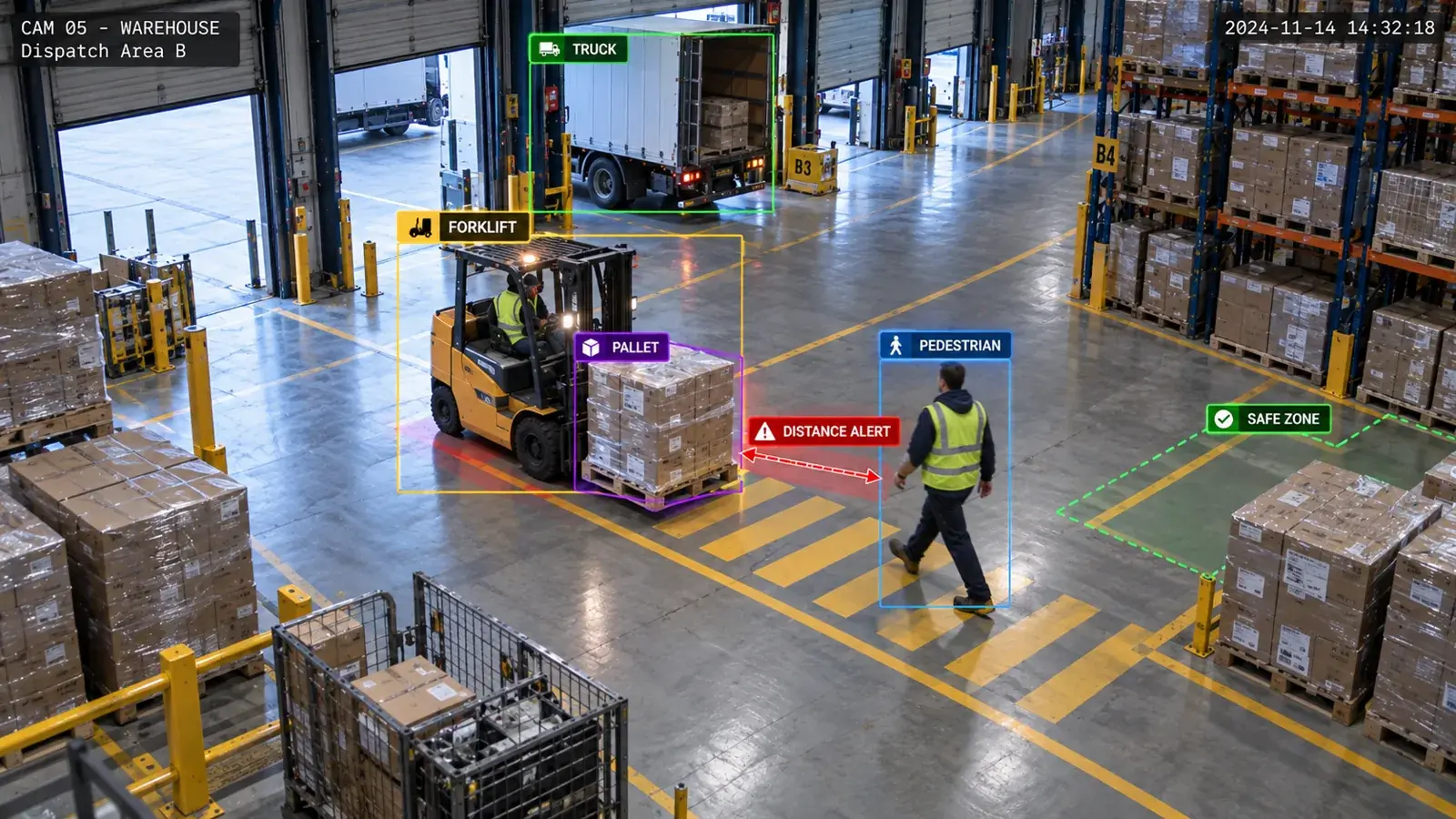
Logistics & Warehousing
Pallet and carton counting, dock times, forklift routes and a video evidence archive for shipments.
- Pallet counting
- Dock time
- Evidence archive
Privacy by designno facial recognition — we analyse the event, not the person
On-premise processing
With an on-premise deployment, video never leaves your building; all processing runs on a local server.
Data minimisation
Most modules work without facial recognition — on zones, objects and motion. With role-based access and defined retention periods, only the data that is needed is kept.
Data class clear upfront
We state upfront which data each module processes. Meeting privacy-law obligations is designed together with you as the data controller.
Note: not using facial recognition does not mean every processed record is free of personal data — a record can be indirectly linked to a shift, station or event. That is why we clarify the technical measures (on-premise processing, data minimisation, role-based access, retention periods) and the data-controller responsibilities together.
What can AI detect in your factory?
Let's review together which safety, quality and production analytics your existing cameras can deliver.
- Free 15-minute technical call
- Camera infrastructure pre-assessment
- Feasible AI scenarios
Case studiesresults measured on site
All case studies →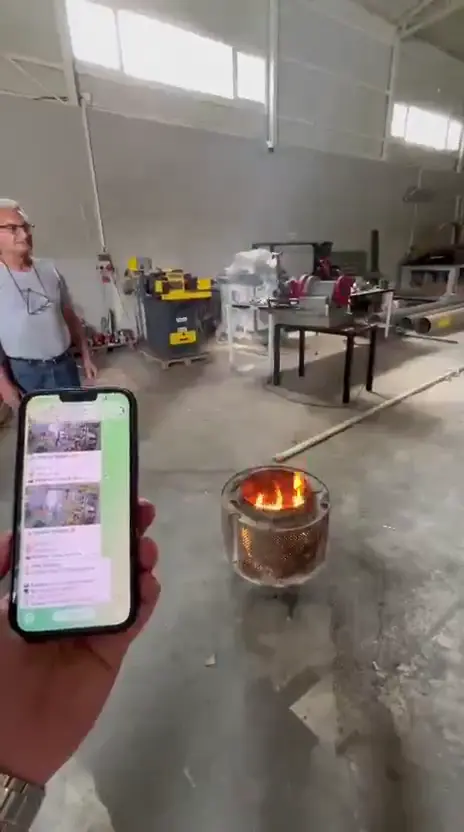
Early fire and flame detection with cameras: spots a basketball-sized flame from 15-20 meters
Existing cameras detect fire and flame early from the image; a basketball-sized flame is caught from 15-20 meters away and an instant…
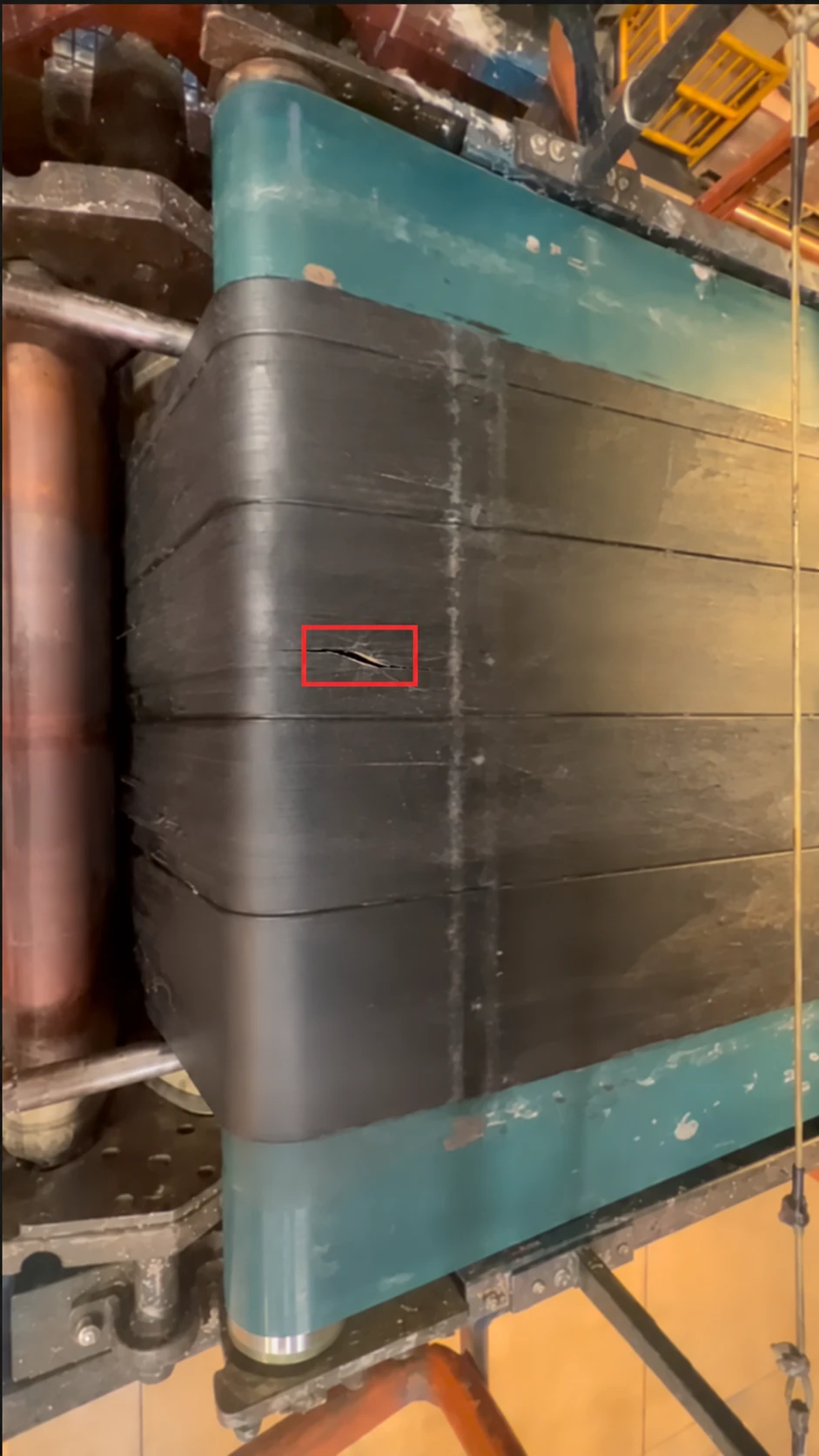
Rubber/tire surface tear and crack detection: high-speed quality inspection with an industrial camera
Tears and cracks on fast-moving rubber/tire surfaces are detected in real time with a high-frame-rate industrial camera and AI; defects are…
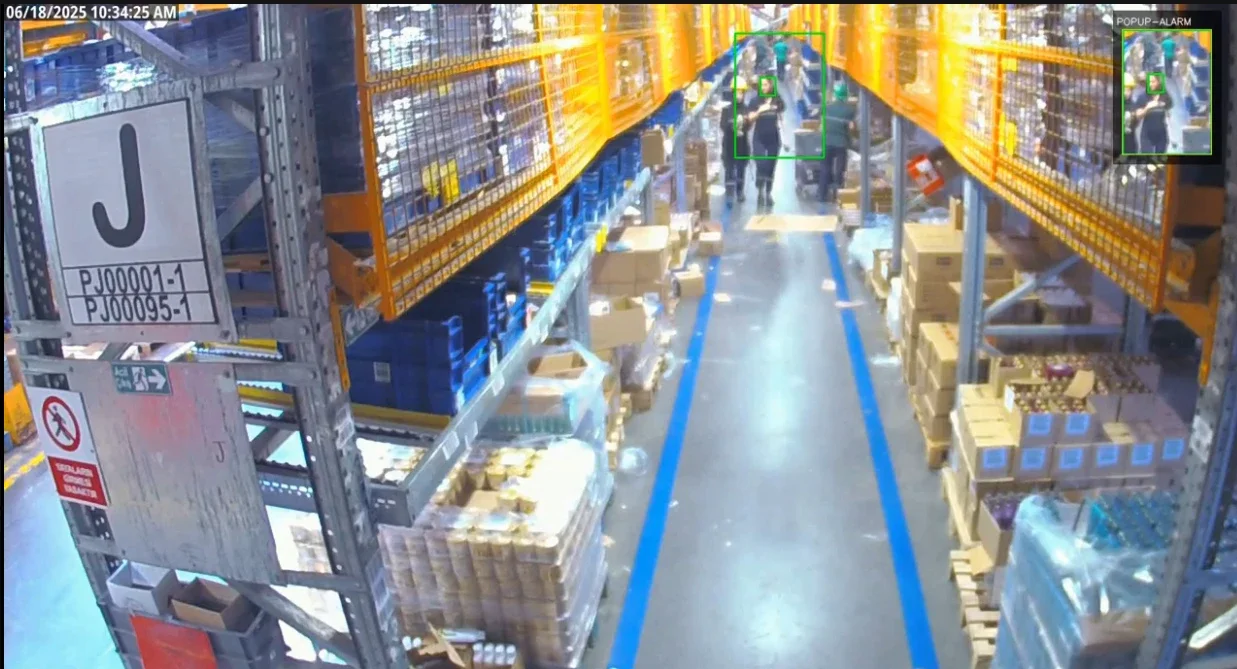
Detecting people riding on forklifts/pallet trucks in the warehouse: AI safety-violation alerts
Warehouse cameras detect people riding (standing) on forklifts or pallet trucks with AI, raising an evidence-framed alert for this unsafe…
 %0,69
Egg grading, counting and line efficiency with cameras: 18 lines in one system, 0.69% error
At an egg facility, existing cameras count eggs and classify them as large/small; 18 collection lines merged into one system, with a…
Counting machine output and production performance: per-machine output and efficiency with cameras
Cameras automatically count products coming off machines (rolls, bolts, sheets); per-machine production quantity, speed and performance are…
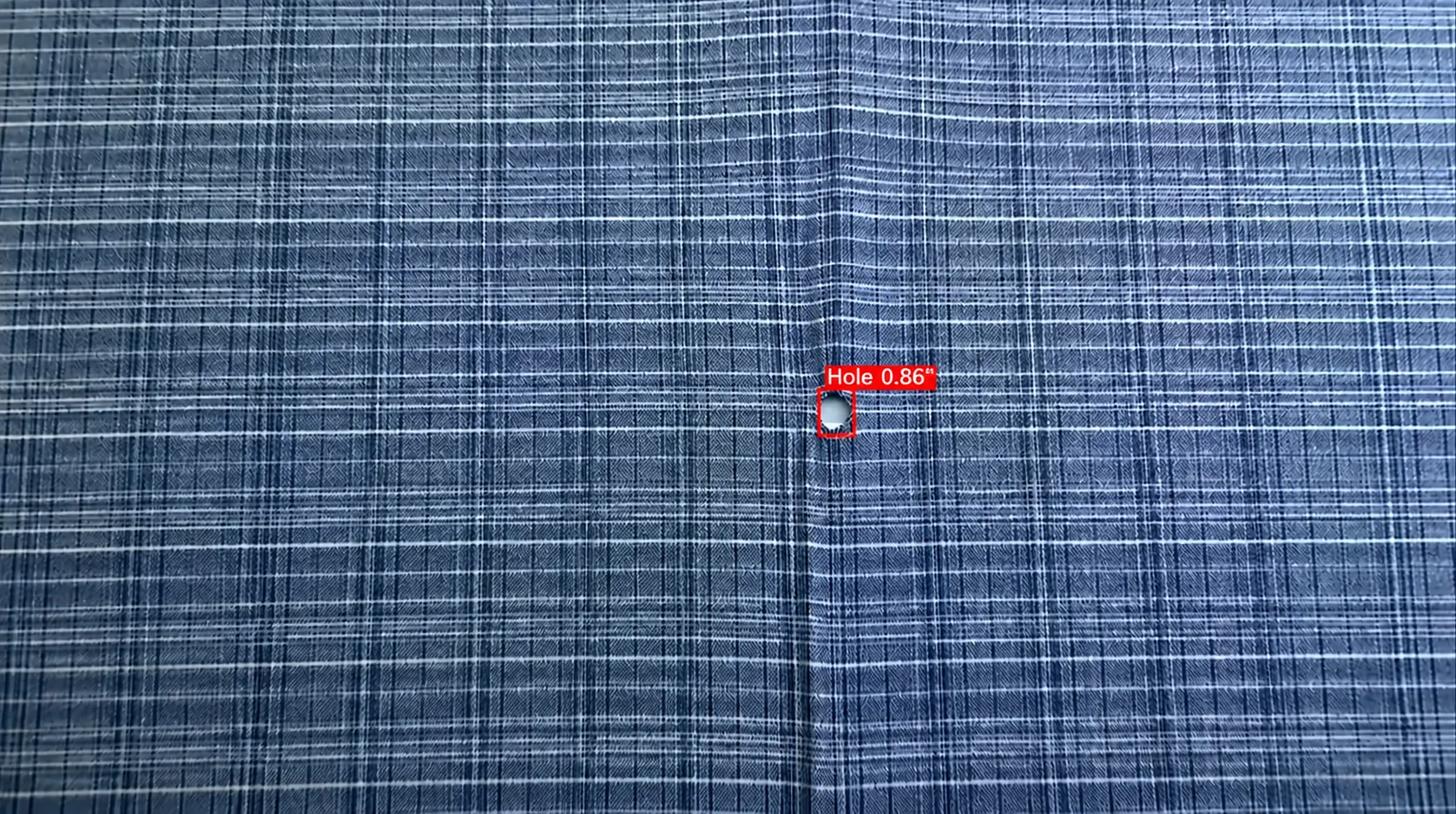
Textile fabric quality control: hole, tear and stain detection on patterned and plain fabric
An AI camera on the fabric inspection machine detects holes, tears and stains on patterned and plain fabric in real time, logging 100% of…
Frequently asked questionscameras, deployment and data privacy
All questions →What is the difference between machine vision and computer vision?
Machine vision traditionally refers to rule-based inspection systems with dedicated industrial cameras and controlled lighting. Computer vision is the broader field; in industry today it usually means deep-learning models that also work on general CCTV footage and in variable conditions.
Do we need GPUs on site?
For on-premise processing, an edge device with suitable acceleration is used. The hardware is sized to the number of cameras and analytics during discovery.
How long does a pilot take?
It depends on the use case and number of cameras. Ready-made safety analytics can be deployed quickly; custom quality inspection models need time for data collection and validation.
Can Hype Vision work with existing CCTV cameras?
In most projects, yes. Cameras or NVRs that provide RTSP or ONVIF streams can be connected regardless of brand. Each camera’s view is checked for suitability before a pilot.
Do we need to replace our cameras?
Usually not for safety and operations use cases. Some views may need repositioning or an additional camera. Visual quality inspection often needs dedicated cameras and lighting.
Can the system run on-premise?
Yes. Analysis can run on edge hardware inside your network so that video is processed locally.
Can it operate without sending video to the cloud?
Yes. In an on-premise deployment, video stays on-site; only event data and, if enabled, short evidence clips are stored for review.
Guides & resourcesfor teams putting computer vision to work
All resources →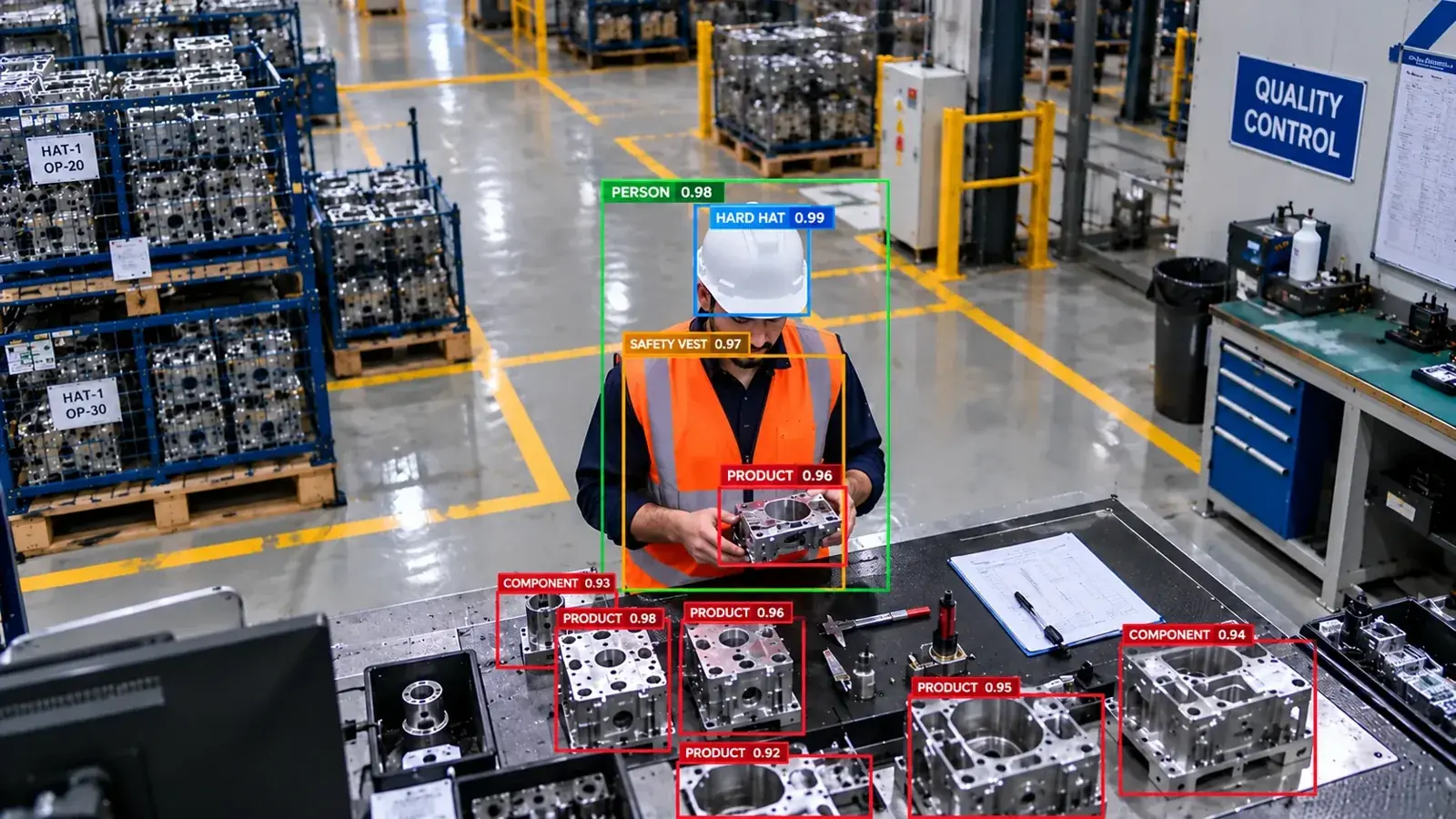
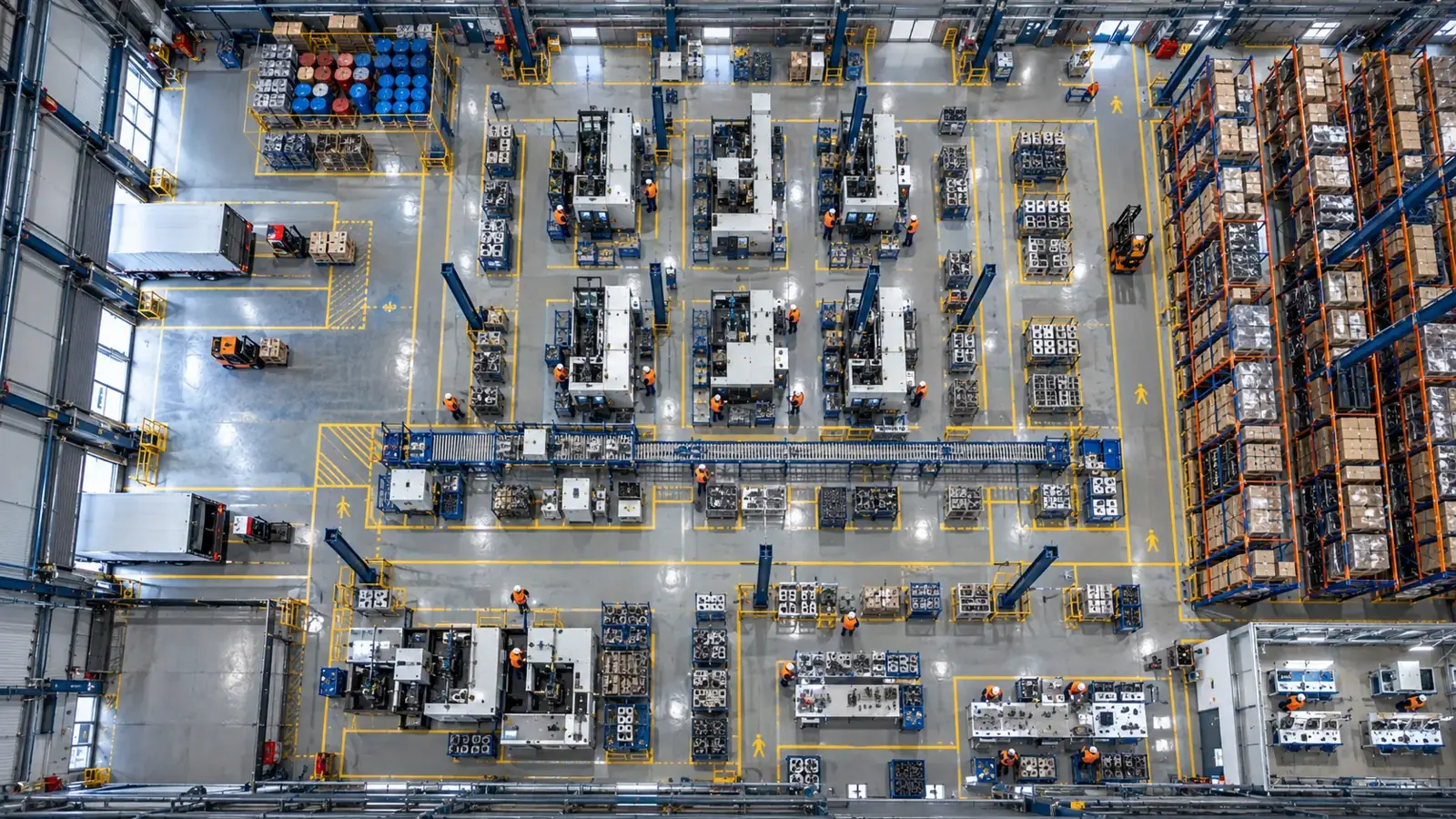
See it on your site in two weeks.One camera, one module, real data.
Contactwrite to us for a discovery call — we reply the same day
41400 Gebze / Kocaeli, Türkiye