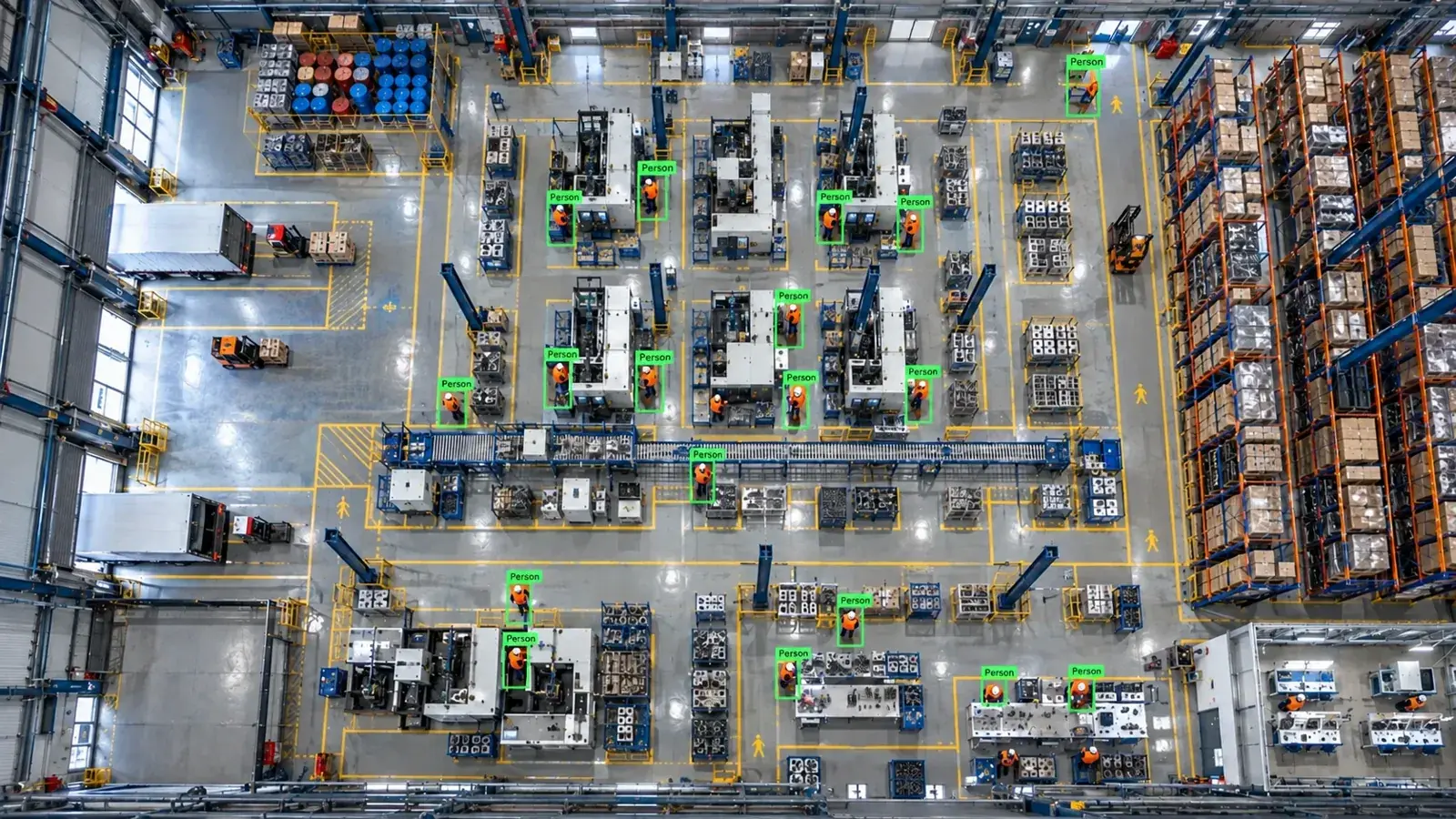
Workplace Safety with Artificial Intelligence: PPE and Hazardous Area Monitoring via CameraWorkplace safety through artificial intelligence and image processing: helmet, vest, PPE detection; restricted area, forklift-pedestrian, and fall detection. Preventive inspections under Law No. 6331.
Ways to shift OHS inspections from sample checks to 24/7 automated monitoring: which risks can be detected by cameras, how to set up installations, and what to consider?
Law No. 6331 on Occupational Health and Safety obliges employers to assess risks proactively and take preventative measures. However, site inspections mostly rely on OHS specialists’ rounds and observations. AI-powered camera systems extend inspections to every frame and shift; they issue alerts and record any violations immediately.
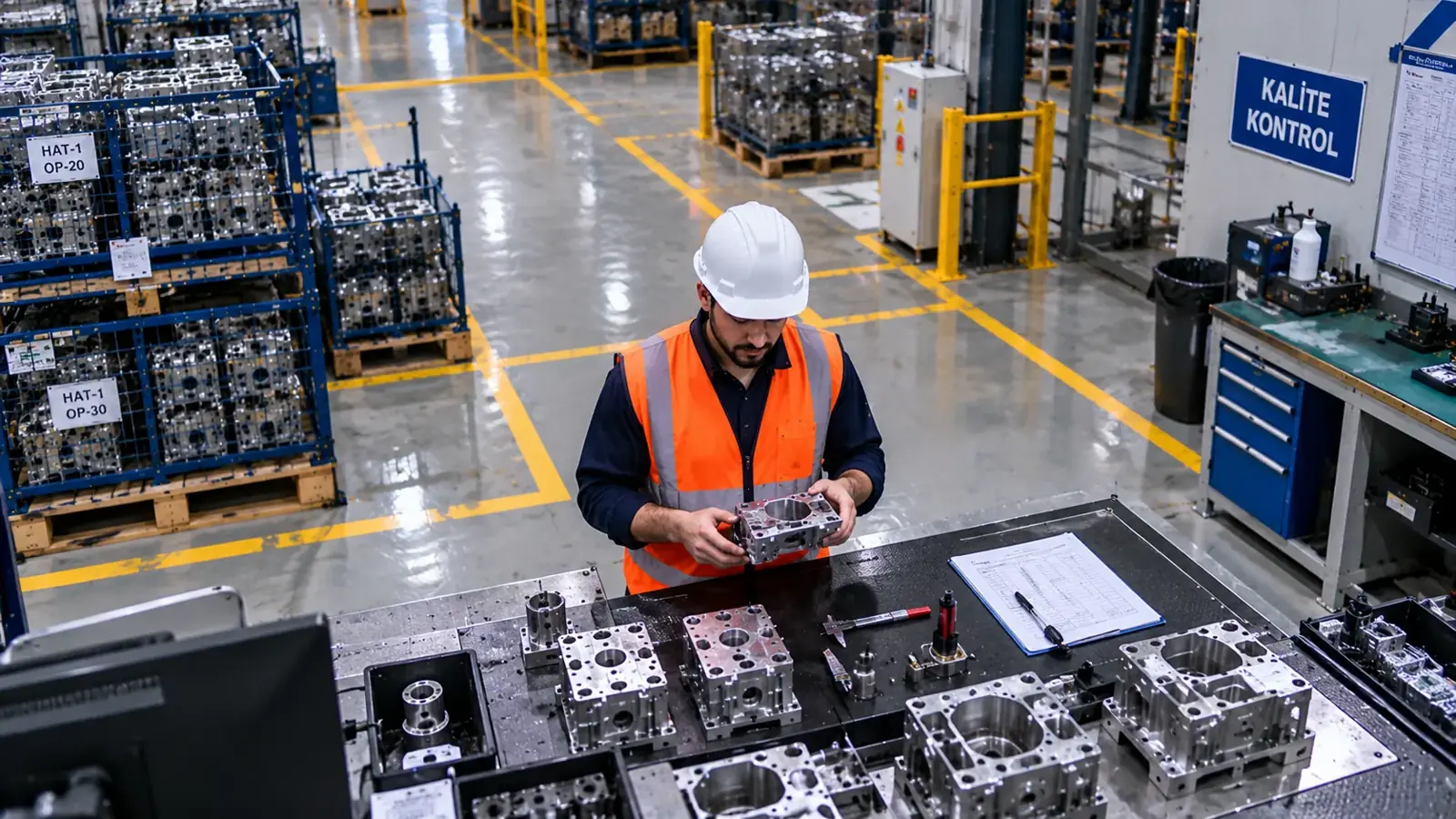
Which OHS Risks Are Detected by Camera?
| Risk | What Image Processing Does | Module |
|---|---|---|
| Helmet Missing | Detects presence/absence of helmet per person; turnstile lock | Helmet Detection |
| PPE Missing | Checks vest, glasses, gloves, mask | PPE Control |
| Restricted/Dangerous Area | Monitors entry and duration in virtual zones | Restricted Area |
| Forklift-Pedestrian Conflict | Alerts on distance and path intersection | Forklift-Pedestrian |
| Fall / Immobility | Alarm for fallen or immobile persons | Fall Detection |
How Does The System Work?
- Live video is captured from existing IP cameras via RTSP/ONVIF.
- An edge device uses a deep learning model to detect people and equipment.
- Violations are determined based on area, duration, and shift rules.
- Actions such as panel alerts, mobile notifications, sirens, flashers, or turnstile locks are triggered.
- Violations are reported with photographic evidence; trend analysis identifies training needs.
What Are the Benefits for Preventative OHS?
- Continuous monitoring: every frame is observed, including night and weekend shifts.
- Near-miss visibility: violations that do not lead to accidents are recorded, enabling data-driven risk assessment.
- Behavioural change: instant alerts ensure rules are genuinely followed.
- Reporting: trend reports by area, shift, and violation type simplify inspection and training planning.
Employee Privacy and KVKK (Turkish GDPR)
The purpose of camera analytics for OHS is to detect violations, not individuals. It is possible to operate without facial recognition, process footage on-site, and limit retention periods. For details, please refer to our factory camera analytics and KVKK guide.
Let’s plan a measured OHS pilot campaign starting with your two or three highest-risk zones.
Related solutions
Frequently asked questions
Does artificial intelligence replace the OHS specialist?
No. The system serves as the expert’s eyes and ears, automating detection and reporting. Risk assessment, training, and corrective action decisions remain with the OHS professional.
Does helmet detection work at night or in low light?
Yes, provided the camera’s night vision (IR) quality is sufficient. Night footage is tested during the discovery phase to verify accuracy.
Can turnstiles or machinery be stopped immediately upon a violation?
Yes. Scenarios for turnstile locking, sirens, and machine interlock can be configured via relay, Modbus/Ethernet-IP, or API.