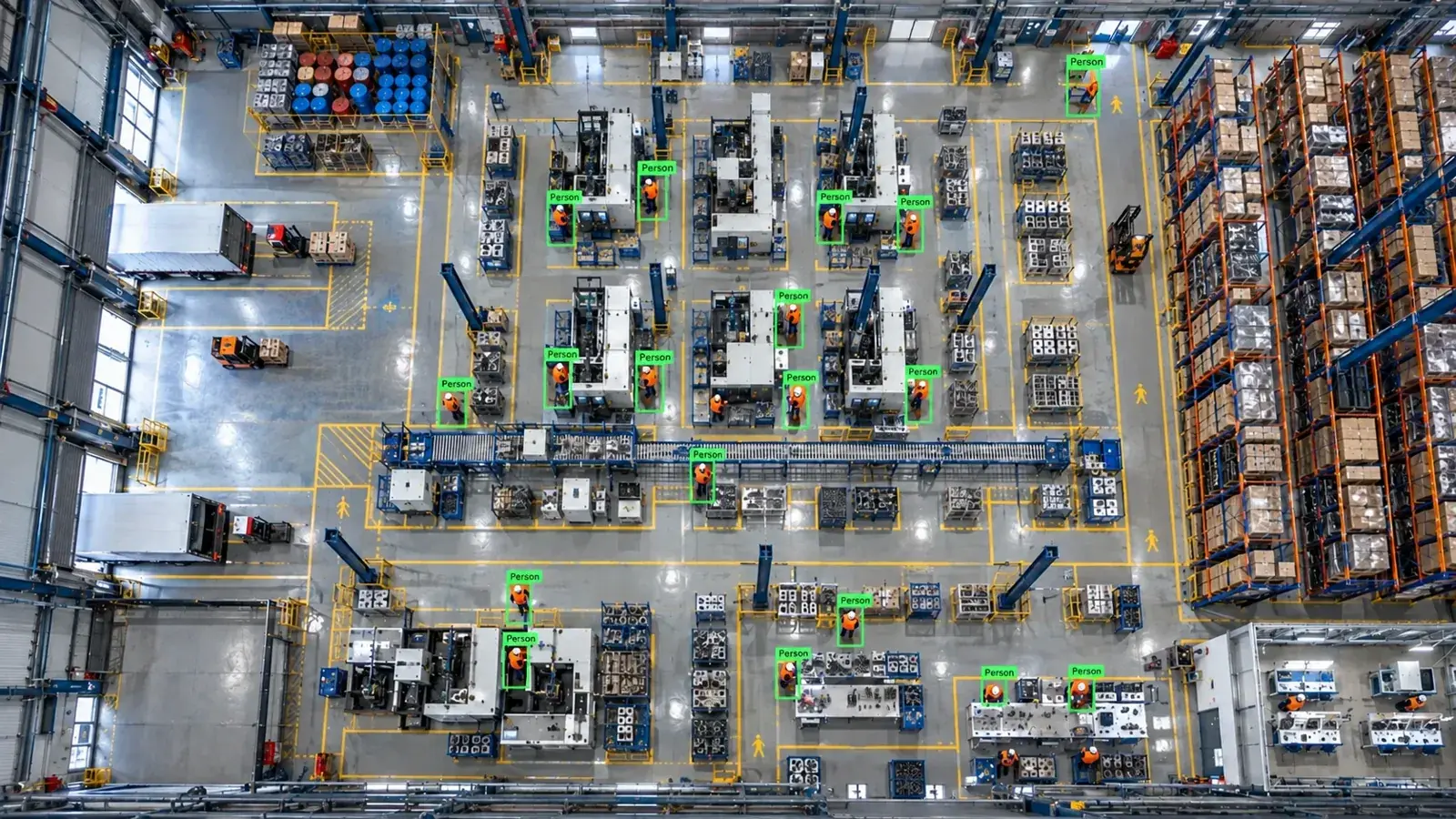
Which Camera is Required for PPE Inspection in Factories?Camera resolution, angle, distance and lighting requirements for detecting helmets, vests, gloves, and safety shoes; evaluating whether existing cameras are adequate.
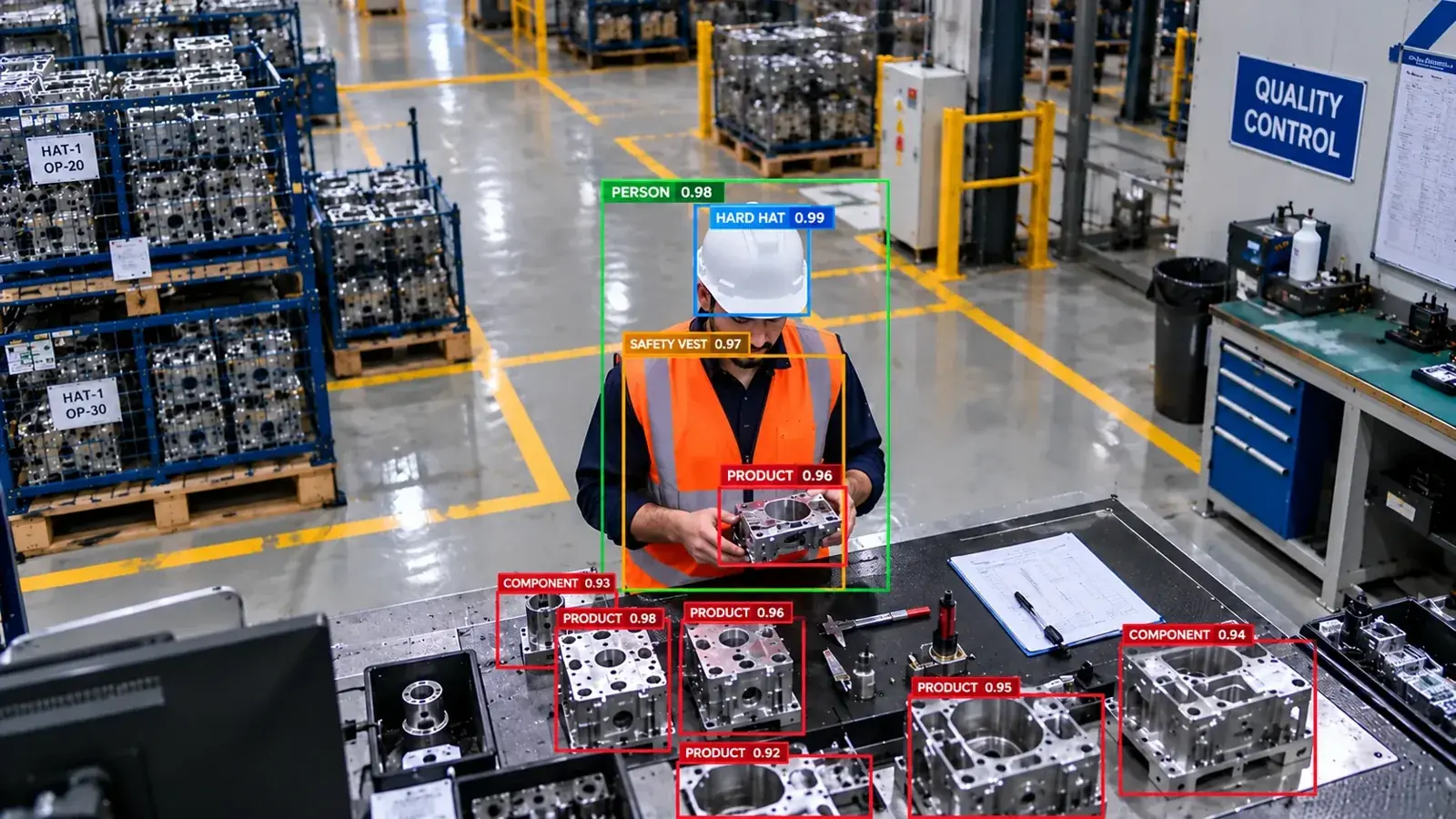
In most factories, existing 2–4 MP IP cameras are sufficient for helmet and vest detection. The person's upper torso should be clearly visible, and the camera should not be positioned directly overhead.
Which Camera is Required for PPE Inspection in Factories?
Short answer: In most factories, existing 2–4 MP IP cameras are sufficient for detecting helmets and vests. The person's upper torso must be clearly visible, and the camera should not be positioned directly overhead. For smaller equipment such as gloves and safety shoes, it is recommended to place the camera near the entrance gate and at a lower height.
Resolution and Distance
For helmets and vests, it is sufficient that the person appears approximately 80–100 pixels tall in the image. A 4 MP camera typically meets this condition up to distances of 10–15 metres.
- Helmet / vest: 2–4 MP, 10–15 m
- Gloves / shoes: 4 MP+, 3–6 m, entrance point
- Face shield / welding mask: close angle
Angle and Lighting
Cameras positioned directly overhead can see helmets clearly but vests and gloves are difficult to detect; an angle of 30–45° is ideal. Strong backlighting (from doors or windows) creates a silhouette effect, so the camera orientation should be chosen accordingly.
Are Existing Cameras Adequate?
During the survey phase, several frames are taken from each camera to assess suitability. In practice, most PPE projects start using existing security cameras without purchasing new ones. Example: area-based PPE inspection with 400 cameras.
Related solutions
Frequently asked questions
Does PPE detection work on night shifts?
Yes, if the area is sufficiently lit. Since colour information is lost in IR mode, vest detection may become challenging and this is evaluated during the survey.