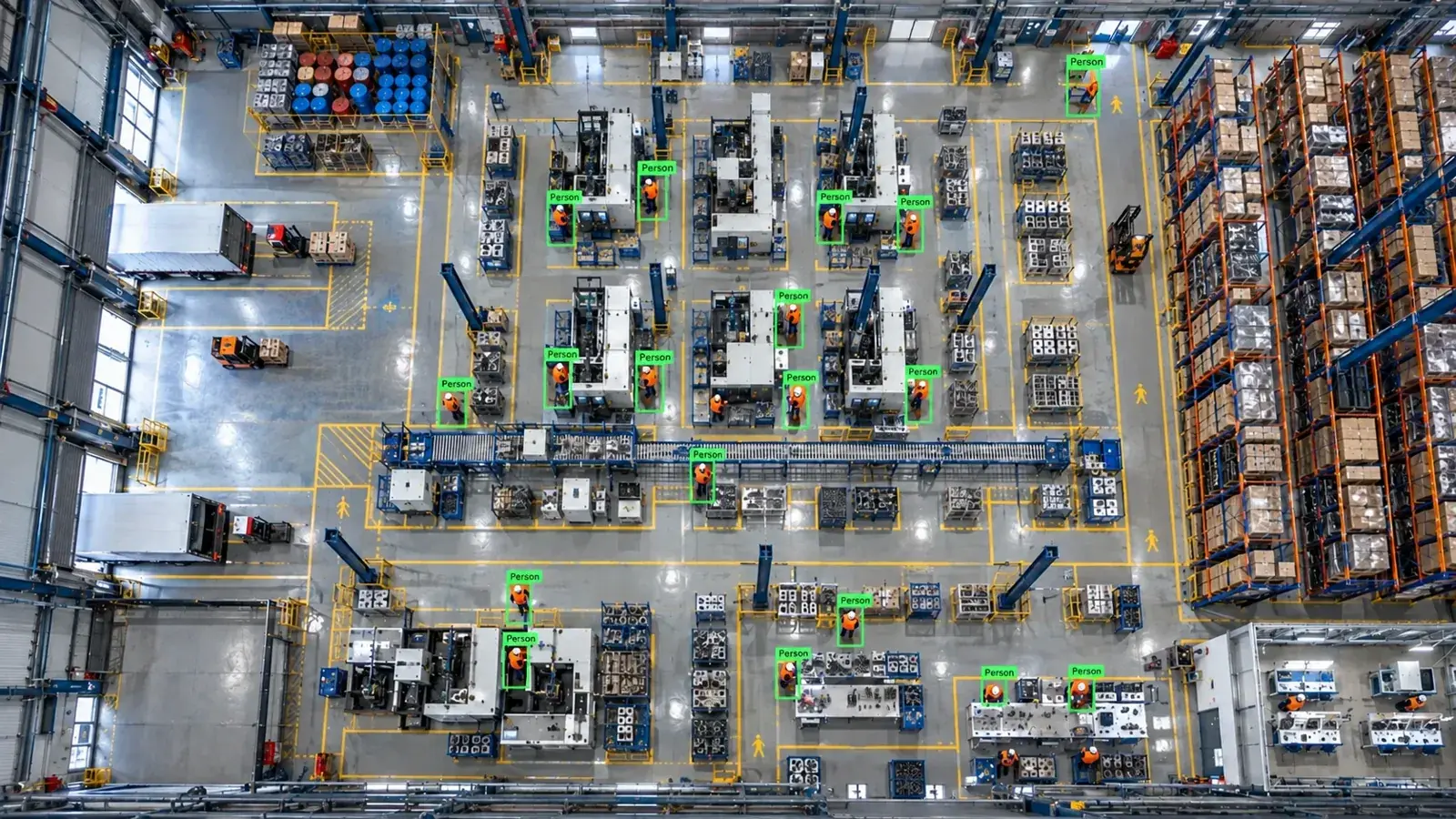
Production Quality Control with Artificial Intelligence and Hype Vision SolutionsProduction quality control processes with artificial intelligence, the advantages of image processing, and workplace safety solutions with the Hype Vision video analytics platform.
Production quality control processes with artificial intelligence, the advantages of image processing, and workplace safety solutions with the Hype Vision video analytics platform.
Quality control in production processes is a critical point for both product quality and workplace safety. Controls conducted by traditional methods are time-consuming, prone to error, and costly. Therefore, production quality control with artificial intelligence is increasingly important and is leading digital transformation in factories.
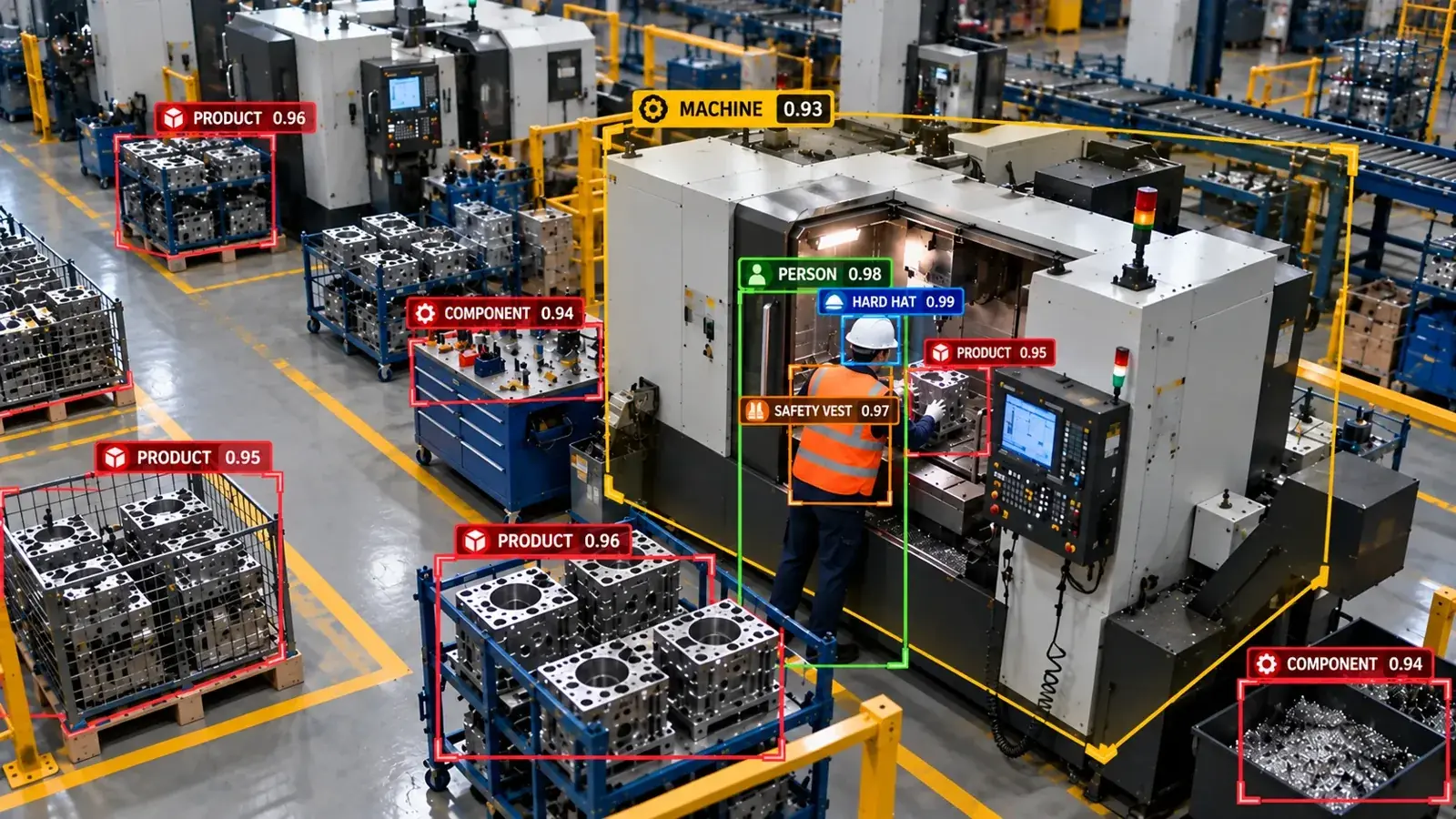
Challenges and Importance in Production Quality Control
Traditional quality control methods mostly rely on human observation. This increases the risk of error, reduces efficiency, and makes maintaining standards difficult, especially in busy production environments. In critical areas such as workplace safety, violations may lead to accidents and significant costs. For example, if risks such as the absence of personal protective equipment (PPE) or proximity of pedestrians to forklifts are not detected in advance, accidents become inevitable.
According to SGK 2023 statistics, a significant portion of workplace accidents are preventable, highlighting the necessity for technological improvements.
Concrete Example: In an automotive parts manufacturing facility, small surface defects were missed during manual quality control, resulting in defective products being sent to the customer. This error led to customer dissatisfaction and rework costs on the production line. AI-supported image processing systems can greatly reduce such errors.
Traditional Methods vs. Image Processing in Quality Control
In traditional methods, quality control is typically performed through manual measurement, observation, and inspections. These processes are labour-intensive and time-consuming. Moreover, due to the human factor, it is difficult to maintain continuous and objective control.
On the other hand, image processing techniques and AI-powered video analytics platforms provide real-time and continuous monitoring of the production line via cameras. Thus, both quality and workplace safety issues can be supervised automatically, continuously, and in compliance with standards.
Step-by-step Comparison:
- Manual Control: Operators inspect products at intervals and perform physical measurements to detect defects.
- AI-Supported Control: Camera images are analysed in real time, abnormalities are automatically detected and reported.
- Advantages: Fault detection time is shortened, human errors are reduced, continuous and objective oversight is ensured.
How Does the Hype Vision AI Video Analytics Platform Work?
Hype Vision operates using your existing IP cameras, eliminating the need for additional hardware. With RTSP and ONVIF compatibility, it ensures easy integration. The platform analyses video footage through AI algorithms to automatically detect PPE usage, pedestrian proximity to forklifts, hazardous area violations, and production quality controls.
It offers integration with ERP systems to facilitate data management and accelerate process control. During installation, key criteria such as camera angles, lighting conditions, and KVKK (Turkish GDPR) compliance are carefully considered. Detailed installation steps are tested and optimised through pilot projects to ensure efficient results on site.
Field Scenario: In a food production facility, the Hype Vision platform detected faulty packaging and labelling errors in real time. Thanks to system alerts, defective products were removed from the production line, leading to a significant reduction in customer complaints.
Installation and Key Considerations
- Camera Angles: Selecting the correct angles reduces false detections. For detailed information, please refer to our camera angle article.
- Lighting: Insufficient or excessive lighting decreases image quality and affects AI accuracy.
- KVKK Compliant Analytics: Camera analytics compliant with KVKK (Turkish GDPR) is essential for personal data protection.
- Area Coverage: Critical production and workplace safety points must be fully covered by cameras.
- Pilot Process: The system performance should be tested under field conditions through a small-scale pilot application before full installation.
How to Plan a Pilot Process?
To successfully plan a pilot process for AI-based production quality control, the following steps should be followed:
Checklist:
- Goal Setting: Define clearly which quality and workplace safety criteria will be monitored.
- Camera and Area Selection: Identify critical production points, set up existing or new cameras accordingly.
- Data Collection: Collect and analyse data from the system over a specific period.
- Performance Evaluation: Field experts verify the accuracy and consistency of AI detections.
- Improvement: Optimise camera angles, lighting, and algorithm parameters.
- General Implementation: After successful completion of the pilot, roll out across the entire production line.
- Are the target quality and safety standards defined?
- Have critical areas and cameras been identified?
- Is the data collection duration and method planned?
- Have AI detections been compared against field observations?
- Is a feedback mechanism established for improvements?
- Have results been reported and shared?
Measurable Benefits and Outcomes
AI-supported quality control applications reduce product defects, decrease scrap rates, and significantly improve workplace safety. Human error is minimised, and processes are accelerated. Video analytics platforms like Hype Vision provide these benefits cost-effectively using existing IP camera infrastructure.
Thanks to this technology, businesses can both raise quality standards and increase customer satisfaction, whilst also reducing workplace accidents and labour costs.
Common Mistakes and Recommended Solutions
Common mistakes encountered in AI-based production quality control projects and recommendations to prevent them:
- Insufficient Camera Coverage: Failing to fully monitor critical areas leads to inaccurate detections. Solution: Camera placement should be planned based on detailed field analysis.
- Lighting Issues: Poor lighting conditions reduce AI performance. Solution: Lighting should be optimized and additional illumination used if necessary.
- Data Privacy Violations: Non-compliance with KVKK rules results in legal problems. Solution: Use KVKK-compliant solutions and educate personnel.
- Inadequate Training and Awareness: Incorrect system use by operators lowers performance. Solution: Organise training programmes and provide user support.
Future Trends in AI-Based Production Quality Control
As AI technologies rapidly evolve, new trends are emerging in production quality control. These include more precise image analysis based on deep learning, multi-sensor integration, and real-time automated decision support systems.
Concrete Example: In electronic device manufacturing, AI-powered sensor fusion analyses both image and vibration data, allowing production defects to be detected at much earlier stages. This enables faulty products to be separated from the production line, resulting in substantial cost savings.
These advancements make it possible to approach zero-defect production targets while raising workplace safety standards to a higher level.
Tips for Success in AI Production Quality Control Applications
- Form a Cross-Functional Team: Collaboration between quality, IT, production, and workplace safety teams enhances application success.
- Prioritise Data Quality: Clean and accurate camera images and sensor data directly impact AI performance.
- Continuous Monitoring and Updates: AI models should be regularly updated and adapted to new production conditions.
- Staff Training: Provide regular training and support to ensure operators use the system effectively.
- Generate Performance Reports: Regular analyses should measure and report the system’s contribution to business processes.
Conclusion and Recommendations
Supporting quality control processes with artificial intelligence in production areas creates a competitive advantage in both quality and workplace safety. Hype Vision is a natural solution partner with its video analytics platform offering easy installation and high integration potential using existing IP cameras.
For more detailed information and a free preliminary camera suitability assessment, please click here.
Let’s discover the right image processing setup for your facility together during an exploratory meeting.
Related solutions
Frequently asked questions
How does AI ensure quality control?
AI analyses camera footage to instantly detect defective products, PPE violations, or hazardous conditions.
Can existing IP cameras be used?
Yes, Hype Vision works compatibly with existing IP cameras and does not require additional hardware.
How is KVKK compliance ensured?
By choosing camera analytics solutions compliant with data privacy and KVKK (Turkish GDPR) regulations.
What should be considered during installation?
Correct camera angles, appropriate lighting, and selection of areas are key factors to consider during installation.
Is ERP integration possible?
Yes, Hype Vision facilitates ERP system integration to streamline data management.