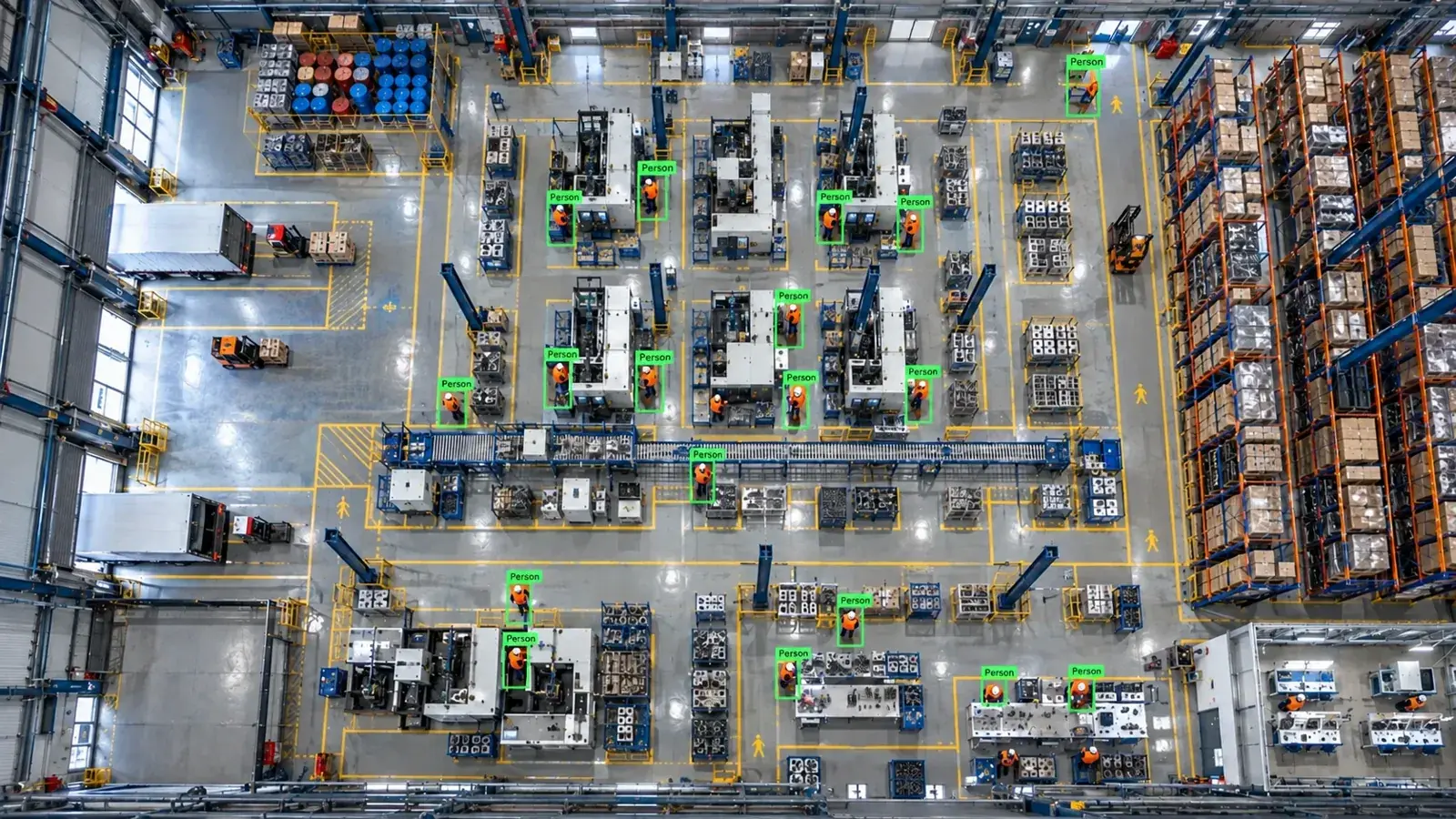
What is Image Processing? How Does It Work and Where is It Used in Industry?What is image processing and how does it work? Steps of image processing from classical algorithms to artificial intelligence, industrial applications, hardware requirements, and example projects.
We explained the fundamentals of image processing, its relationship with artificial intelligence, and real use cases ranging from quality control in factories to occupational safety—all in one article.
Image processing is the analysis of digital images from cameras or sensors by a computer to convert them into meaningful information. Cleaning noise from a photo or sorting out a scratched part on a production line within seconds are both image processing. Today, when we say “image processing,” we mostly mean AI-supported computer vision: the machine recognising, counting, measuring objects in images, and making decisions.
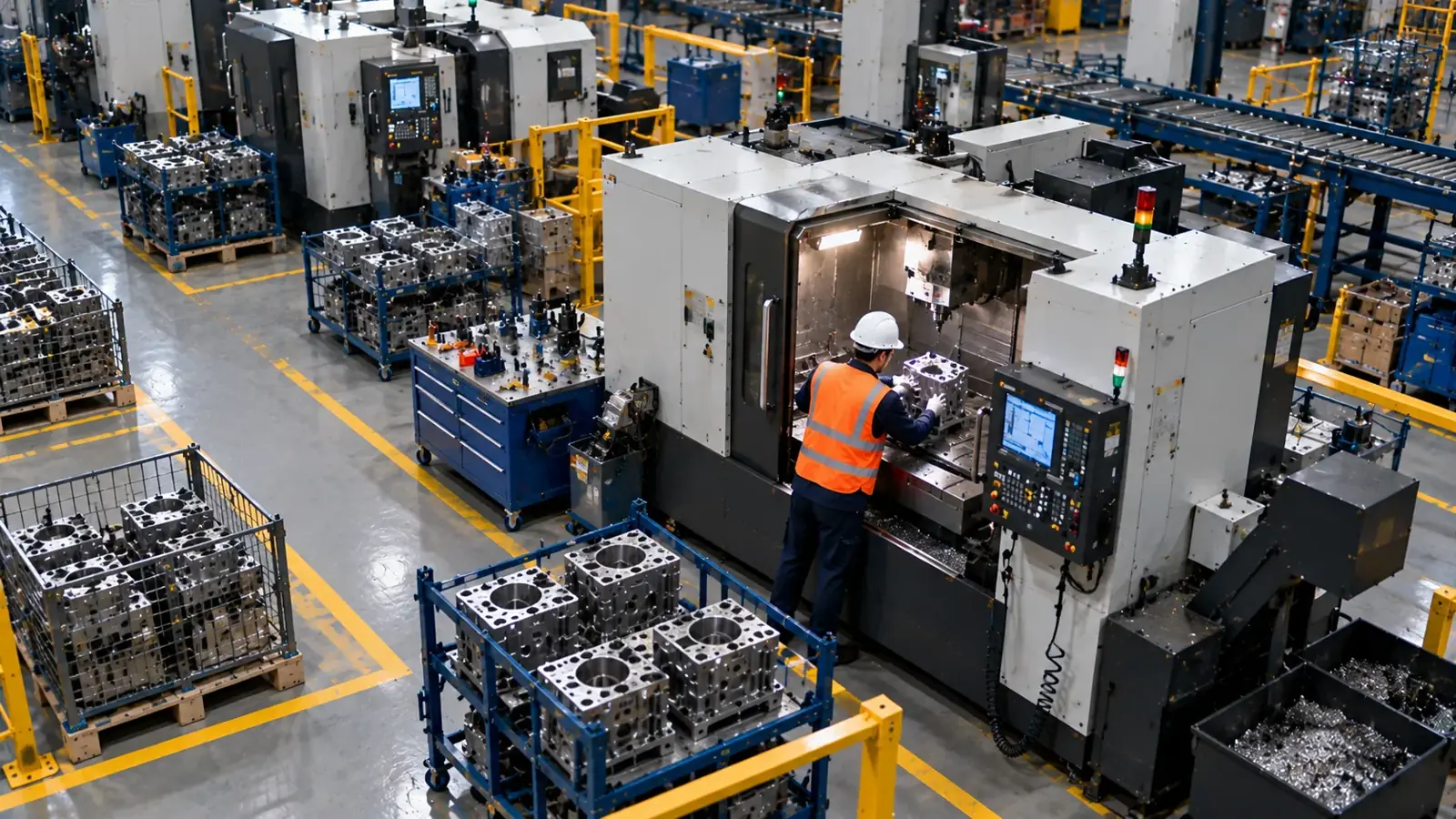
How Does Image Processing Work?
A digital image is a matrix composed of pixels, each carrying colour and brightness values. The image processing system works on this matrix step by step:
- Image acquisition: IP camera, industrial camera, or smartphone captures the image. IP cameras supporting RTSP/ONVIF are commonly used in factories.
- Preprocessing: Noise reduction, contrast enhancement, perspective correction, and resizing are performed.
- Feature extraction: Edges, colour regions, textures, or representations learned by the network in deep learning are extracted.
- Analysis and decision: Object detection (is there a helmet?), classification (is the part defective?), segmentation (what is the area of the stain?) or tracking (where is the forklift going?) are carried out.
- Action: The result is sent back to the field as an alarm, report, PLC signal, turnstile lock, or ERP record.
Difference Between Classical Image Processing and Artificial Intelligence
Classical image processing relies on rules written manually by engineers: “if the number of pixels within this colour range exceeds the threshold, count as a defect”. It is still very effective on lines with fixed lighting, fixed angles, and uniform products. However, rules break down as the environment changes.
Deep learning-based image processing learns its own rules from thousands of sample images. It can generalise despite changes in lighting, angle, clothing colour, or product variation. Therefore, it has become the standard for “rule-defying” problems such as occupational safety, human behaviour, and variable surface defects. For a detailed comparison, please see our machine vision and deep learning article.
| Criterion | Classical Image Processing | Artificial Intelligence (Deep Learning) |
|---|---|---|
| Installation Logic | Manually written rules and thresholds | Learning from labelled samples |
| Changing Environment | Sensitive, requires frequent adjustment | Robust, generalises well |
| Suitable Tasks | Measurement, barcode, fixed-position inspection | Defect detection, human/PPE, behaviour, counting |
| Hardware | Industrial camera + controlled lighting | Existing IP cameras + edge GPU/NPU |
Industrial Applications of Image Processing
1. Quality Control and Defect Detection
Scratches, stains, cracks, missing assemblies, incorrect labels or colour deviations are detected at production speed. Defective products are separated before reaching the customer, reducing scrap rates and return costs. See quality control with image processing and surface defect detection.
2. Occupational Health and Safety (OHS)
Deficiencies in PPE such as helmets, vests, goggles, and gloves; entry into restricted areas, forklift-pedestrian proximity, and fall incidents are monitored 24/7. Every frame is checked in the field where human supervision is only sampled. See helmet detection system, PPE control, forklift-pedestrian safety.
3. Productivity and OEE
Line stops, cycle times, station occupancy, and idle times are automatically measured from the camera to provide real-time dashboards instead of end-of-shift Excel sheets. See OEE tracking system and workforce productivity analysis.
4. Logistics, Counting and Traceability
Counting pallets, boxes, vehicles; ramp occupancy and shipment verification are performed. Counting data is transferred to WMS/ERP systems via API. See warehouse and logistics safety.
What Hardware is Required for Image Processing?
For many applications, buying new cameras is unnecessary. Existing IP cameras at the facility (mostly 1080p, 15–25 FPS) are sufficient for OHS and productivity analysis. For quality control stations searching for micron-level defects, industrial cameras and controlled lighting may be required. Analysis can be performed on an edge device within the facility (without sending images outside) or in the cloud. Details: Are existing IP cameras sufficient for artificial intelligence?
How Does an Image Processing Project Progress?
Let’s discover together in the initial meeting which problem image processing can solve in your facility.
- Discovery: Problem, target metric and camera positions are determined together.
- Data and model: Sample images are collected from the field; a pre-trained model is calibrated or a custom model is trained.
- Pilot: A few weeks of trial measurements are carried out on 1–2 lines or areas.
- Deployment: Alarm rules, reports, and ERP/MES integration extend the solution to the entire facility.
Related solutions
Frequently asked questions
Is image processing the same as artificial intelligence?
No. Image processing is the general term for extracting information from images; artificial intelligence (particularly deep learning) is the most powerful current method of doing this. Classical, rule-based image processing is still used.
Which programming language is used for image processing?
The most common language is Python, using libraries like OpenCV, PyTorch, and TensorFlow. For real-time industrial systems, C++ and optimized inference engines are also used for performance.
Is buying new cameras necessary to set up an image processing system?
For most OHS and productivity applications, it is not; existing IP cameras supporting RTSP/ONVIF are sufficient. Industrial cameras may be recommended at quality stations searching for very small defects.
What is the accuracy of industrial image processing systems?
It depends on the application and field conditions. Hype Vision reports accuracy between 96% and 98.6% for helmet detection after on-site calibration; exact values are determined with pilot measurements.