
Cold Storage Monitoring with AI Cameras for Safer Freezer WarehousesEnhance cold storage safety with AI-powered monitoring on existing security cameras. Detect hazards, PPE compliance, and forklift activity in freezer warehouses.
Cold storage facilities face unique safety and operational risks due to low temperatures, hazardous materials, and forklift traffic. Monitoring these environments effectively is critical for safety managers and plant operators.
Hype Vision’s AI solution adds advanced analytics to your existing IP/CCTV cameras using RTSP/ONVIF, providing real-time insights on-site through the Hype-Model family. This improves cold chain safety without new hardware.
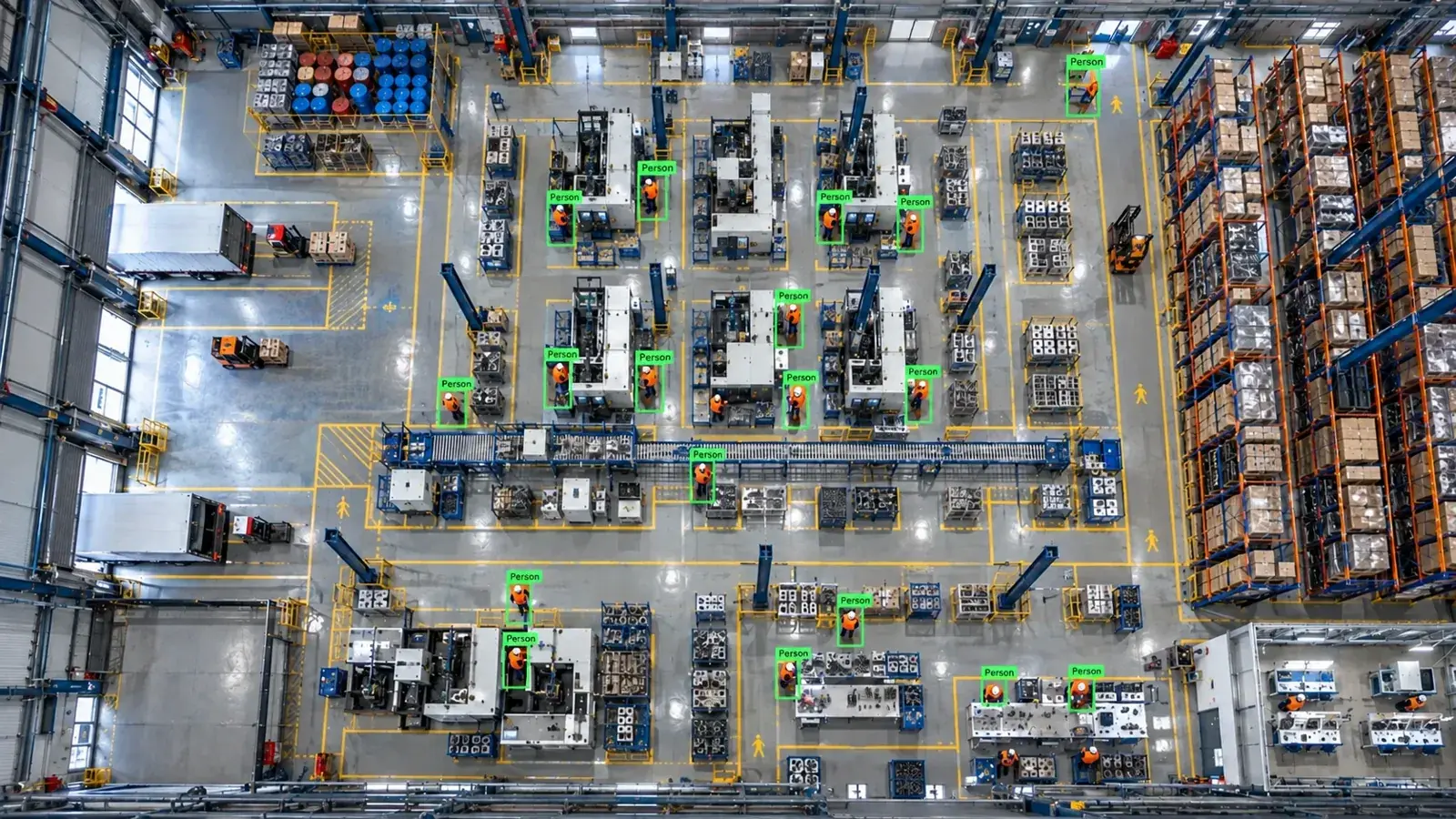
Hype Vision leverages AI on your existing cold storage cameras to detect safety risks, PPE compliance, and forklift activity on-premise via RTSP/ONVIF streams—helping US facilities meet safety goals efficiently.
Understanding Cold Storage Monitoring Challenges
Cold storage and freezer warehouses have unique monitoring challenges including freezing temperatures, dim lighting, condensation, and active forklifts. Human supervision alone often misses critical hazards like improper PPE use, pallet stacking risks, or blocked emergency exits.
Facilities need continuous, reliable observation to identify unsafe behavior, environmental anomalies, and equipment faults without exposing sensitive footage offsite.
- Low visibility and cold conditions can reduce camera image quality
- Dynamic forklift and personnel activity increases risk of accidents
- Compliance with general OSHA/ANSI safety standards requires monitoring PPE and safety zone adherence
- Manual surveillance is costly and prone to errors
How AI Enhances Cold Storage Safety Using Existing Cameras
Hype Vision applies AI models from its Hype-Model family directly to streams from your facility’s existing RTSP/ONVIF-compatible IP or CCTV cameras, installed onsite without cloud dependencies. This on-premise setup ensures data privacy and low latency.
The AI analyzes video in real time for object detection, pose estimation, and optical character recognition (OCR). It identifies forklifts, personnel, PPE compliance, open doors, and blocked aisles, issuing alerts directly to dashboards, SMS/WhatsApp, or plant control systems.
- Leverages existing camera infrastructure—no new cameras required
- Works alongside most commercial camera brands supporting RTSP/ONVIF streaming protocols
- Runs on local servers or edge devices to protect sensitive footage
- Delivers actionable alerts instantly to enhance safety response
What Cold Storage Conditions and Events Can AI Detect?
The Hype-Model AI suite can identify key cold storage safety and operational events:
Proper PPE such as gloves, helmets, and high-visibility vests on workers
Forklift presence and unsafe behaviors like excessive speed or unauthorized zone entry
Obstructions in aisles and emergency exit blockages
Open or improperly closed freezer doors risking temperature loss
Unattended pallets or precarious stacking that may cause hazards
- Object detection of forklifts and handheld tools
- Pose analysis for PPE compliance and worker activity
- OCR for reading access badges or safety signage
- Zone intrusion alarms and safety fence breaches
Camera Requirements and Placement for Effective Monitoring
To maximize AI accuracy, cameras should have clear views of key activity zones with minimal obstructions. High-definition IP cameras with good low-light or infrared capabilities improve detection performance in dim freezer conditions.
Ensure cameras stream via RTSP or ONVIF protocols to enable integration with Hype Vision AI software. Cloud-only or proprietary camera platforms with limited stream access may not support all features.
Recommended placements include receiving docks, aisle intersections, freezer exits, forklift routes, and PPE check stations.
- Use IP/CCTV cameras supporting RTSP or ONVIF for seamless connection
- Position cameras to cover forklift lanes and work zones clearly
- Maintain camera lenses free from condensation or frost build-up
- Add supplementary lighting or infrared if needed for night/dark areas
Limitations and Practical Considerations
While AI greatly enhances cold storage safety monitoring, certain constraints exist. Extremely low temperatures or heavy frost on lenses can degrade image quality. AI accuracy depends on camera angles and lighting conditions.
Some cloud-managed or brand-locked cameras limit access to full RTSP/ONVIF streams, reducing analytic detail. Also, very crowded or cluttered areas may impact detection precision.
AI complements but does not replace human safety supervision or compliance audits. It provides continuous, scalable assistance to identify patterns and risks early.
- Possible reduced accuracy due to poor visibility or extreme weather effects
- Dependence on RTSP/ONVIF stream availability from existing cameras
- AI alerts require operator verification to prevent false positives
- Not a substitute for detailed OSHA/ANSI compliance and manual checks
Starting a Cold Storage AI Monitoring Pilot
Implementing Hype Vision’s AI monitoring typically begins with a 2-4 week pilot project. This short-term deployment helps assess AI performance in your cold storage environment before broader adoption.
The pilot involves connecting your existing RTSP/ONVIF cameras to the on-premise Hype Vision analytics platform. After initial setup and calibration, your safety and operations teams receive real-time alerts via dashboard, SMS/WhatsApp, or integration with your PLC or ERP/MES systems.
Pilot steps include site evaluation, camera compatibility check, system installation, training sessions, tuning AI models to your workflows, and final assessment of alert effectiveness.
- Evaluate current camera infrastructure and improvement needs
- Deploy Hype Vision AI software on-premise using existing cameras
- Configure alerts and reporting tools for your safety team
- Review pilot outcomes, adjust parameters, and plan full rollout
Cold Storage AI Monitoring vs. Traditional Surveillance
Comparing AI-enabled monitoring with traditional human oversight shows clear benefits in scalability and real-time responsiveness. The table below highlights key differences.
| Aspect | Traditional Surveillance | AI-Powered Monitoring with Hype Vision |
|---|---|---|
| Coverage | Limited to human attention span and screen count | Continuous video analysis of all RTSP/ONVIF streams |
| Alerting | Manual observation and reactive response | Automated real-time alerts via dashboard, SMS, and systems |
| Data Privacy | Depends on on-site storage; footage often reviewed manually | On-premise AI processing; no cloud upload required |
| Compliance Support | Subjective and periodic inspections | Objective detection of PPE, zone violations, and hazards |
| Cost | High staffing and training expenses | Lower ongoing cost leveraging existing cameras |
| Scalability | Scaling requires more personnel | Scaling achieved by adding compute resources |
This page answers: cold storage monitoring · cold storage safety ai · freezer warehouse analytics · cold chain camera ai
Frequently asked questions
Can Hype Vision AI work with any existing cold storage security camera?
Hype Vision AI connects to existing IP or CCTV security cameras that support RTSP or ONVIF streaming protocols. Some cloud-managed or proprietary cameras may restrict stream access, which could limit functionality.
What kinds of safety incidents can the AI detect in cold storage environments?
The AI detects forklift activity, PPE compliance, blocked emergency exits, open freezer doors, and unsafe stacking or obstruction risks, helping prevent accidents and maintain safety standards.
Is the AI software cloud-based or on-premise?
Hype Vision runs entirely on-premise at your facility, ensuring privacy by processing video streams locally without cloud upload.
How do I begin a pilot project for cold storage AI monitoring?
Start with a 2-4 week pilot by evaluating your camera infrastructure, deploying on-premise Hype Vision AI software, configuring alerts, and training your safety team to review real-time notifications.
Does this AI system replace manual safety inspections required by OSHA?
No, it complements manual safety inspections by providing continuous monitoring and early alerts. This overview is general information and not legal advice regarding compliance with OSHA or ANSI standards.
What are typical limitations of AI in freezer warehouse monitoring?
Limitations include reduced accuracy in very low light or frost-covered lenses, dependency on camera stream availability, and the need for human review of AI alerts to confirm incidents.
What can AI detect in your factory?
Let's review together which safety, quality and production analytics your existing security cameras can deliver.
- Free 15-minute technical call
- Camera infrastructure pre-assessment
- Feasible AI scenarios