
Hard Hat Detection at Mining Sites: AI-Driven Safety AutomationDiscover how AI-enabled camera systems automate hard hat detection at mining sites. Explore Hype Vision's solutions, installation steps, and key features.
Workplace safety is paramount in high-risk environments like mining and quarries. Proper use of hard hats is critical, but continuous and accurate compliance monitoring can be challenging on site.
Hype Vision integrates AI-powered image processing technologies with existing camera systems to ensure automated hard hat detection at mining sites, enabling effective and consistent safety standard enforcement.
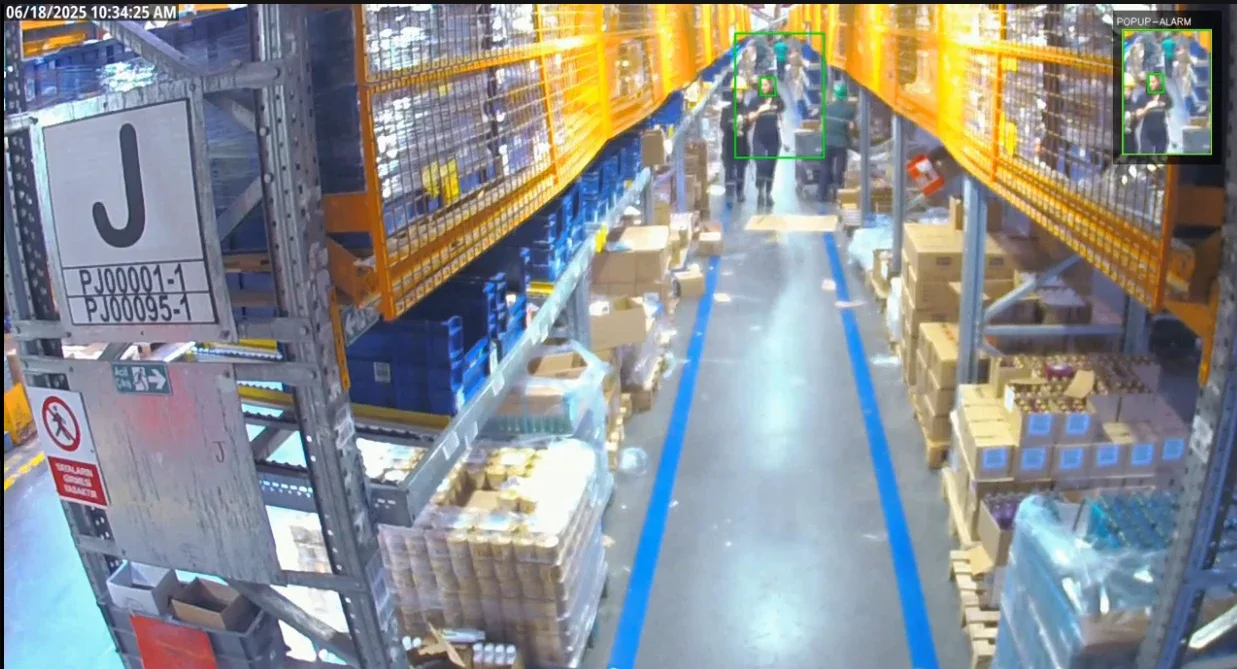
Hard hat detection in mining environments can be automated using camera and AI technologies. Hype Vision delivers highly accurate detection with brand-independent RTSP/ONVIF-compatible cameras and its 'Hype-Model' algorithms.
The Challenge and Importance of Hard Hat Detection in Mining Sites
Hard hats are essential personal protective equipment in mining and quarry operations to reduce workplace accidents. However, harsh field conditions, busy operations, and human factors often impede full compliance monitoring, increasing safety risks and posing significant challenges for employers.
Detecting hard hat usage is crucial to verify workers’ adherence to safety protocols and promptly identify violations. Automated detection systems reduce human error and help sustain a strong safety culture.
Traditional Inspection Methods and Their Limitations
Hard hat compliance is typically monitored manually by safety personnel on mining sites. These inspections are time-consuming, prone to errors, and do not provide continuous coverage across the entire site.
While basic CCTV recordings may be used in some areas, they lack real-time automated detection capabilities. Traditional systems also have limited capacity to issue alerts during safety breaches.
- Manual checks are time-intensive and can miss violations.
- Continuous monitoring is difficult in fast-paced environments.
- Conventional cameras provide insufficient data for analysis.
- Real-time alerts and reporting are usually unavailable.
How Hard Hat Detection Works with Cameras and Artificial Intelligence
Analyses utilize existing IP or CCTV cameras compatible with RTSP/ONVIF standards. Hype Vision integrates these cameras regardless of brand.
The 'Hype-Model' family of AI algorithms detects hard hats on individuals’ heads in video streams and triggers alarms when missing. This AI module employs object detection and classification techniques.
The system is optimized for varying lighting conditions and angles typical to mining sites, providing real-time analysis.
- Connect existing IP/CCTV cameras via RTSP/ONVIF protocols.
- AI discriminates hard hat presence or absence on heads.
- Real-time alarms and reporting mechanisms are active.
- Individuals not wearing hard hats are promptly flagged.
Camera, Lens, and Lighting Requirements
Durable cameras rated IP65 or higher for dust, moisture, and impact resistance are recommended in mining environments. Resolution of 2MP or greater is advised to clearly recognize hard hats.
Lens choice depends on site size and monitoring distance. Wide-angle lenses cover large areas, while telephoto lenses capture detailed images from afar.
Proper and balanced lighting is crucial for AI detection accuracy. Industrial lighting solutions may be deployed to minimize shadows and dark spots.
- Use IP/CCTV cameras with at least 2MP resolution.
- Select appropriate lenses based on working distance (wide-angle or telephoto).
- Apply IP65 or better protection for dust, moisture, and shocks.
- Ensure steady, shadow-free industrial lighting.
Installation Steps and Integration Process
Installation begins with site analysis to identify monitoring points and optimal camera placements.
Existing IP/CCTV cameras are connected via RTSP or ONVIF protocols. Hype Vision software processes the video and initiates AI analysis.
Alert scenarios are configured through various channels such as WhatsApp/SMS notifications, panel pop-ups, PLC relays, or ERP/MES system integrations.
A pilot phase lasting 2 to 4 weeks assesses system accuracy, detection consistency, and operational benefits.
- Conduct site survey and determine camera positions.
- Integrate existing cameras using RTSP/ONVIF protocols.
- Deploy 'Hype-Model' AI module.
- Set up alerting and reporting integrations.
- Complete a 2–4 week pilot testing period.
Applicability Limits and Considerations
AI-based hard hat detection can be less effective under obstructed views, extremely low light, or heavy dust conditions commonly found in mining environments.
Image quality and adequate lighting are critical for accurate detection. Cameras must be angled to capture hard hats clearly.
As AI operates within predefined rules and model parameters, it may produce detection errors in unforeseen scenarios. Continuous optimization and adaptation to field conditions are necessary.
- Detection is challenged in very dark or dusty areas.
- Poor lighting or improper camera angle may cause false detections.
- AI models may produce errors with unknown or novel conditions.
- Regular maintenance and model updates are recommended.
Hard Hat Detection Pilot Project with Hype Vision
Powered by its industrial image processing platform developed in Gebze Informatics Valley, Hype Vision delivers tailored solutions fit for mining site conditions. Rapid integration leverages existing camera infrastructure.
During the 2–4 week pilot, real-time hard hat detection facilitates easier intervention and reporting by safety teams. Modules process data anonymously to comply with personal data protection regulations.
Integration with multi-channel alerts including panel notifications, SMS/WhatsApp, ERP/MES, and PLCs enhances operational responsiveness.
- Rapid site integration leveraging existing infrastructure.
- Real-time AI-based hard hat detection.
- Multiple alarm and notification mechanisms.
- Anonymous and personal data regulation-compliant processing.
- 2–4 week pilot phase enabling operational evaluation.
This page answers: hard hat detection mining site · hard hat detection system mining · AI-based hard hat detection mining · how to detect hard hats with camera mining · hard hat detection automation mining site · hard hat detection software mining · hard hat detection solution mining · companies providing hard hat detection mining · hard hat detection cost mining site · hard hat detection in production facilities mining
Frequently asked questions
What type of camera is suitable for hard hat detection at mining sites?
IP/CCTV cameras rated IP65 or higher for dust, moisture, and impact resistance, with a minimum resolution of 2MP and RTSP/ONVIF compatibility, are recommended. Lens and lighting choices depend on site distance and conditions, using wide-angle or telephoto lenses as appropriate.
How is the hard hat detection system integrated?
Existing cameras connect to the Hype Vision platform via RTSP or ONVIF protocols. The AI module analyzes live feeds for hard hat detection, while alarm and reporting modules integrate with operational systems for real-time notifications.
What types of errors can occur in AI-based hard hat detection?
Poor lighting, incorrect camera angles, or heavy dust can hinder detection accuracy. Additionally, since the AI works within predefined rules, it may produce false detections when encountering unexpected conditions.
What is the duration of the pilot application and its benefits?
The pilot typically lasts 2 to 4 weeks during which the system is tested under actual site conditions to measure accuracy. This period allows evaluation of real-time detection, alarm functions, and integration benefits.
How is the cost of hard hat detection at mining sites determined?
Costs vary based on existing infrastructure, number of cameras, site size, and integration requirements. Hype Vision conducts project-specific analyses to propose suitable solutions and pricing.
What can AI detect in your factory?
Let's review together which safety, quality and production analytics your existing security cameras can deliver.
- Free 15-minute technical call
- Camera infrastructure pre-assessment
- Feasible AI scenarios