
AI-Powered Camera Solutions for Metal Surface Scratch DetectionAutomatically detect metal surface scratches with AI and camera technology. Explore pilot steps with Hype Vision's advanced industrial vision solutions.
Scratches on metal surfaces not only reduce product quality but also increase costs and customer dissatisfaction on production lines. AI-driven metal scratch detection systems effectively address this issue, enabling fast and accurate quality control.
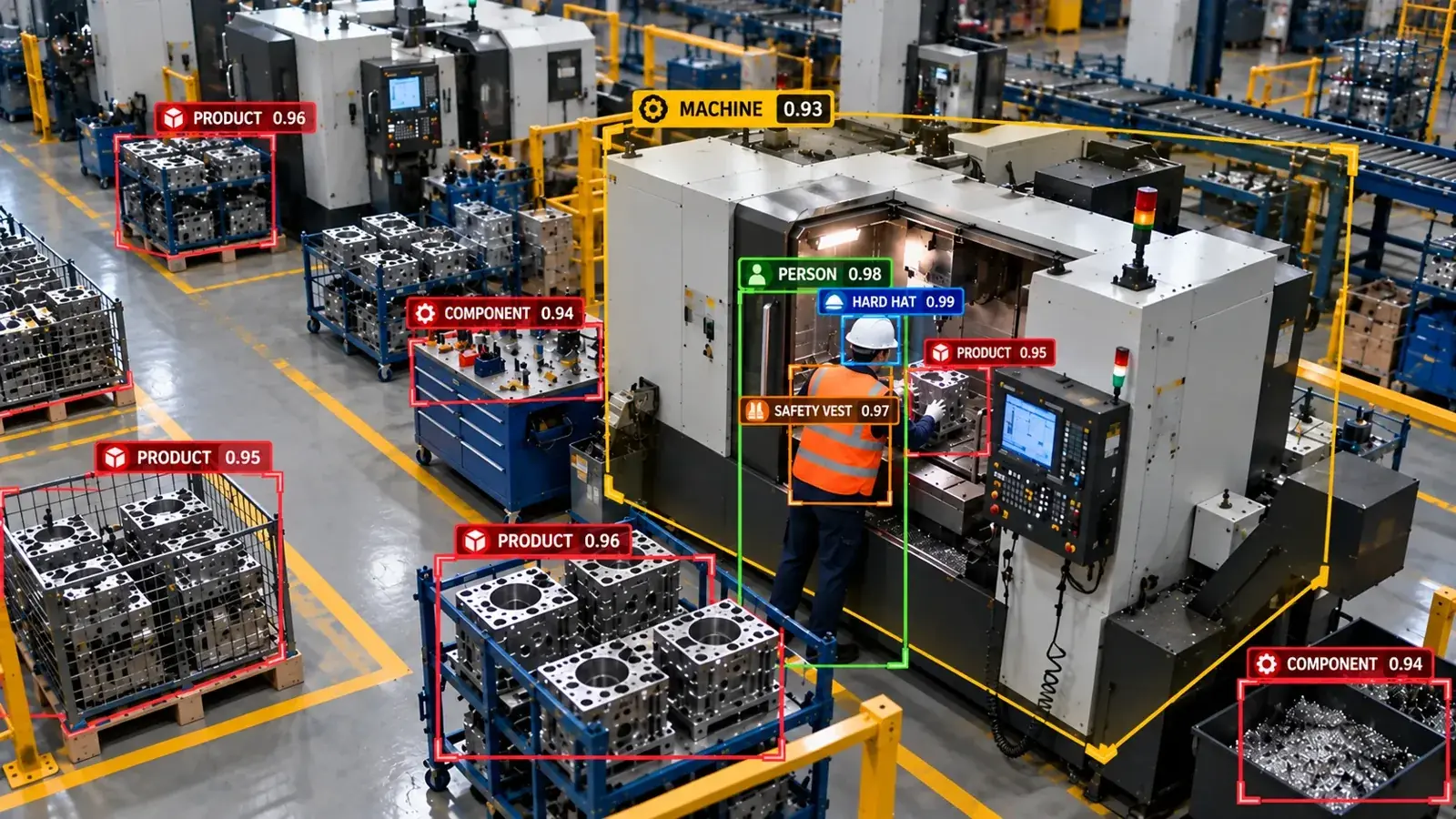
Metal surface scratch detection is performed automatically, quickly, and accurately using AI-based camera systems. Hype Vision’s industrial image processing platform supports this process on-premise and brand-independently.
Metal Surface Scratch Detection and Its Importance
In the metalworking industry, surface quality is critical for the functionality and aesthetics of the final product. Scratches can compromise mechanical durability and lead to unmet customer expectations.
Manual quality inspections are often slow, subjective, and unreliable. Therefore, automated solutions are essential to increase production efficiency and elevate quality standards.
Traditional Inspection Methods and Limitations
Traditional methods rely on operators visually inspecting surfaces or using basic optical devices. These approaches are prone to human error and often lack sufficient precision at high production speeds.
Fatigue and decreased attention during inspections can result in overlooked surface defects. Lack of automation causes production delays and higher costs.
How Is Metal Surface Scratch Detection Performed Using Cameras and AI?
Industrial cameras connect to existing IP or CCTV infrastructure via RTSP/ONVIF protocols. Hype Vision’s 'Hype-Model' family detects scratches with high accuracy through advanced object detection and classification.
Our AI model utilizes deep learning techniques to detect, classify, and prioritize scratches of various types and sizes. Operating on-premise within a closed system ensures data privacy.
- Real-time analytics powered by artificial intelligence
- Detailed reporting on scratch shape, size, and location
- Alarm integration (WhatsApp, SMS, VMS popup, PLC, ERP)
- High-speed processing compatible with production rates
Camera, Lens, and Lighting Requirements
High-resolution industrial cameras are preferred for metal surface scratch detection. Camera selection depends on surface type, scratch size, and production line speed.
Lens choice is important for field of view and image clarity, typically involving macro lenses or lenses with suitable focal lengths.
Lighting is critical due to metal’s reflective properties. Special LED or industrial lighting systems provide uniform illumination without shadows or reflections, highlighting scratches effectively.
Installation Steps and System Integration
Installation of a metal surface scratch detection system generally involves a 2–4 week pilot phase. The main steps include:
First, optimal camera and lighting positions are identified on the production line. Next, the Hype Vision platform is integrated with the existing camera infrastructure regardless of brand.
AI models are optimized with real production data. Then, alarm and reporting functionalities are configured. Lastly, integration with ERP, MES, and PLC systems is completed.
Continuous performance monitoring supports the system, with model updates applied as needed.
- Review of surface and production process for analysis
- Selection and installation of camera and lighting equipment
- Adaptation and training of AI model on site
- Setup of alarm and data integration
- Evaluation of pilot application and transition to full system
Applicability Limits of Metal Surface Scratch Detection Systems
AI-based scratch detection systems deliver high accuracy depending on surface type and scratch characteristics, but may face challenges with very fine or highly complex surfaces.
Environmental factors such as extreme glossiness, matte finishes, or surface contamination can impact detection performance. Proper lighting and maintenance are therefore crucial.
Efficient operation requires process-specific analysis and optimization. Consequently, pilot implementation is a vital step to assess real-world conditions.
Pilot Application for Metal Surface Scratch Detection with Hype Vision
Hype Vision offers a brand-independent AI platform compatible with existing RTSP and ONVIF camera infrastructures.
Specialized object detection models from the Hype-Model family have been developed for scratch detection in metalworking facilities. On-premise deployment ensures data security, with most modules compliant with local privacy regulations.
During the pilot, recommendations for camera, lens, and lighting tailored to facility resources are provided, and scratch detection is performed in targeted areas. Real-time quality control is enabled via alarm and reporting options.
This page answers: metal surface scratch detection · metal surface scratch detection system · ai for metal scratch detection · how to detect metal surface scratches with camera · metal surface scratch detection automation · metal scratch detection software · metal surface scratch detection solution · companies providing metal scratch detection · metal surface scratch detection cost · implementing metal scratch detection in production
Frequently asked questions
How is metal surface scratch detection performed using cameras?
Metal surfaces are captured with high-resolution industrial cameras and appropriate lenses. Our AI models analyze images to detect and report scratches accurately.
What advantages does metal surface scratch detection automation provide?
Automation enables fast, objective, and continuous quality control, reducing human errors, accommodating production speeds, and offering cost-efficient improvements.
How does the installation and integration process proceed?
It starts with field and requirement analysis, followed by installing suitable cameras, lighting, and software integration with the Hype Vision platform. Full integration begins after a pilot phase.
What type of lighting is used for metal surface scratch detection?
Special LED or industrial lighting that minimizes reflections and shadows is used. Proper illumination is critical for clear scratch detection.
How is the cost of metal surface scratch detection determined?
Cost depends on the number of cameras, hardware requirements, integration scope, and AI model optimization, varying according to project scale.
What can AI detect in your factory?
Let's review together which safety, quality and production analytics your existing security cameras can deliver.
- Free 15-minute technical call
- Camera infrastructure pre-assessment
- Feasible AI scenarios