
Restricted Area and Machine-Guarding Monitoring with AI for SafetyImprove facility safety with AI-powered restricted area and machine guarding using existing cameras, on-premise Hype-Model detection, and real-time alerts.
Ensuring safety in restricted zones and around hazardous machinery is crucial in industrial environments. AI-driven monitoring leverages existing IP/CCTV cameras to enhance detection and response without costly hardware upgrades.
Hype Vision’s AI solution uses on-premise Hype-Model analytics to monitor exclusion zones, detect unsafe behaviors or intrusions, and deliver instant alerts to safety managers, helping maintain OSHA and ANSI guideline compliance.
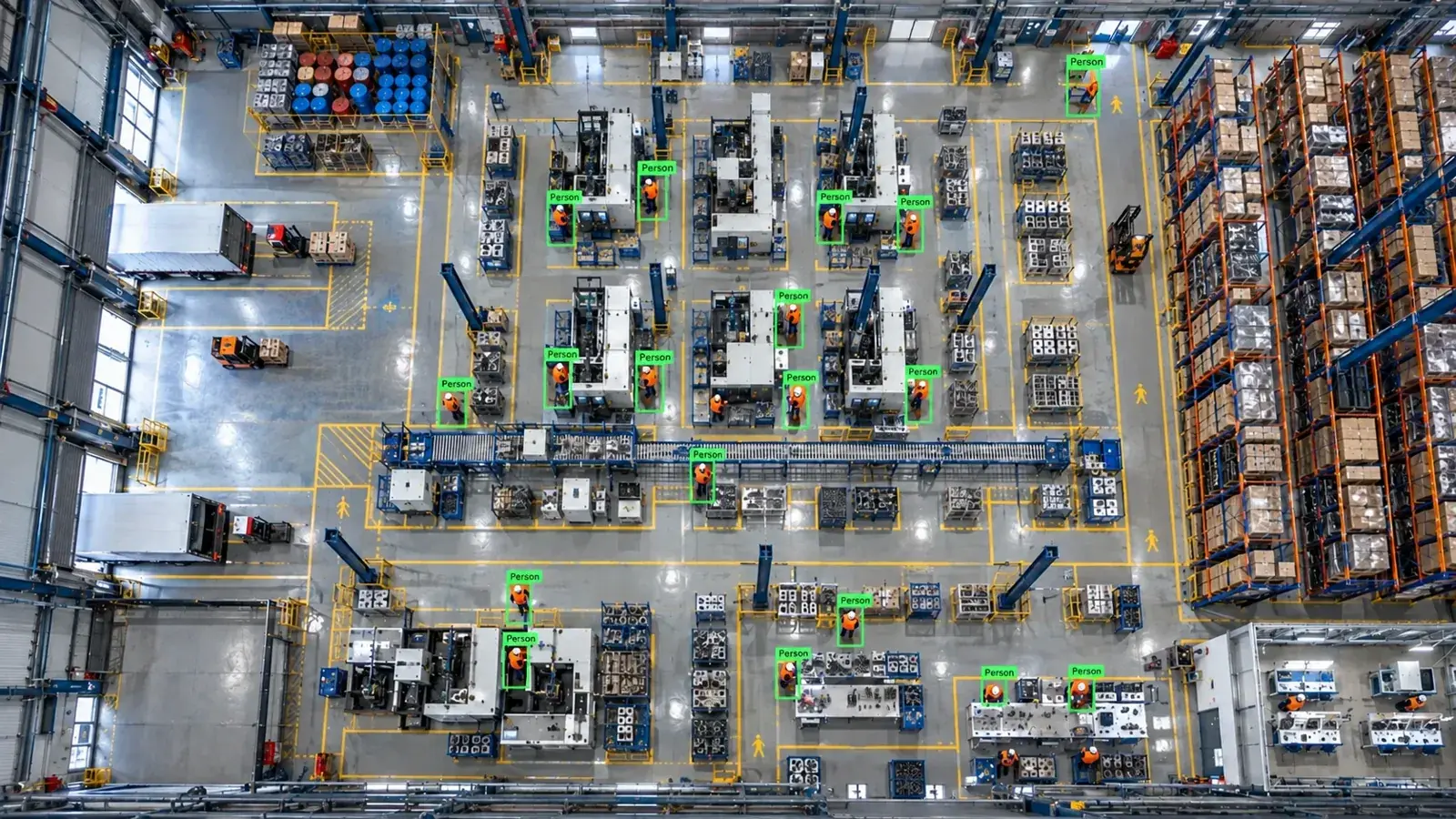
AI technology on existing security cameras identifies intrusions and unsafe activities in restricted and machine-guarded areas. Hype Vision’s on-premise Hype-Model provides real-time, privacy-friendly alerts to keep your facility safe and compliant.
The Challenge of Restricted Area and Machine-Guarding Safety
Industrial facilities, warehouses, and plants face ongoing risks related to unauthorized entry into restricted zones or unsafe proximity to machinery. These incidents can cause serious injuries, operational downtime, and regulatory concerns.
Traditional security cameras alone don’t provide active monitoring or real-time alerts to prevent incidents. Manual surveillance can be resource-intensive and prone to human error.
Adhering to OSHA and ANSI safety guidelines requires effective exclusion zone monitoring and reliable detection of PPE compliance, intrusion, and unsafe behaviors.
How AI Enhances Safety Using Existing Security Cameras
Hype Vision’s AI solution integrates with your current IP or CCTV cameras using widely supported RTSP or ONVIF streaming protocols. This brand-agnostic approach avoids costly hardware replacements while adding powerful analytics on-premise.
The Hype-Model family applies advanced computer vision techniques to detect objects, classify personnel, recognize poses, and perform OCR for badge or sign reading. It actively monitors restricted and danger zones for unauthorized presence or unsafe actions.
Running the AI on-site improves privacy, lowers latency, and ensures reliability even without internet connectivity. Alerts are configurable and can be delivered via dashboard, SMS/WhatsApp, VMS popups, PLC/relay triggers, ERP/MES integration, or REST APIs.
- Uses existing RTSP/ONVIF cameras — no new hardware needed
- On-premise processing preserves privacy and lowers delays
- Detects unauthorized entry, safety gear violations, dangerous proximity
- Multiple alert options fit operational workflows
What the AI Detects in Restricted and Machine-Guarded Areas
Hype-Model detects various conditions critical to safety monitoring:
Exclusion zone intrusion: Identifies unauthorized personnel entering restricted or hazardous areas.
PPE detection: Recognizes whether workers wear required safety equipment (helmets, vests).
Unsafe poses or behaviors: Detects improper posture, falls, or unsafe equipment handling.
Machine danger zone proximity: Flags people or objects dangerously close to active machinery, conveyors, or forklifts.
Sign and label reading: OCR checks for visible safety signage or error codes.
Camera and Placement Considerations for Effective Monitoring
Successful AI monitoring requires proper camera setup focused on targeted zones:
Position cameras to fully cover restricted and machine-guarding areas with minimal blind spots.
Ideal placement includes elevated angles with clear, unobstructed views of exclusion zones and machinery.
Ensure consistent lighting or use infrared-capable cameras for low-light conditions.
Select IP/CCTV cameras compatible with standard RTSP or ONVIF streaming protocols; some cloud or closed platforms offer limited RTSP access which may restrict AI integration.
High resolution and frame rates improve detection accuracy but balance with on-premise processing capacity.
- Elevated, clear line-of-sight to exclusion zones
- Consistent lighting or IR support for day/night use
- Standard RTSP/ONVIF camera compatibility
- Coverage of all monitored danger points
Limits and Challenges of AI-Based Restricted Area Monitoring
While AI-based monitoring offers substantial benefits, be aware of constraints:
Detection accuracy is influenced by camera quality, placement, and environmental conditions such as dust, fog, or glare.
Some closed-brand cameras or cloud video platforms restrict full RTSP access needed for analytics.
Complex factory layouts or overlapping zones may require multiple cameras or tailored detection zones.
AI detects visual cues but cannot replace all human judgment or engineering controls; it should complement existing safety programs.
False positives and negatives may occur and should be managed through initial pilot tuning.
Starting a Pilot: Step-by-Step Approach
A typical Hype Vision pilot spans 2-4 weeks and involves:
1. Assessment: Review your existing camera infrastructure, safety priorities, and alert needs.
2. Setup: Connect AI software to selected cameras by RTSP or ONVIF, and configure detection zones with Hype-Model.
3. Calibration: Fine-tune detection parameters using onsite footage for your restricted areas or machinery.
4. Integration: Set up alert channels suited to your operations, such as VMS popups or messaging apps.
5. Evaluation: Measure performance, assess false alerts, and gather user feedback.
6. Scale-up: Plan broader rollout and integration into your safety management workflows.
- Review cameras and safety needs
- Connect AI to cameras via RTSP/ONVIF
- Configure and calibrate detection zones
- Choose alert methods (dashboard, SMS, VMS, etc.)
- Evaluate pilot results and refine
- Implement at full scale
General Compliance and Legal Notes
This information serves as a general guide and is not legal advice on OSHA or ANSI compliance.
Facilities should consult with safety professionals and regulators to align AI monitoring with applicable standards and workplace safety requirements.
This page answers: restricted area detection · machine guarding ai · exclusion zone monitoring · danger zone intrusion camera
Frequently asked questions
Can AI monitoring detect when workers are missing required PPE in restricted areas?
Yes. Hype-Model’s computer vision can identify whether personnel in monitored zones are wearing essential PPE like helmets and safety vests, enabling timely alerts for safety compliance.
Do I need to install new cameras to use Hype Vision’s AI?
No. Our solution works with your existing IP or CCTV cameras that support RTSP or ONVIF streaming protocols, avoiding costly hardware upgrades.
How does on-premise AI protect my facility’s privacy?
Processing all video data locally onsite means no footage is sent to the cloud, reducing security risks and addressing privacy concerns while ensuring low-latency alerts.
What types of alerts can I receive from the AI monitoring system?
Alerts can be delivered in various ways including dashboard notifications, SMS or WhatsApp messages, VMS popups, PLC/relay signals for automated controls, ERP/MES system integration, and REST API connections.
Are there environmental conditions that limit AI detection accuracy?
Adverse conditions like poor lighting, dust, glare, or obstructed views can impact detection performance. Proper camera placement and lighting help mitigate these limitations.
How do I start a pilot to test AI restricted area monitoring?
Start by identifying cameras covering your restricted or machine-guarding zones, connect them to the Hype Vision AI using RTSP/ONVIF, configure detection areas with the Hype-Model, and run a 2-4 week pilot to evaluate system effectiveness and alerts.
What can AI detect in your factory?
Let's review together which safety, quality and production analytics your existing security cameras can deliver.
- Free 15-minute technical call
- Camera infrastructure pre-assessment
- Feasible AI scenarios