
Slip, Trip and Fall Detection with AI Cameras for US FacilitiesImprove worker safety using AI-powered slip, trip, and fall detection on your existing security cameras via RTSP/ONVIF. Start with a low-cost pilot.
Slip, trip, and fall incidents are a leading cause of workplace injuries in US industrial and warehouse environments. Detecting these events promptly can reduce injury severity and improve response times.
Hype Vision’s AI-powered slip, trip, and fall detection runs on your facility’s existing IP/CCTV cameras via RTSP/ONVIF, using our on-premise Hype-Model technology to detect and alert about worker falls without compromising privacy.
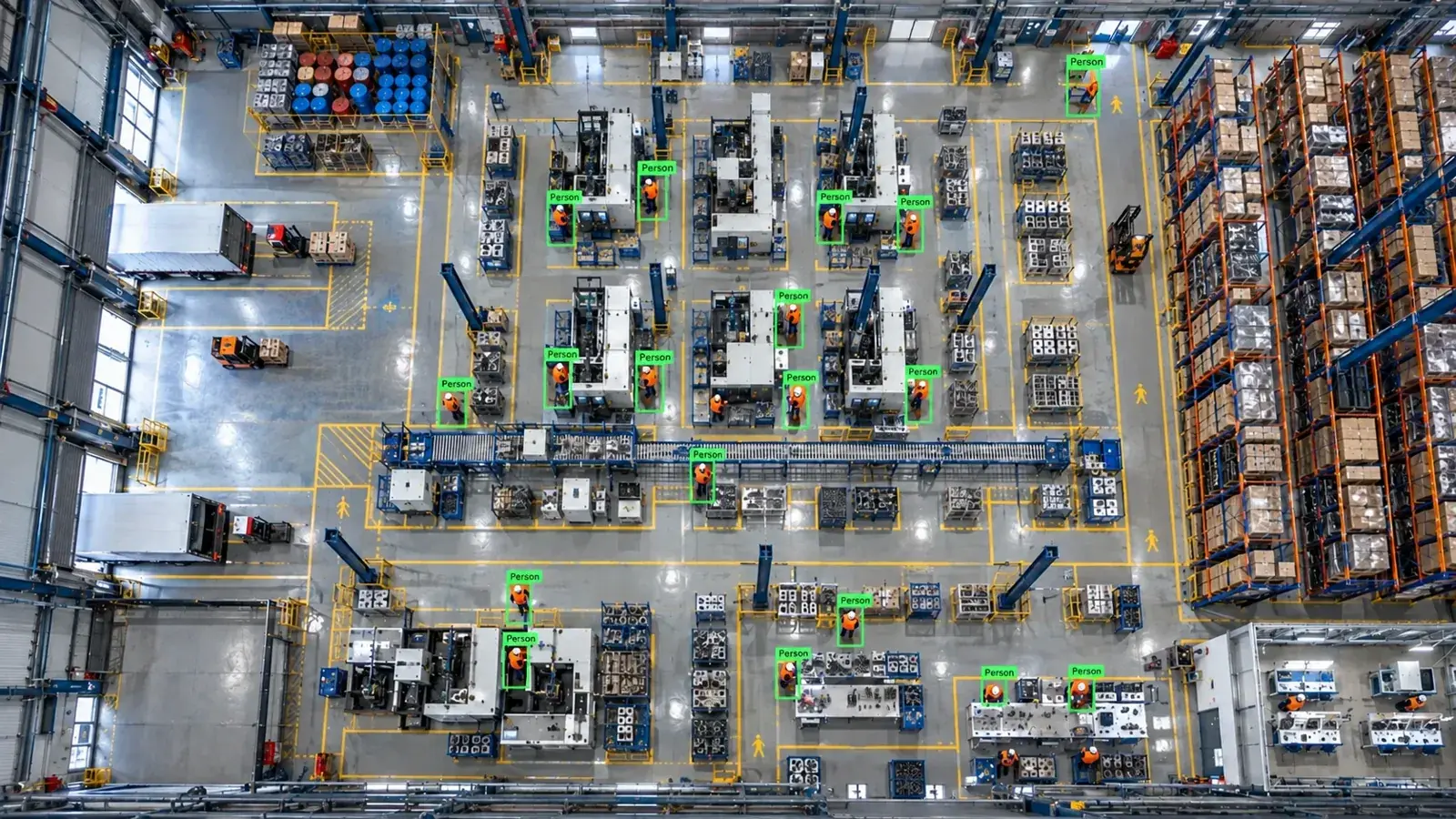
Hype Vision enhances your existing CCTV cameras with on-site AI that detects slip, trip, and fall events in real time, helping US safety managers respond faster to incidents. It works with standard RTSP/ONVIF cameras, requires proper placement, and starts with a 2-4 week pilot to validate results.
Understanding the Slip, Trip and Fall Challenge
Slip, trip, and fall events present major risks in manufacturing plants, warehouses, and industrial facilities, often resulting in injuries to workers, lost productivity, and increased safety compliance costs. These incidents may be caused by wet or uneven floors, misplaced objects, poor lighting, or distraction.
Traditional safety programs rely heavily on employee awareness, inspections, and manual incident reporting, which can delay injury assistance and make it harder to identify hazardous conditions proactively.
- Falls account for a large portion of workplace injuries and lost workdays.
- Prompt detection can reduce injury severity through faster response and aid in root cause analysis.
- Preventing falls requires identifying risk factors and alerting personnel immediately.
How AI Cameras Detect Slip, Trip and Fall Events
Hype Vision leverages AI models from the Hype-Model family to analyze video streams from your existing IP or CCTV cameras over RTSP or ONVIF protocols. Our on-premise system processes live video locally, removing the need to stream data to the cloud, preserving privacy and network bandwidth.
The AI detects motion patterns, object classifications, and worker poses typical of fall events or slip and trip incidents. When a potential fall or person down scenario is identified, alerts are generated immediately on dashboards or integrated systems.
- Uses existing cameras—no need to install new hardware if coverage is sufficient.
- Runs anonymized, privacy-friendly AI on-premise for real-time analysis.
- Supports alerts via dashboards, SMS/WhatsApp, VMS popups, PLC/relay triggers, or integration with ERP/MES and REST APIs.
Detection Capabilities: What You Can Expect
The Hype Vision slip, trip, and fall detection AI focuses on identifying:
• Workers who have slipped, lost balance, or fallen to the ground.
• Abnormal poses such as lying prone or sitting suddenly on the floor.
• Situations where assistance may be needed immediately, potentially before a serious injury is reported.
- Person down detection even with some occlusion or partial visibility.
- Distinguishes between normal activities like bending vs. a fall.
- Detection accuracy depends on camera resolution, angle, and lighting.
Camera and Placement Requirements for Reliable Detection
Effective fall detection depends heavily on camera quality and positioning. Typical considerations include:
• Existing IP/CCTV cameras must support RTSP or ONVIF streaming for seamless integration with Hype Vision AI.
• Cameras should cover high-risk zones such as staircases, aisles, loading docks, wet floor areas, and entrances.
• Placement that provides clear, unobstructed views of worker movement—with overhead or angled views preferred to minimize occlusion.
• Consistent lighting conditions improve AI model performance; very dark or overly bright environments can reduce accuracy.
- Camera resolution of at least 1080p recommended for best detection.
- Fixed cameras preferred over PTZ for consistent monitoring zones.
- Avoid heavy reflections, glare, or occlusions like shelving that block views.
Limitations and Practical Considerations
While AI-powered slip, trip and fall detection greatly enhances safety monitoring, understanding limitations helps set realistic expectations:
• Not all falls can be detected if completely out of camera view or heavily occluded.
• Environmental factors like poor lighting or camera shake affect accuracy.
• Detection is advisory and should complement, not replace, traditional safety measures and employee training.
• Some cloud-based or closed camera platforms restrict RTSP/ONVIF access, requiring verification before deployment.
- AI may produce false alerts, which can be tuned during pilot phase.
- Wearable detection solutions may enhance or complement video AI.
- On-premise setup ensures data privacy but requires onsite hardware resources.
Starting a Slip, Trip and Fall Detection Pilot with Hype Vision
A typical Hype Vision pilot lasts 2-4 weeks and includes the following steps:
1. Site assessment and selection of existing cameras with suitable RTSP/ONVIF streams in high-risk areas.
2. On-premise installation of Hype Vision AI software on local hardware or edge devices.
3. Configuration and tuning of the Hype-Model to detect falls and slips tailored to the facility layout.
4. Monitoring of alerts and iterative improvement based on onsite feedback.
5. Evaluation of alert accuracy, system integration, and operational impact.
Following a successful pilot, you can scale the AI system to other facility zones or integrate alerts with existing safety and ERP systems.
- No new cameras needed if existing ones meet technical criteria.
- Pilot designed to minimize disruption and demonstrate value quickly.
- Local processing means low latency, full data control, and compliance.
Compliance and Safety Standards Context
Slip, trip, and fall detection technology can support workplace safety programs aligned with OSHA and ANSI guidelines by providing timely incident awareness and enabling proactive hazard identification.
This page provides general information only and does not constitute legal advice. Facilities should consult professional safety and legal advisors to ensure compliance with all applicable regulations and standards.
This page answers: fall detection ai camera · slip trip fall detection · worker fall detection · person down detection
Frequently asked questions
Can Hype Vision AI work with any existing security camera?
Hype Vision works with IP/CCTV cameras that provide live video streams over RTSP or ONVIF protocols. Closed cloud-based cameras that restrict such access may not integrate fully.
How accurate is slip, trip and fall detection using AI cameras?
Detection accuracy depends on camera quality, placement, and environmental conditions. Typical trials during the pilot phase allow tuning to reduce false alerts and improve reliability.
Does the system store video or personal data outside the facility?
No. Hype Vision’s slip, trip and fall detection runs on-premise, processing video locally to preserve employee privacy and avoid cloud data transfers.
What types of alerts can be generated when a fall is detected?
Alerts can be sent via dashboard notifications, WhatsApp or SMS messages, VMS popups, PLC or relay triggers, and integration with ERP/MES or REST APIs to fit your response workflows.
What is required to begin a pilot for fall detection in my facility?
Start by identifying existing cameras suitable for AI analysis, then Hype Vision installs the on-premise software, configures detection models, and monitors alerts during a 2-4 week pilot to validate performance.
Is this system a substitute for worker training and hardware like PPE?
No. AI-based fall detection complements existing safety protocols but does not replace PPE requirements or employee safety training programs.
What can AI detect in your factory?
Let's review together which safety, quality and production analytics your existing security cameras can deliver.
- Free 15-minute technical call
- Camera infrastructure pre-assessment
- Feasible AI scenarios