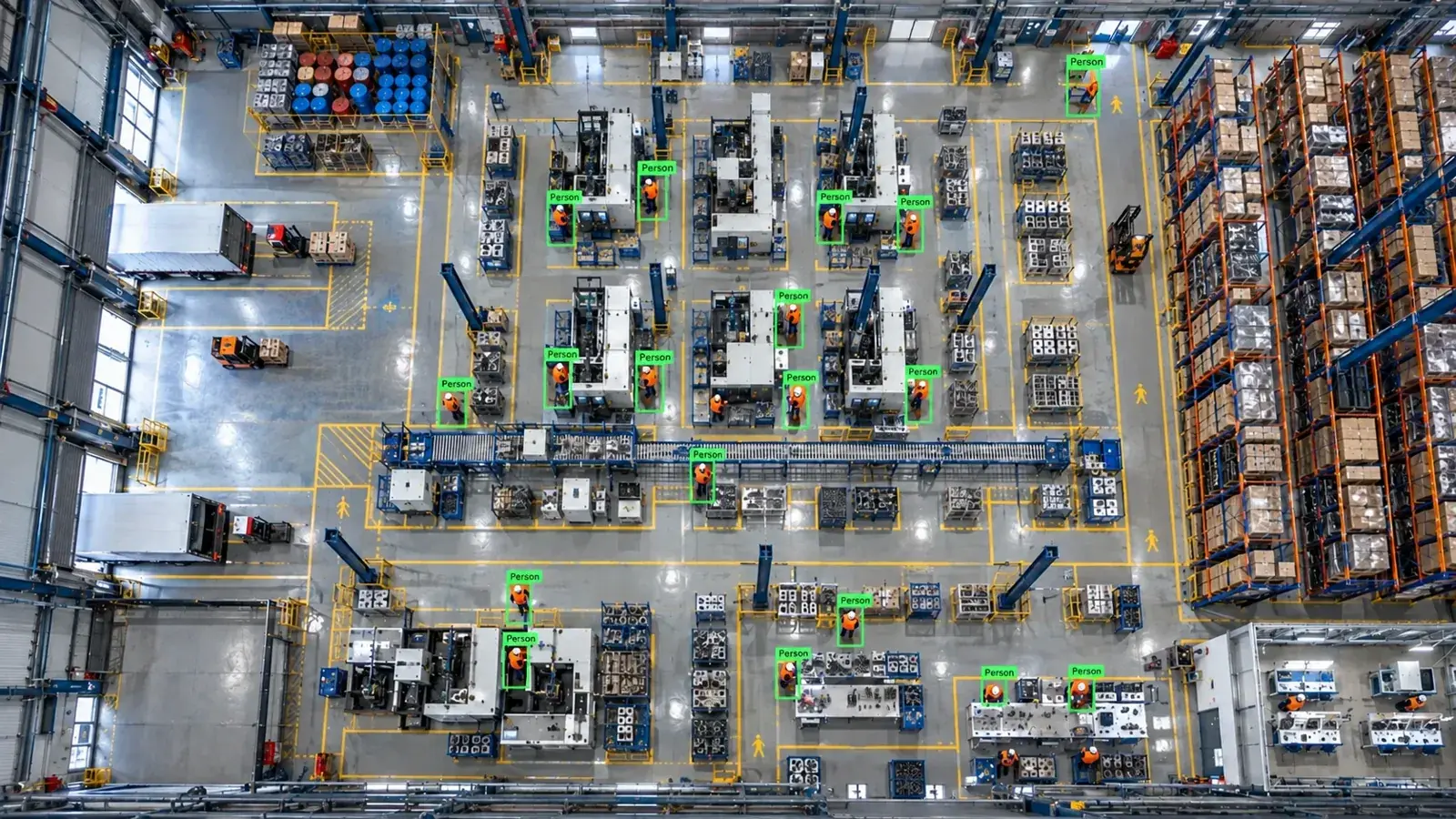
Empty-pack detection on a medical packaging line: defective packs reaching customers down 94%On a sterile medical consumables line, an industrial camera and controlled lighting inspected every pack; the AI model separated empty packs with 98.6% accuracy.2026-10-12
A manufacturer packing sterile single-use medical products was seeing empty or under-filled packs reach customers, causing complaints and return costs. Hype Vision deployed an inspection station with an industrial camera and controlled lighting that checks every pack with AI.
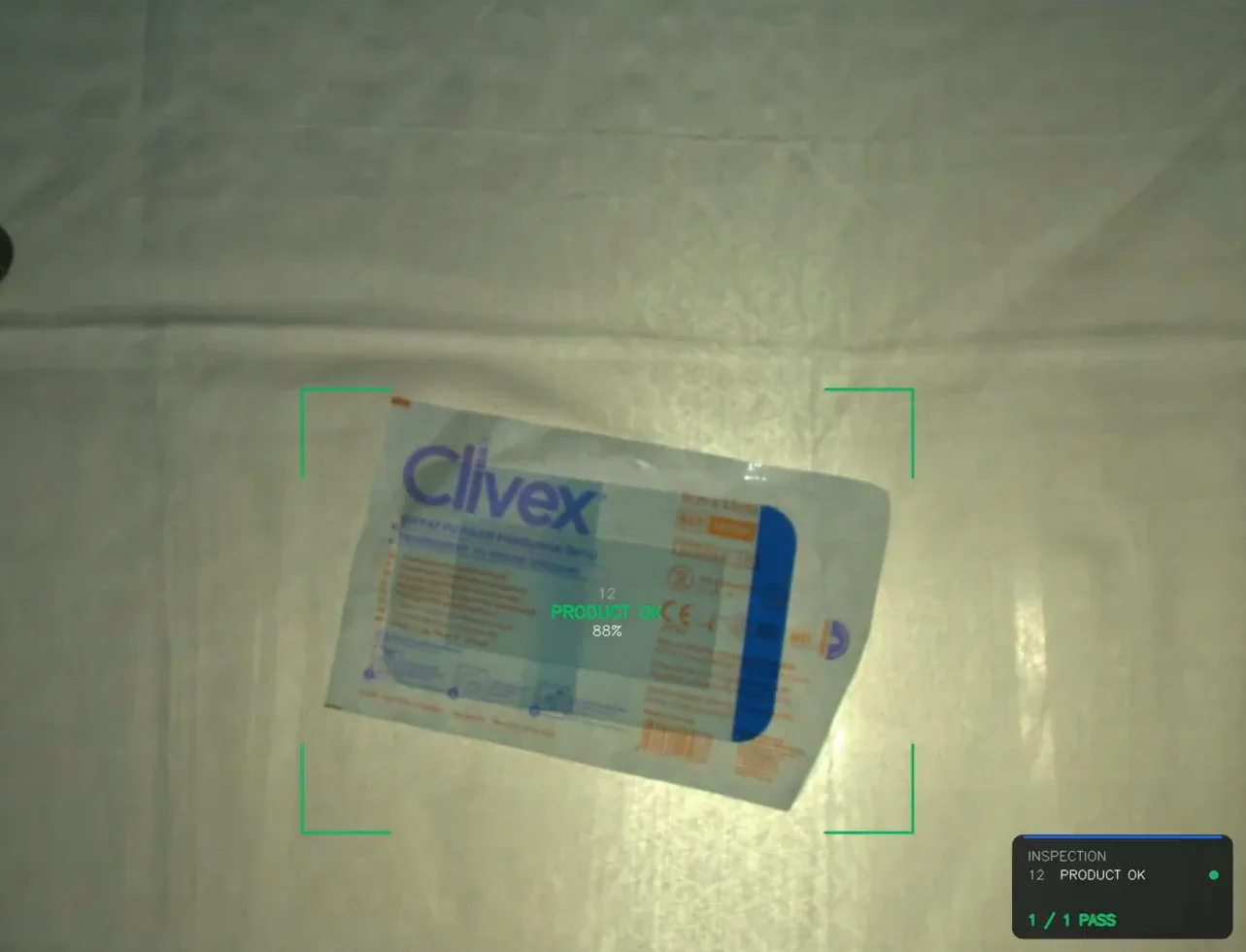
Packs were sealed at high speed and operators could only spot-check.
A classification model trained on site footage sorts every pack into PRODUCT OK or EMPTY.
AI model accuracy: 98.6%; Empty/incomplete packs reaching customers: down 94%; Manual final-inspection workload: down 70%
Problem
Packs were sealed at high speed and operators could only spot-check. On printed sterile packaging, it was hard to tell at a glance whether the product was inside.
Empty or incomplete packs occasionally slipped into shipments, leading to complaints, returns and re-packing costs.
Why an industrial camera and lighting?
The deciding factor was the image, not the model. A standard CCTV angle and ambient light emphasised the print and hid the content.
A diffuse backlight was placed under the pack. Light passing through the packaging revealed the product's silhouette while suppressing print and reflections. Images were captured with an 8.9 MP global-shutter industrial camera without motion blur.
- Global shutter: no blur on fast-moving packs
- Backlight: clear content silhouette, minimal print effect
- Fixed working distance and lens: same scale in every frame
- PoE + IP67 housing: suited to the line environment
Solution
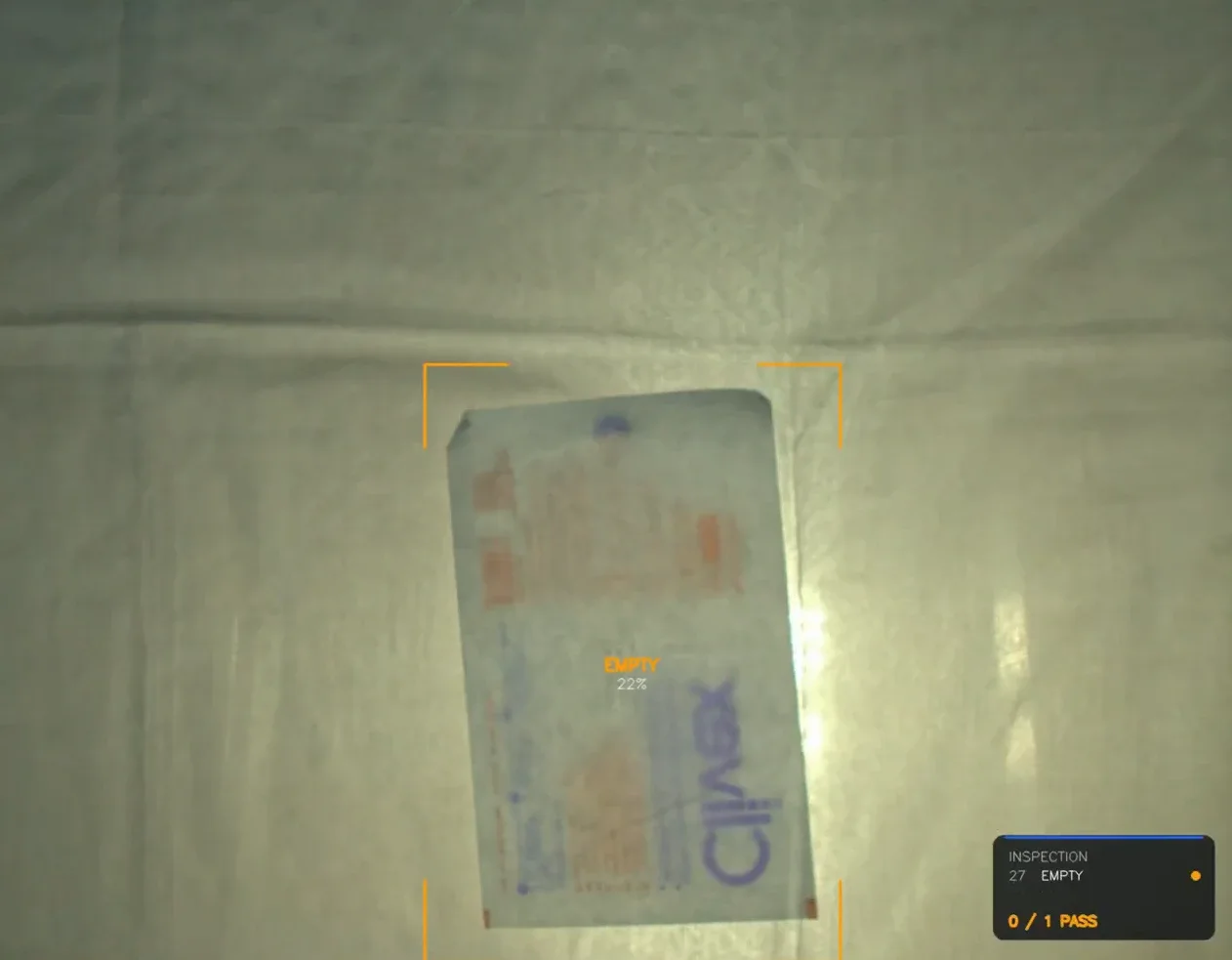
A classification model trained on site footage sorts every pack into PRODUCT OK or EMPTY. The decision is made as the pack enters the field of view and shown with a confidence score.
On EMPTY, a reject signal is sent to the line controller via digital output and the pack is removed automatically. Every decision is logged with a time-stamped image; a pass/reject report per shift is ready in the dashboard.
Deployment
- Discovery and sample image collection: 2 days
- Camera, lens and lighting installation: 1 day
- Model training and field calibration: 5 working days
- Parallel run against manual inspection: 2 weeks
Results
During the parallel run, system decisions were compared with manual inspection before switching to fully automatic mode.
- AI model accuracy: 98.6%
- Empty/incomplete packs reaching customers: down 94%
- Manual final-inspection workload: down 70%
- 100% inspection at line speed (instead of sampling)
- Image evidence for every rejected pack
Related solutions
Frequently asked questions
Why an industrial camera instead of existing CCTV?
Pack content only became reliably visible with controlled lighting and fixed optics. Existing cameras are enough for safety and operations use cases; product quality inspection usually calls for an industrial camera and lighting.
Does it work with different pack sizes?
Yes. A new size or print needs only a short sample collection and calibration; one station can run several product recipes.