Rubber/tire surface tear and crack detection: high-speed quality inspection with an industrial cameraTears and cracks on fast-moving rubber/tire surfaces are detected in real time with a high-frame-rate industrial camera and AI; defects are caught early, cutting scrap and returns.2025-01-02
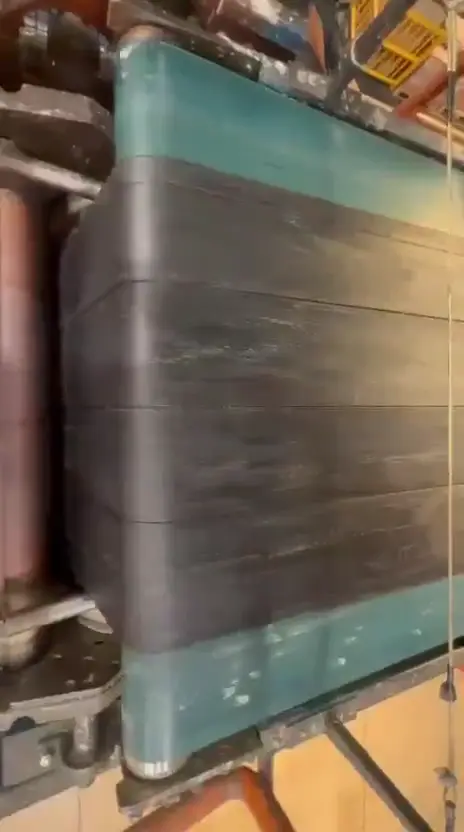
In tire and rubber manufacturing, small tears and cracks on a dark, fast-moving surface are very hard to spot by eye; a missed defect comes back downstream as scrap or a customer return. In this project, Hype Vision placed a high-frame-rate industrial machine-vision camera (Hikrobot) on the line and ran the analysis on a GPU workstation; tears and cracks on the moving rubber surface were detected and marked in real time.
The problem: seeing defects on a dark, fast surface
Rubber and tire surfaces are dark and the line is fast; in these conditions a small tear or crack is easily missed by eye. If a defect is not caught early, the affected section moves downstream and becomes scrap or a customer return.
Manual inspection is tiring and inconsistent; you cannot inspect continuously and at the same sensitivity at high speed.
The solution: industrial camera + AI (at high speed)
A high-frame-rate industrial machine-vision camera (Hikrobot) was placed on the line and, with proper lighting, imaged the moving surface clearly. The analysis ran on a GPU workstation, detecting tears and cracks on the fast-moving rubber surface in real time; each defect was boxed and logged.
This setup catches small defects on a dark, fast surface that the naked eye would miss and flags them to the operator instantly.
- Imaging with a high-frame-rate industrial camera
- Real-time analysis on a GPU workstation
- Tears and cracks marked with a box
- Instant defect alert to the operator
Accuracy on a fast, dark surface
The system was calibrated for the dark, fast-moving rubber surface; thanks to the high frame rate, defects can be caught even as speed increases. Small surface tears and cracks move from being a late-noticed error to a real-time detected event.
- Calibration for a dark, fast surface
- Defect capture at high frame rate
- Early detection of small surface defects
- Continuous, consistent inspection
Setup and integration
The industrial camera is placed over the line, proper lighting is provided, and analysis runs on the GPU workstation. Defect data is collected on the dashboard and can be integrated with line stop, marking or a quality/ERP system. Analysis runs on-premise and video does not leave the site.
- On-line industrial camera + lighting
- Analysis on a GPU workstation
- Line-stop / marking integration
- Data to a quality/ERP system
Outcome
Tears and cracks on the rubber/tire surface were detected continuously and automatically, even on a fast, dark surface. Catching defects early keeps bad product from moving downstream, reducing scrap and customer returns.
- Continuous surface inspection at high speed
- Early detection of tears and cracks
- Industrial camera + GPU workstation
- Reduced scrap and customer returns
Frequently asked questions
Which camera and hardware were used?
A high-frame-rate industrial machine-vision camera (Hikrobot) was used on the line and the analysis ran on a GPU workstation. Camera, lighting and frame rate are chosen per site based on the surface, speed and defect size.
What defects does it detect?
Surface tears, cracks and similar visible defects. Each defect is boxed and timestamped, and can be matched to a line stop or marking if wanted.
Can existing security cameras do this?
For fast, small surface defects like these, an industrial machine-vision camera and proper lighting are usually recommended; for safety/counting scenarios, existing IP cameras are enough. Suitability is determined in the free pre-assessment.
Does video leave the site?
No. Analysis runs on-premise (a GPU workstation); video does not leave the facility, only defect and metric data reach the dashboard.