
AI Analysis with Dahua Cameras: Integration, Architecture, and ApplicationsLearn how to connect Dahua IPC/NVR devices to AI platforms using RTSP/ONVIF protocols. Explore architectural methods, analysis types, and key considerations.
Dahua IP cameras and NVR devices come with built-in analytics, but they also support external AI analysis for industrial applications. Without replacing existing equipment, video streams can be delivered to AI platforms via RTSP and ONVIF protocols.
This article covers the technical details, connection methods, and implementation architecture for external AI analysis on Dahua products.
Yes, existing Dahua IPC and NVR devices can connect to AI analysis platforms via RTSP or ONVIF without replacement. This enables advanced analytics but requires careful attention to bandwidth and authorization.
Is AI Analysis Possible Without Replacing Existing Dahua Devices?
Dahua IP cameras and NVRs support RTSP and ONVIF protocols, which are standard and widely used for transmitting video streams to brand-independent AI analysis systems. There’s no need to replace current hardware since AI processing typically happens on external servers or edge devices.
Built-in analytics are generally limited to predefined scenarios with a few rules per camera. External AI platforms provide advanced capabilities such as complex object detection, classification, pose tracking, and OCR.
- Dahua devices support RTSP/ONVIF video output.
- Additional hardware is required for external AI analysis (e.g., edge server).
- Existing infrastructure can generally be used without changes.
- New functions can be added without replacing camera hardware.
Connection Methods for Dahua Cameras: RTSP, ONVIF, and NVR Channel Streams
The most common method to stream video to AI platforms is capturing the direct camera feed via RTSP (Real Time Streaming Protocol). Dahua cameras usually provide multiple RTSP streams, including main and sub-streams, allowing selection based on bandwidth and resolution needs for analysis.
ONVIF enables more integrated connections by facilitating device discovery, stream management, and client synchronization. In some scenarios, streams may be pulled from an NVR, but this often increases latency and limits resource availability.
- RTSP URL formats vary depending on model and firmware version.
- Sub-streams differ in resolution and frame rate; select according to bandwidth requirements.
- ONVIF is used for remote authentication and device configuration.
- Streaming via NVR channels can add latency and increase resource use.
- H.264/H.265 codec support optimizes video quality and bandwidth.
AI Analysis Architecture: Camera, NVR, Edge Server, and Alarm Systems
A typical Dahua AI system involves transmitting camera video to an edge server via RTSP or ONVIF, where analysis is conducted using models from the "Hype-Model" family. Analysis results are then monitored through alarms or integrated systems.
The common architecture is Camera → (optional NVR/VMS) → Edge Server (AI) → Panels/Alarm Systems/ERP/MES. Edge servers often include high-performance GPUs or AI accelerators for continuous analysis.
Alarm outputs can be integrated with panels, WhatsApp/SMS alerts, VMS pop-ups, PLCs, or via REST APIs.
- Camera streams are delivered to the edge server via RTSP or ONVIF.
- "Hype-Model" algorithms run on the edge server hardware.
- Analysis results feed alarms and control systems.
- Alarm triggers and reporting support multiple protocols.
Analyses Available with Built-in and External AI
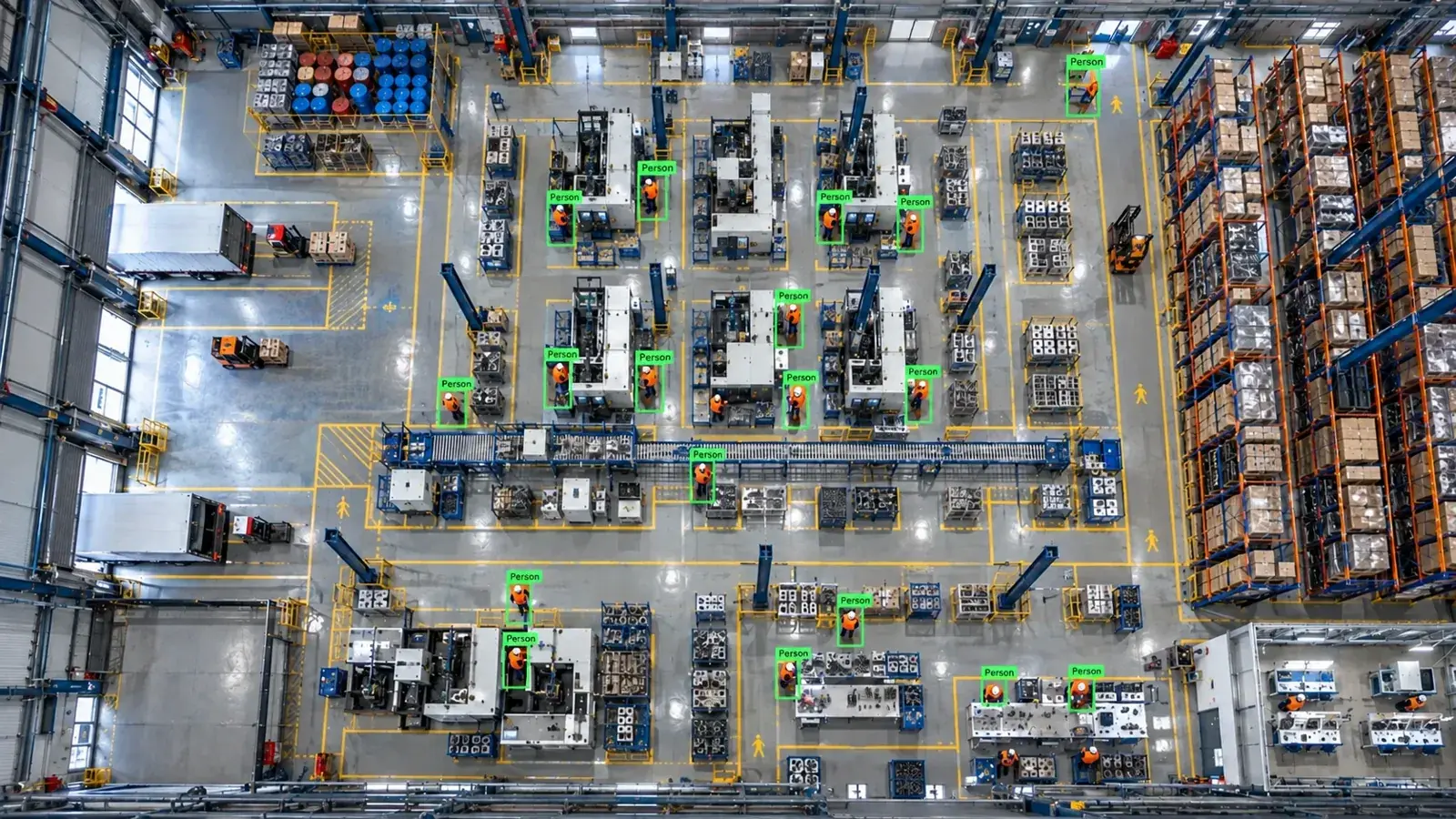
Dahua’s built-in analytics are generally limited to basic rules such as motion detection, area intrusion, and line crossing. External AI platforms offer advanced analyses including personal protective equipment (PPE) compliance, restricted area monitoring, forklift and vehicle classification, human/object counting, and quality control.
The "Hype-Model" family includes models capable of object detection, classification, pose and hand movement tracking, and OCR. Industrial cameras combined with proper lighting enable high accuracy for quality control.
- PPE compliance checks (helmets, masks, vests)
- Defined restricted area intrusion detection
- Forklift and vehicle detection and counting
- Pose and hand motion tracking for human activity
- OCR and object classification for process quality assurance
Key Considerations: Authorization, Bandwidth, Codec, and Firmware
Security and user authorization are critical when streaming video for AI analysis. RTSP and ONVIF require strong authentication; weak passwords or open access pose risks.
Bandwidth quality directly impacts analysis accuracy. Higher resolution streams improve results but demand sufficient network and processing resources. Using H.264 or H.265 codecs optimizes bandwidth consumption.
Firmware versions affect camera and NVR capabilities. It is recommended to use current, stable firmware. Resolution, sub-stream selection, and processing capacity should be planned in advance.
- Ensure strong RTSP/ONVIF authentication for security.
- Select bandwidth and stream resolution according to needs.
- Use H.265 codec for bandwidth savings; ensure server compatibility.
- Regularly verify and update firmware versions.
- Protect systems with user access controls.
Suitability Assessment and Installation Steps
Before deploying AI analysis in a Dahua-camera facility, conduct a suitability assessment. This includes verifying RTSP/ONVIF support, measuring stream quality and bandwidth, defining AI analysis requirements, checking hardware capacity, and designing analysis scenarios.
Typical projects start with a 2-4 week pilot phase, involving edge server installation, connection testing, model training, and field validation. Full integration follows successful pilot completion.
- Check physical and network infrastructure adequacy for analysis.
- Test RTSP/ONVIF stream availability.
- Measure and plan bandwidth and processing capacity.
- Define and prioritize AI analysis scenarios.
- Perform pilot setup and calibration to evaluate performance.
This page answers: dahua artificial intelligence · dahua ai alternatives · dahua nvr external ai · dahua camera image processing
Frequently asked questions
Is it necessary to replace Dahua cameras for AI analysis?
No, existing Dahua IPC and NVR devices can connect to external AI platforms via RTSP and ONVIF without replacement.
Which connection method is preferred: RTSP or ONVIF?
RTSP is generally preferred for direct video streaming, while ONVIF is used for device management and synchronization. Both can be used depending on project needs.
What types of analyses can AI perform?
External AI platforms enable PPE compliance monitoring, restricted area alerts, forklift and human counting, pose and hand tracking, and OCR among other advanced analyses.
How do bandwidth and codec choices affect AI analysis?
Adequate bandwidth is essential for high-quality, continuous video streams. Using H.264 or H.265 codecs reduces bandwidth consumption and helps optimize analysis performance.
How is KVKK compliance ensured?
Most AI modules are designed to operate without personal identification. Data processing and storage policies must comply with KVKK regulations.
What can AI detect in your factory?
Let's review together which safety, quality and production analytics your existing security cameras can deliver.
- Free 15-minute technical call
- Camera infrastructure pre-assessment
- Feasible AI scenarios