
IP Camera Hard Hat and PPE Detection: How It Works, Connections & ComplianceDiscover how existing IP cameras enable AI-based hard hat and PPE detection via RTSP/ONVIF, system architecture, analysis options, and key installation points.
Hard hat and personal protective equipment (PPE) detection using IP cameras is increasingly common in safety and occupational health. AI-driven analysis delivers fast, effective results without replacing existing devices.
This article explains the system architecture, analysis capabilities, and technical considerations of solutions operating via RTSP and ONVIF connections, presented clearly from an expert perspective.
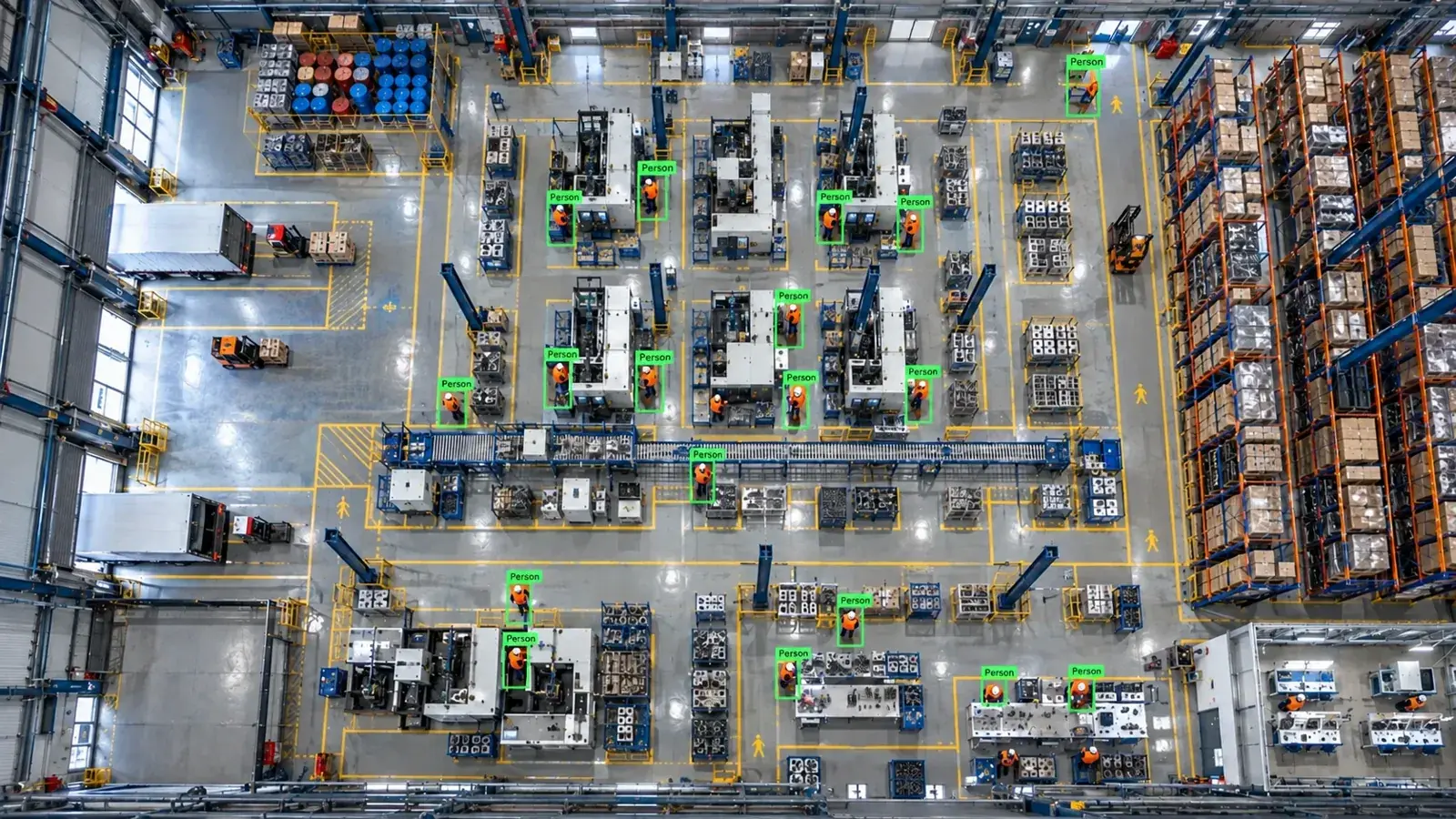
Existing IP cameras can integrate AI-powered hard hat and PPE detection via RTSP or ONVIF without hardware replacement. Proper architecture and connection methods enable detailed analysis seamlessly.
Is Hard Hat and PPE Detection Possible with Existing IP Cameras?
Analysis for hard hat and PPE detection can be performed using existing IP/CCTV systems without the need for specialized cameras. RTSP and ONVIF protocols provide brand-independent connectivity options.
However, assessing camera suitability based on resolution, field of view, and lighting conditions is essential, as lower-quality footage can negatively impact detection accuracy.
Connection Methods: RTSP, ONVIF, NVR, and Substream Selection
The most common way to connect to IP cameras is through RTSP (Real Time Streaming Protocol) to capture live video streams directly from the camera or via an NVR channel.
ONVIF is used for device discovery and control, simplifying setup when compatible with cameras and NVRs.
Selecting the appropriate substream is important to optimize bandwidth and processing power, balancing resolution and frame rate between live viewing and analysis.
- Live video streams can be accessed via RTSP directly from cameras or through NVR channels.
- ONVIF facilitates automatic device discovery and control.
- Substreams reduce bandwidth but must maintain sufficient resolution for analysis.
- Compression formats like H.264 and H.265 are supported and should be selected based on system compatibility.
System Architecture: Camera, NVR/VMS, Edge Server, and Alarm Panel
A typical hard hat and PPE detection system includes IP cameras connected to a centralized NVR or VMS. Video streams are forwarded to an edge server where AI analysis takes place.
Hype Vision’s 'Hype-Model' family runs on the edge server to perform object and PPE detection. Analysis outputs can integrate with panels, alarm systems, SMS/WhatsApp alerts, and ERP/MES platforms.
On-premises infrastructure ensures data security and facilitates compliance with regulations like KVKK.
- Camera → NVR/VMS → Edge server (AI analysis)
- Edge server → Alarm panels, SMS/WhatsApp notifications
- PLC/relay outputs enable automatic field responses
- ERP/MES and REST API integrations allow data flow into business processes
Available Analyses: PPE Detection, Restricted Area Violation, Forklift Detection, Counting, Quality Control
Beyond hard hat and PPE detection, the Hype-Model suite offers algorithms for various industrial scenarios including restricted area violations, forklift detection, people counting, and quality control.
Industrial cameras and specialized lighting improve success in quality control applications when required.
Each module operates without personal identification, supporting privacy regulation compliance.
- Detection of hard hats, gloves, glasses, and other PPE
- Detection of restricted area and safety distance violations
- Forklift and vehicle tracking
- People counting and density analysis
- Image processing and OCR for quality control
Installation and Key Technical Considerations
For reliable system operation, user permissions must be properly configured and bandwidth limits respected. Ensuring stable, uninterrupted RTSP video streams is critical.
Regular camera firmware updates are necessary, and compression codecs like H.264/H.265 should be selected according to system support.
Camera angle, lighting conditions, and image quality directly influence system effectiveness. Using industrial cameras and adequate lighting is recommended for harsh environments.
- Configure user authorizations and access control correctly.
- Use substreams to avoid bandwidth overload.
- Maintain compatibility by applying regular firmware updates.
- Optimize camera image quality and lighting conditions.
- Verify support for H.264/H.265 compression.
Suitability Assessment and Pilot Process
Before deployment, a thorough suitability assessment should evaluate camera specifications, network infrastructure, processing capacity, and environmental conditions.
Typically, a 2–4 week pilot phase measures live performance, allowing calibrations and optimizations.
Upon pilot completion, the system can be approved for full-scale installation or redesigned based on findings.
- Technical evaluation of camera and environmental suitability
- Assessment of network infrastructure and bandwidth
- Determination of edge server resources
- 2–4 week live pilot deployment
- Decision-making based on performance and accuracy testing
This page answers: ip camera ai · ip camera ppe detection · ip camera hard hat detection
Frequently asked questions
Can hard hat and PPE detection be done without changing my existing IP camera system?
Yes, existing IP camera systems can integrate AI analyses via RTSP or ONVIF protocols. However, camera resolution and image quality must be adequate.
Which connection method is best: RTSP, ONVIF, or NVR channel streaming?
Live video analysis is typically done using RTSP streams. ONVIF facilitates device discovery and control, while streaming via NVR channels is possible but bandwidth and latency should be considered.
Are camera firmware updates important for system functionality?
Absolutely. Regular firmware updates ensure compatibility and security, and are necessary for features like H.264/H.265 support to operate correctly.
What analyses can be performed besides hard hat and PPE detection?
The Hype-Model family enables various analyses including restricted area violation detection, forklift tracking, people counting, and quality control.
How does the pilot process work and why is it important?
The pilot phase, lasting 2–4 weeks, tests system performance live. It evaluates accuracy, latency, and user experience to optimize the system before full deployment.
What can AI detect in your factory?
Let's review together which safety, quality and production analytics your existing security cameras can deliver.
- Free 15-minute technical call
- Camera infrastructure pre-assessment
- Feasible AI scenarios