Gas station forecourt service analytics with cameras: first contact, service time, window cleaning and hood checksAt a fuel station, attendant performance and customer service are measured with AI: time to first contact, service time, whether the windscreen was cleaned, the hood was opened and vehicle wait time.2024-10-03
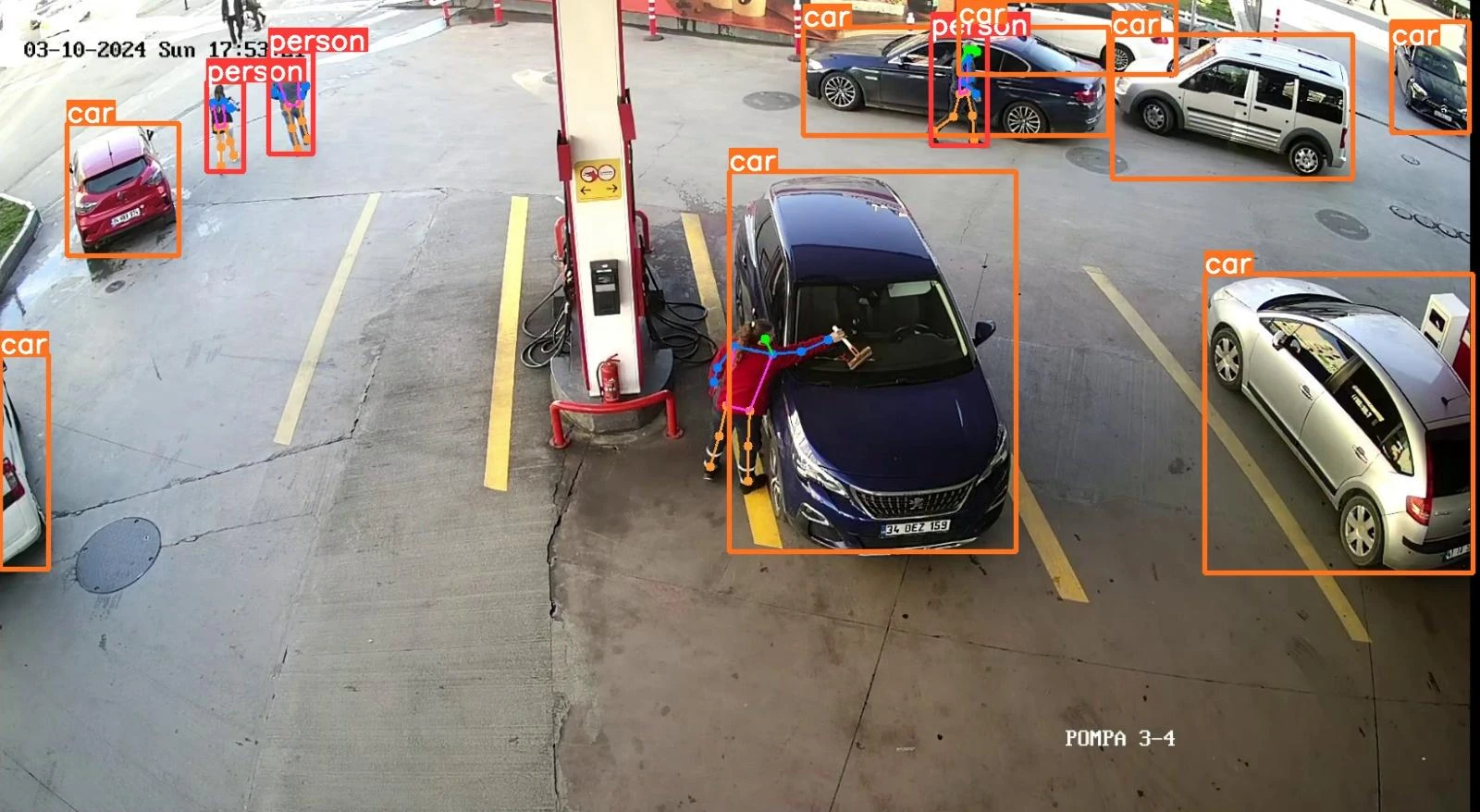
At fuel stations, customer satisfaction depends on the service standard: how quickly an attendant reaches a vehicle, whether the windscreen is cleaned, whether the hood/oil is checked and how long the customer waits. Until now all of this relied on the manager's eye. Hype Vision connected the forecourt cameras to AI and combined pose estimation with vehicle detection to measure the service at each pump objectively — all fully on-premise.
The problem: the service standard could not be measured
At a station, service quality depends on how fast an attendant greets the customer, extra services like cleaning the windscreen and checking the hood/oil, and how long the customer waits. But whether these steps actually happened and how long they took could not be measured.
At busy times, which pump filled up, how long the customer waited and when the attendant made first contact were only guessed.
First contact and wait time
The moment a vehicle pulls up to a pump is detected; when an attendant first approaches it, the 'first contact' time is measured. The gap objectively shows how long the customer waited. Average first-contact and wait times are produced per pump.
Situations like 'the customer waited and no one came' become visible with data.
- Detection of a vehicle pulling up
- Time to first contact (how fast the attendant arrived)
- Customer wait time
- Per-pump averages and peak-hour analysis
Service steps: window cleaning, hood opening, service time
Pose estimation distinguishes the attendant's actions: steps such as cleaning the windscreen, opening the hood and fuelling are recognised. This makes it possible to count how many vehicles had their windscreen cleaned, how many had the hood opened, and to measure total service time.
It shows whether the service standard is actually applied and which attendant/pump delivers better service.
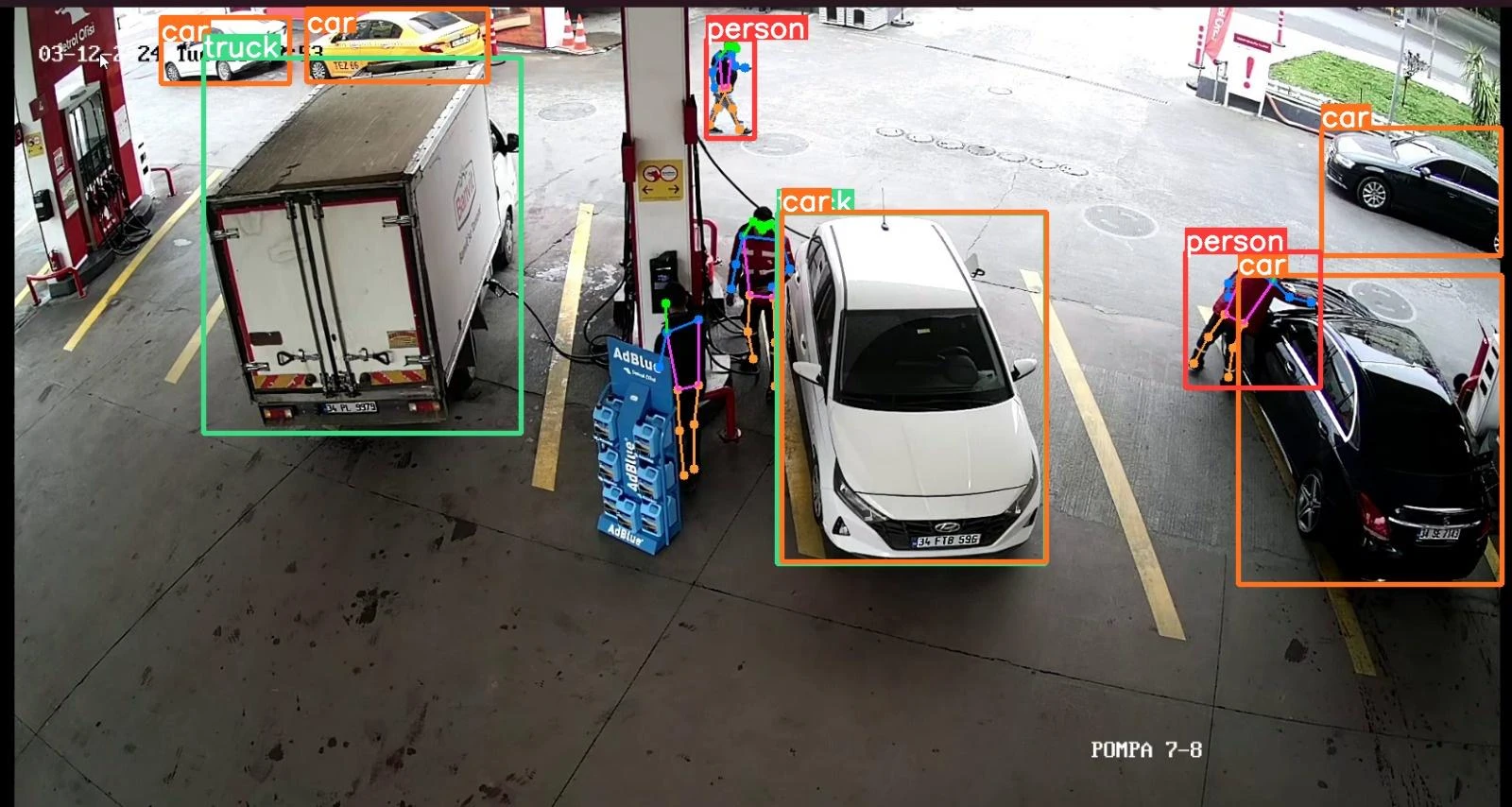
- Window-cleaning action detection (how many vehicles)
- Hood/oil-check action detection
- Total service time
- Service performance per attendant and pump
Vehicle and pump traffic
Vehicles (cars, trucks, vans) are detected and counted per pump. Which pump gets busy and when, whether a queue forms and overall forecourt occupancy become visible, so shift and staffing can be planned with data.
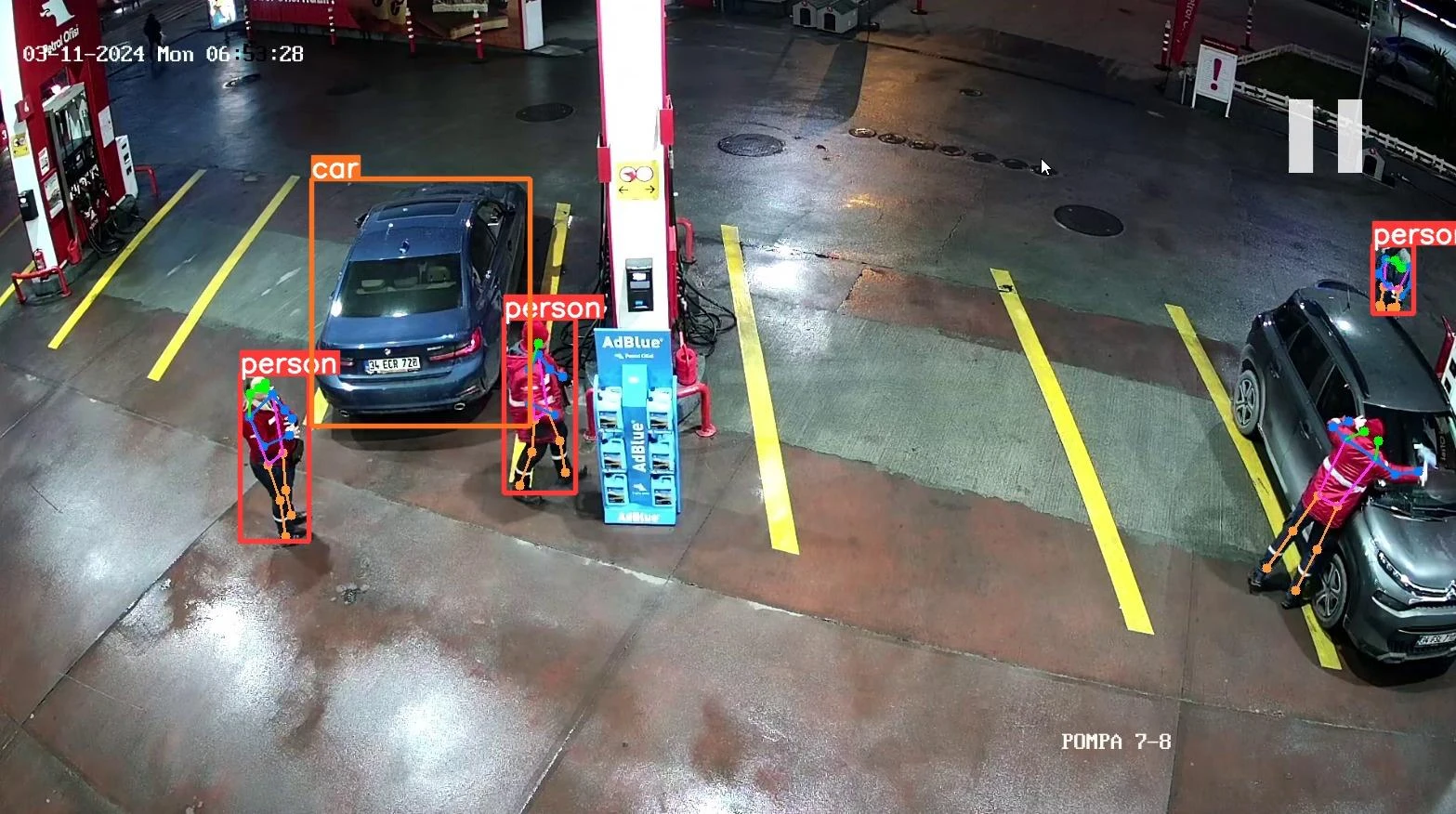
- Per-pump vehicle count and type (car/truck)
- Peak-hour and occupancy analysis
- Queue/wait formation detection
- Data for shift and staffing planning
On-premise architecture and privacy
All analysis runs on a server inside the station; video does not leave the site. The analysis is motion- and vehicle-based; people are not identified, tracking is anonymous and faces can be blurred. Plate reading is added only on request and with data-protection duties defined.
Outcome
The station's service standard is now measurable: first contact, service time, window-cleaning and hood-opening rates and wait times are tracked per pump with data. The manager runs service quality on data, not observation.
- First contact and wait time measured
- Window-cleaning / hood-opening rate counted
- Service time and attendant performance visible
- Shift and traffic planning with data
Frequently asked questions
How does the system know a windscreen was cleaned or a hood opened?
Pose estimation models the attendant's body and arm movements to distinguish steps like cleaning the windscreen, opening the hood and fuelling; combined with vehicle detection it infers which service was given to which vehicle.
Do I need new cameras?
In most cases no. Existing RTSP/ONVIF cameras that see the pumps are enough; field-of-view suitability is assessed in the free pre-assessment.
Are plates read — is that a privacy problem?
The default analysis is anonymous; plate reading is added only on request. Technical measures and data-controller duties are defined together with the station.
Does video leave the station?
No. The deployment is on-premise; analysis runs on a server inside the station and only event and metric data reach the dashboard.