Textile fabric quality control: hole, tear and stain detection on patterned and plain fabricAn AI camera on the fabric inspection machine detects holes, tears and stains on patterned and plain fabric in real time, logging 100% of greige fabric quality control.2025-01-02
In textiles, fabric quality control (greige/inspection) usually relies on the inspector's eye; as metres of fabric pass quickly, small holes, tears and stains are inevitably missed. On patterned fabric (checks, stripes) the defect hides inside the pattern. Hype Vision installed an AI camera on the fabric inspection machine: it detects defects like holes, tears and stains on the moving fabric in real time and marks each one with its location and a confidence score — even on patterned fabric.
The problem: visual fabric inspection misses defects
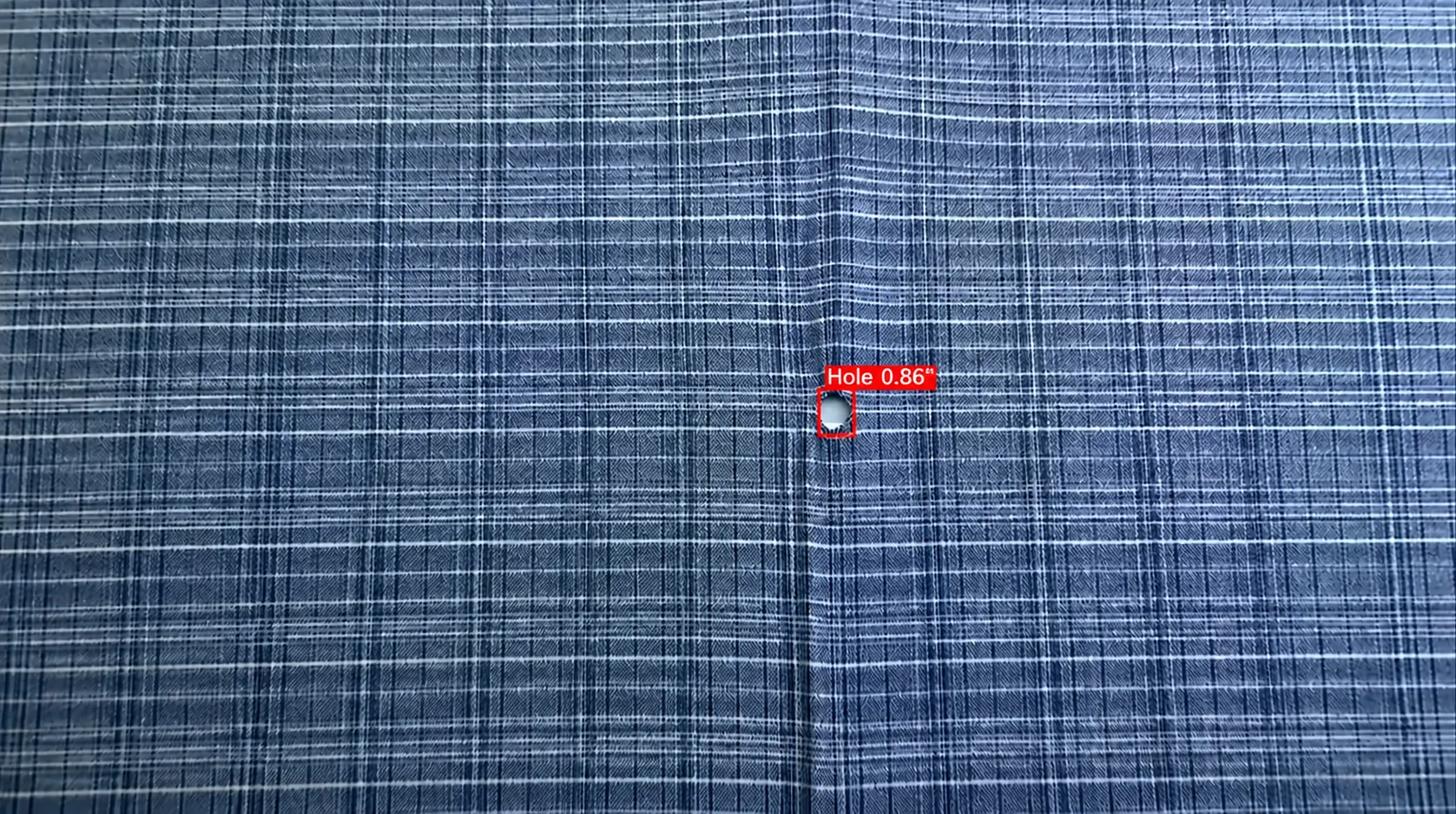
On the inspection table, metres of fabric pass quickly; an inspector cannot see the full width and every detail at once. Small holes, tears and stains slip through and are only found at cutting or sewing — which means waste and lost time.
On patterned (check/stripe) fabric the problem is worse: a busy pattern makes defects hard to spot by eye.
AI defect detection: holes, tears, stains
The camera on the inspection machine continuously analyses the moving fabric. The model detects defects like holes, tears, stains and weave faults; it marks each with a box and gives its type, location and confidence score (e.g. 'Hole 0.86').
A defect is flagged to the operator instantly and logged per metre/roll, so it is recorded which roll had a defect and where.
- Hole, tear, stain and weave-defect detection
- Defect type, location and confidence score
- Timestamped logging per metre/roll
- Instant operator alert
Works on patterned and plain fabric
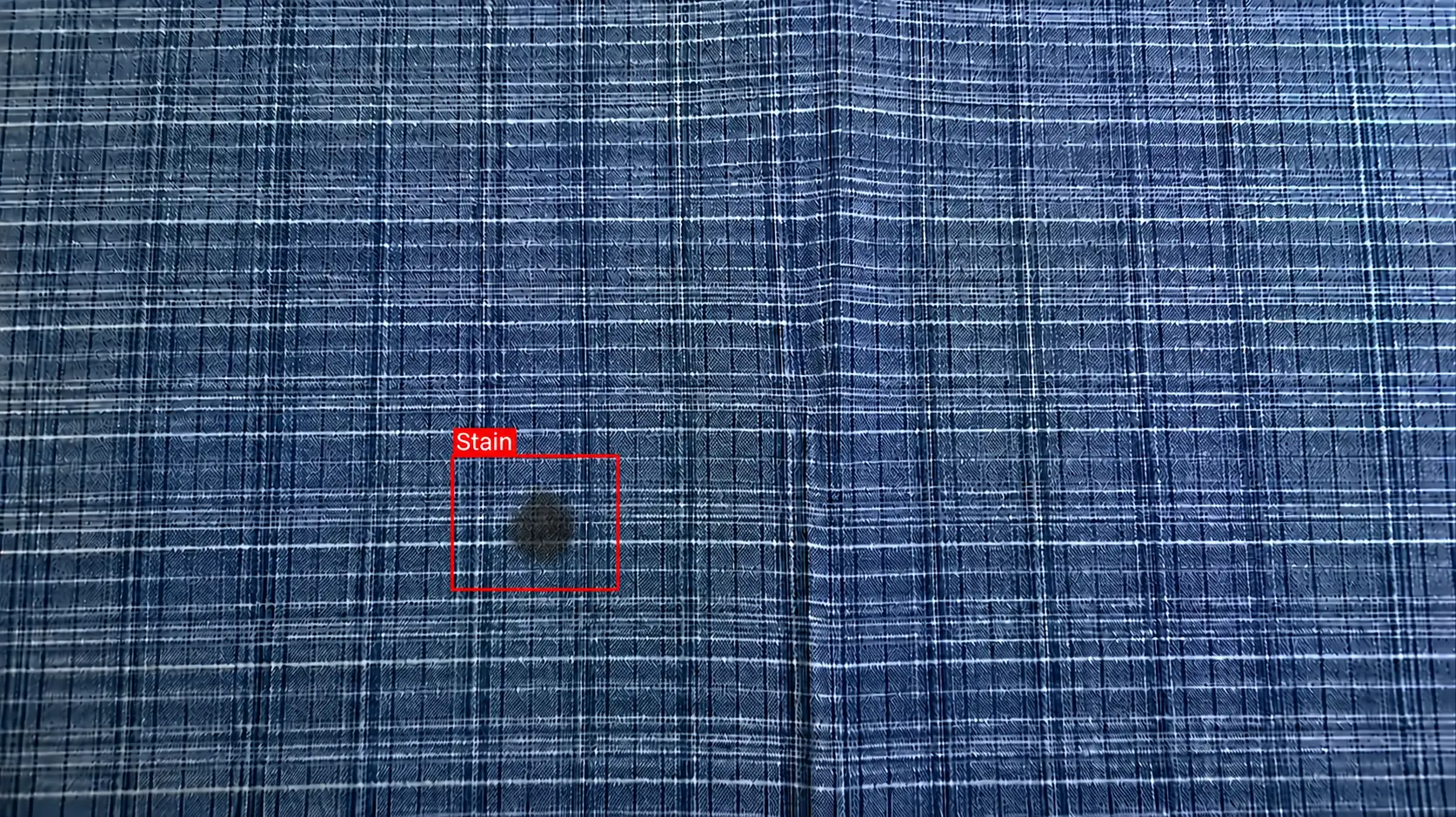
The system works on both plain and patterned (check, stripe) fabric. The hardest case is patterned fabric: busy lines and squares hide the defect. The model is built to distinguish the defect from the pattern, so stains and holes are caught even on a checked fabric.
- Support for plain and patterned (check/stripe) fabric
- Defect distinguished from the pattern
- Adaptable to different colours and textures
- Calibration for new fabric types
Setup: on the inspection machine or portable
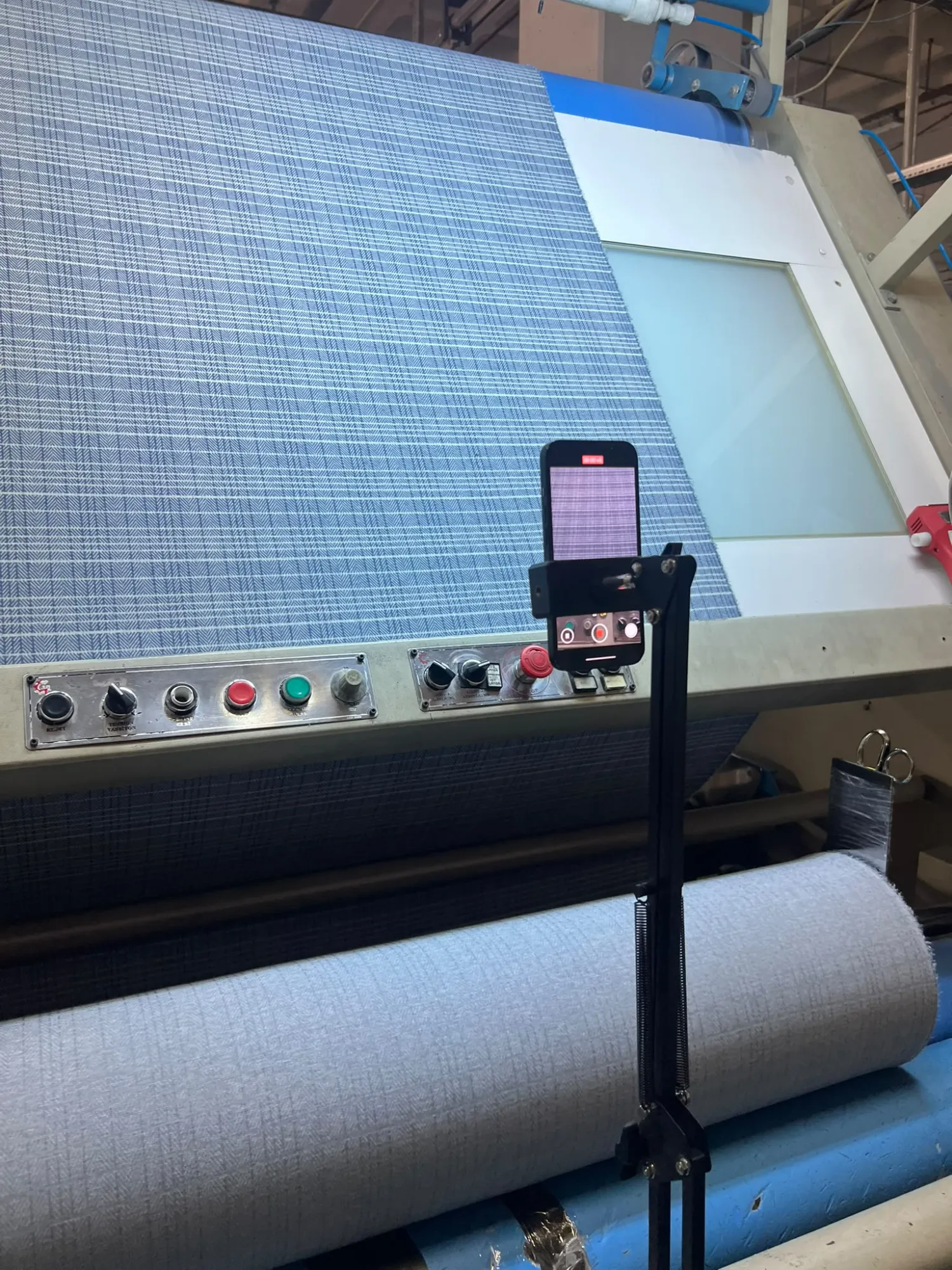
The camera is positioned over the existing fabric inspection machine; with steady lighting and the right angle it sees the moving fabric clearly. It can be integrated into the inspection line, or kept portable to try on different lines.
- Integration with the existing inspection machine
- Clear image with steady lighting
- Portable option between lines
- Analysis matched to production speed
On-premise architecture and integration
All analysis runs on a server/edge device inside the plant; video does not leave the site. Defects are collected on the dashboard, reported per metre/roll and, if wanted, pushed to an ERP/quality system; defect locations can also be matched with physical marking systems.
Outcome
Fabric quality control moved from depending on the inspector's attention to continuous and logged. Holes, tears and stains are caught early; defective fabric is pulled before cutting/sewing, reducing waste and customer returns.
- 100% continuous control of moving fabric
- Early detection of holes, tears, stains
- Defects caught even on patterned fabric
- Logging and reporting per metre/roll
Related solutions
Frequently asked questions
Does it work on patterned (check) fabric?
Yes. The system is designed for both plain and patterned fabric; the model distinguishes the defect from the pattern, so holes and stains are caught even on busy check or stripe fabric. A short calibration is done for new fabric types.
Which defects does it detect?
Visible defects such as holes, tears, stains and weave/knit faults. Each defect is marked with its type, location, size and confidence score and logged per metre/roll.
Do I need a new machine?
No. The camera is positioned on the existing fabric inspection machine and works with steady lighting and the right angle. A portable setup is also possible to try on different lines.
How is the data used?
Analysis runs on-premise/edge; video does not leave the site. Defects are collected on the dashboard and in reports, and can be pushed to an ERP/quality system if wanted.